 43
43

Neil Kennedy Recovery Center named 2018 Agency of the Year
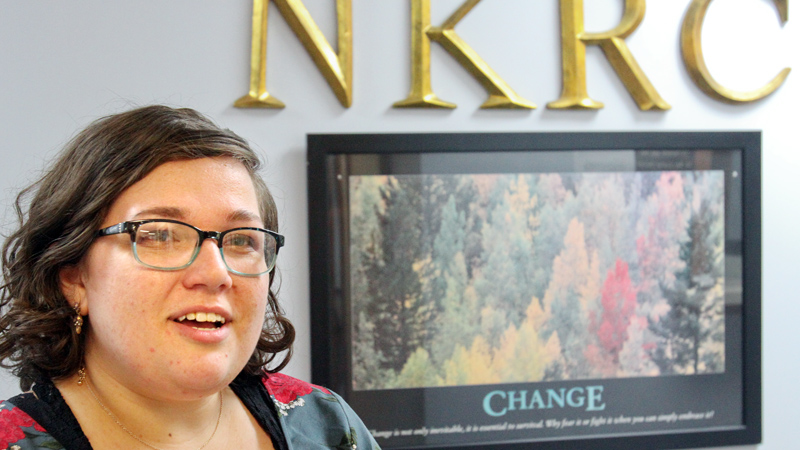
By JUSTIN DENNIS
jdennis@vindy.com
AUSTINTOWN
The National Association of Social Workers Ohio Chapter Region 4 named area addiction treatment provider Neil Kennedy Recovery Center the 2018 Agency of the Year during an awards ceremony Tuesday at the Neil Kennedy outpatient center in Austintown.
The center, now heading into its 73rd year, employs 80 staffers — about half of which are professionals or Master’s-level social workers and many of whom have been with the center for more than 20 years — and treats about 1,500 people per year, said Carolyn Givens, a 29-year social worker and the center’s executive director.
“This group, as a whole, has been very dedicated to the mission and vision of Neil Kennedy,” she said Tuesday.
“We look at every form of prevention that we can use,” Givens said. “We’ve made some improvements and dusted off the model. We’ve looked at quality of care and accessibility of care. We’re trying to look at being available to the community 24 hours a day, seven days a week and partnering with more people.”
Since 2014, the center has predominantly provided addiction treatment through medication-assisted treatments such as suboxone and buprenorphine and was, for years, the only residential or outpatient detoxification provider in the state, she said. The center now maintains 16 inpatient beds at its main campus along Rush Boulevard in Youngstown — and is raising funds for a new inpatient wing there — and recently added 16 beds at St. Elizabeth Youngstown Hospital. It also operates an outpatient center in Warren.
The center also partners with Youngstown State University, which feeds student social work interns to the center.
Julie Kalina-Hammond, director of the association’s local chapter, said its annual awards go to agencies and individuals whose contributions to their communities reflect the core values of social work: service, social justice, dignity and the worth of people, and competence.
Sarah Macovitz, an outpatient therapist with Alta Behavioral Healthcare, was named Social Worker of the Year. Macovitz developed therapeutic garden programs in two counties — a therapy service that helps adolescents build confidence and critical-thinking skills and also addresses food insecurity — and consults on developing those programs elsewhere. She also developed a resource fair for youth transitioning out of state custody, to help them identify helpful services.
“She has done all these programs at a risk that they may fail but were highly successful due to her ability to engage with others in the community, clients and families,” Kalina-Hammond said.
Lake County Court of Common Pleas Judge John O’Donnell was named Public Elected Official of the Year. Judge O’Donnell served as legal counsel for the Lake County Alcohol and Drug Addiction and Mental Health Services Board for 16 years and is a member of a local initiative exploring race relations in the county’s criminal justice system.
“He utilizes the mental health system in having defendants assessed for appropriateness for treatment as well as linkage to services in the community,” Kalina-Hammond said.
Kenna Rearick, a Youngstown State student whose social work has been focused on advocacy and public policy, was named Student of the Year. Rearick is an AmeriCorps alum and completed a full service term with FEMA Corps in 2016, for which she received a Congressional Bronze Medal and a Presidential Volunteer Service Award.
“After experiencing hardships in my life I wanted to give back and help people through adverse life experiences,” Rearick said.
Maureen Reardon, who started in the field in the 1970s and recently retired from Youngstown State University — where she placed student interns in social work programs — was given the Lifetime Achievement Award. Early in her career, she developed adoption programs, worked with unwed mothers and advocated for renters in the time following the civil rights movement, and eventually became a local authority on policy and regulations.
The 1970s was also “the dawn of a dollar for mental health,” Reardon said — when it became a “primary service” recognized for reimbursement by insurance providers. In the past 20 years, outcomes of mental health patients have become much more important, she noted.
“Social work was more an advocacy service when it first started at the end of the last century,” Reardon said. “Then it became a profession. Then you have schools of social work develop. ... It became standardized.