 43
43

Boardman hydroponic program gets boost from police department
By JESSICA HARDIN
jhardin@vindy.com
BOARDMAN
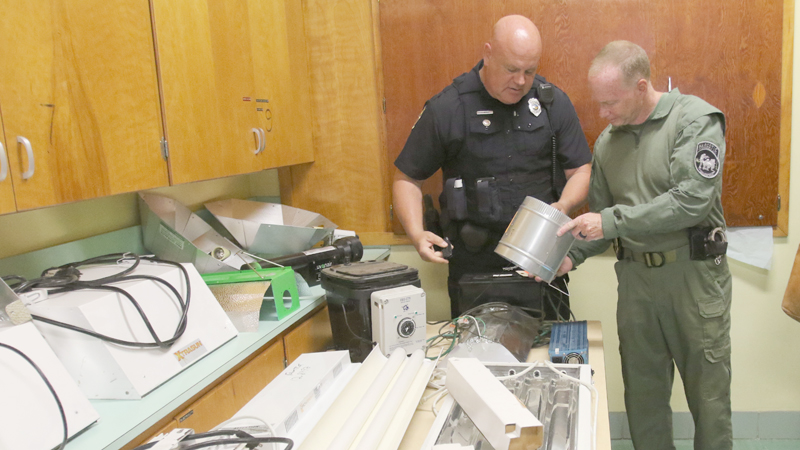
Equipment seized by the Boardman police in drug busts is getting a second life at Boardman Glenwood Junior High School.
School resource officer Phil Merlo made the connection between equipment used to grow marijuana and Boardman’s hydroponics program when he cleaned out the Boardman Police Department’s evidence room this summer. The program, which is in its third year, enables students to grow plants indoors.
“I saw something a year or two ago on the news. Something was donated to a school from a police department, and they used it to further the students’ education. Knowing what we had in evidence waiting to be forfeited or destroyed, I hooked up with the science department. I knew they were into hydroponics and asked them what they may need,” Merlo said.
The program previously purchased some equipment through a grant, but the donation from the police department will significantly boost the young program.
“We gave them lighting, ballasts which support the heavy kilowatt usage, and tubing for hydroponics. All of the equipment we’re giving are from various cases of marijuana growers. Multiple cases going back a couple of years,” Sgt. Michael Hughes said.
Typically, the value of property seized by police is returned to victims. But in victimless crimes such as marijuana cultivation, equipment seized sits in an evidence room and is auctioned or destroyed.
The equipment is worth tens of thousands of dollars, police Chief Todd Werth said.
“One light would be in the area of $400 to $500,” said Hughes.
Grow lights substitute for sunlight during winter months, allowing students to successfully cultivate plants during the school year.
“The most important part is that the indoor equipment allows us to grow plants year-round. Since kids are out during the summer, it’s really hard to just grow things in the classroom,” said eighth grade science teacher Scott Lenhart.
In the spring, students transfer plants to flower beds outside.
“All that basil out there we started indoors last spring,” Lenhart said, pointing to basil plants thriving in Glenwood’s garden.
The exercise has also helped students understand where their food comes from.
Eighth-grade science teacher Laura Frost said that teachers decided to cultivate plants in the classroom when they realized their students “have no concept of how food is grown.”
“We might have grown up with gardens. They don’t really have that necessarily,” said schools communications coordinator Amy Radinovic.
For Frost, the program provides more than scientific understanding.
“This is an important life skill. You talk about the future and how you’re going to feed millions of people. How are you going to ensure fresh produce for your family?” Frost asked.
Principal Bart Smith agreed, noting the program provides opportunities for diverse learners.
“That ability to touch see, smell and feel is something that often we miss, and kids that learn that way – kinetically – they soar,” said Smith.