 43
43

Jewish communities celebrate the annual Torah reading cycle with song and dance
YOUNGSTOWN
 Video
Video
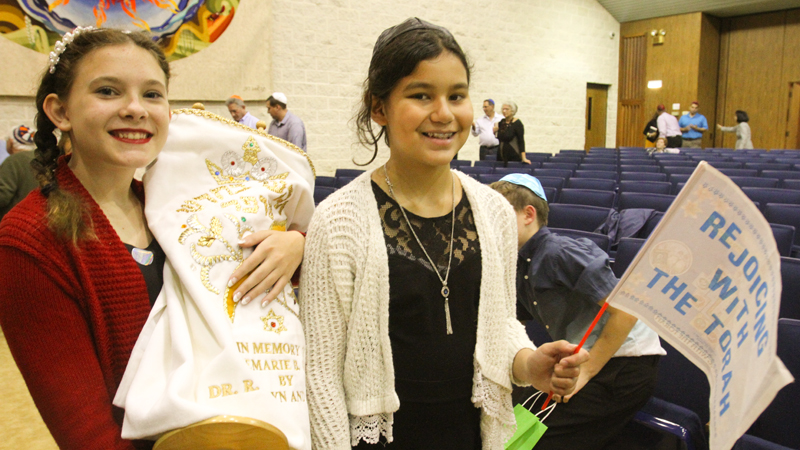
People of the Jewish faith celebrated the final of the fall Jewish high holidays Tuesday with singing, dancing and lots of Torahs.
The holiday of Simchat Torah celebrates the conclusion and restart of the annual Torah reading cycle.
During Jewish liturgical services, portions of the Torah are read throughout the year. The reading of the final passage and the subsequent reading of the first passage are celebrated during the holiday of Simchat Torah.
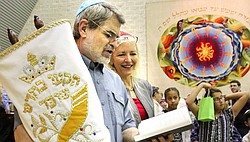
The Torahs are traditionally maintained as scrolls, rather than as books, when used in a liturgical setting, and congregants dance and carry Torahs during the celebration.
Rabbi Joseph Schonberger of Temple El Emeth in Liberty said Jewish holidays are normally observed as extensions of the daily liturgical service, and that Simchat Torah is celebrated with music and jubilance.
“When we renew the reading of the Torah, we add extra singing and dancing, which we do with Torahs, because it’s very important,” Rabbi Schonberger said. “We honor people with special roles during the service where they read from the Torah.”
Rabbi Schonberger said each of the Jewish holidays challenges adherents to focus on various aspects of life – Rosh Hashanah calls for reflection and revision; Yom Kippur focuses on atonement and preparing for the coming year; Sukkot is a remembrance that many things in life are temporary and to live in harmony with nature; and Simchat Torah is a celebration of learning and purpose.
“At the heart of who we are as humans is the value and learning we derive from God that we can apply to our everyday lives. That kind of sets up how we live life, and the holiday is there to renew us and reinforce us,” Rabbi Schonberger said.
For adherents of Judaism, Rabbi Schonberger said the pursuit of knowledge wasn’t just a noble pursuit.
“For us, learning was commanded at Mount Sinai, so more than 3,000 years ago we learned that education and literacy weren’t just good ideas, but required,” Rabbi Schonberger said. “Because knowledge and learning are parts of God’s blessings to us, we need to utilize these in life to try to make things as positive as possible.”