 43
43

Fabulous ferns - From dinosaur’s diet to modern gardens
By Eileen W. NOVOTNY
OSU Ext. master gardener volunteer intern
CANFIELD
Imagine fantastical creatures grazing among huge bizarre-looking plants in a misty landscape, a flashback to the prehistoric world a mere 543 to 248 million years ago.
We often hear someone refer to the passing of something as, “having gone the way of the dinosaurs.” Ferns were once the primary vegetation covering the earth. Fortunately for us, those amazing plants have been able to adapt and evolve, growing in climates from the tundra to the tropics.
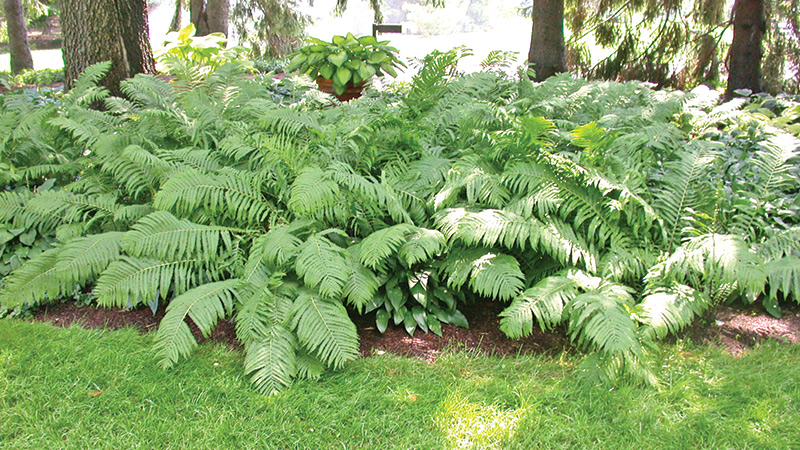
There are estimated to be 12,000 different species found in the world today, including quite a few varieties that can be found in the zone 5 gardens and woodlands of Northeast Ohio. When researching and designing a shade garden along the side of my new home, the idea of a fern garden captured my interest, a change from the ubiquitous hosta of shady fame and deer gourmet dinners.
What a pleasant surprise to discover how many hardy ferns are particularly good at thriving in cold climates if the variety chosen fits the light, soil, climate and site setting of their home space.
Before I took the OSU master gardener volunteer course, I was often guilty of falling in love with a plant at the nursery and proudly taking it home, only to plant it in a spot in which it was doomed to languish and die because the site met none of the necessary requirements. I still fall in love with plants, but resist being complicit in “planticide.”
Over the past three seasons, I checked the proposed site different times, noting the hours of sun/shade, soil moisture/dryness/drainage, and brought a sample to the OSU Mahoning Extension office for a soil test. With all this information in hand, I focused on choosing from the variety of plants available in our local nurseries or online.
Most ferns prefer a slightly acidic soil. To prepare the fern bed and make the soil more acidic I worked in lots of peat and humus and treated the soil with sulfur nitrate, carefully following the directions so as to not overdo it.
Starting small I chose three. The Lady fern can reach anywhere from 1 to 4 feet in height and is extremely tough; the Lady in Red has striking red stems, grows in a strongly vertical form and reaches 20-24 inches tall; Japanese painted ferns unfurl silver fronds brushed with red and blue tints on burgundy stems and grows 12-18 inches tall.
Now I just have to watch out for roving dinosaurs.
For information, visit go.osu.edu/ferns.