 43
43

Trumbull jail's body scanner up and running
By Ed Runyan
WARREN
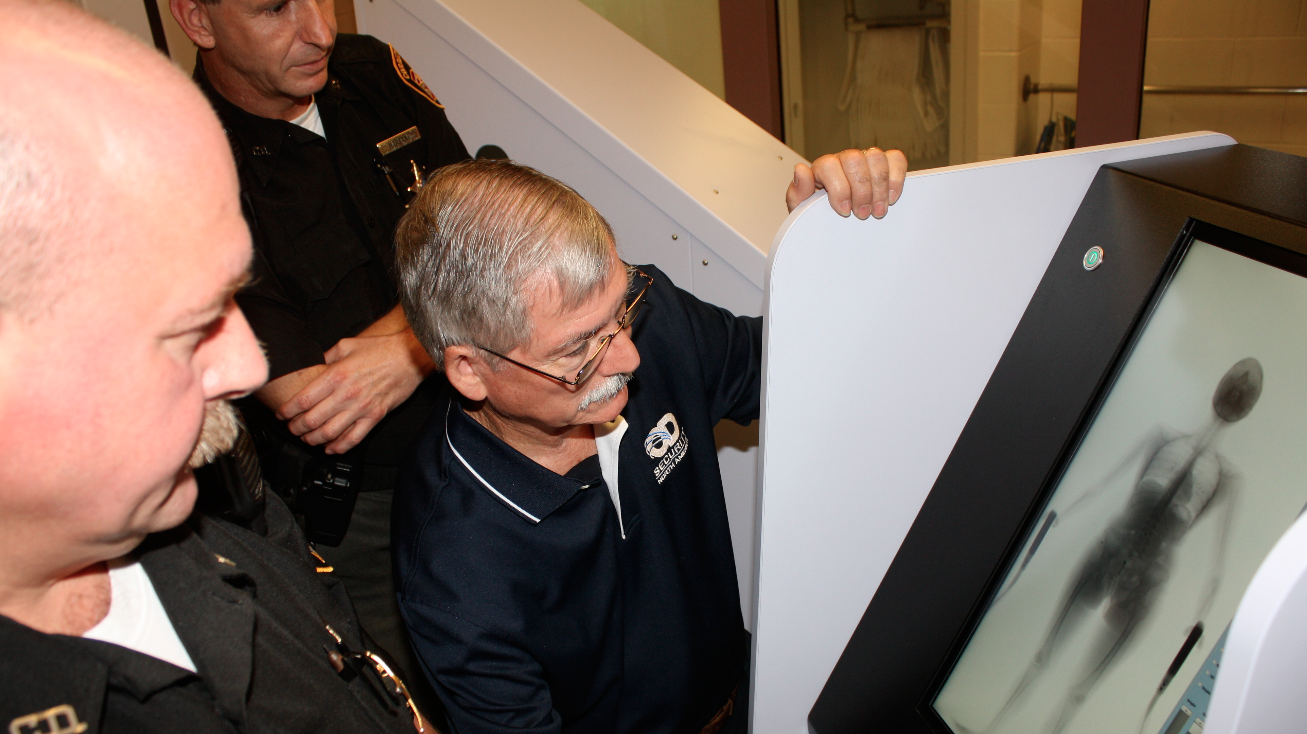
Trumbull County jail officials are looking forward to fewer incidents of inmates smuggling drugs and weapons into their lockup now that the jail’s new body-scanner device is up and running.
Training on the scanner began Thursday and will continue, but enough people on each shift will be trained for the tool to go into operation almost immediately, said Maj. Dan Mason, jail administrator.
Such scanners work a little like ones used at airports to detect weapons that someone might try to bring onto an airplane or X-ray machines used at hospitals.
The instrument includes a tall scanning device and a platform on which a person stands. The platform slides side to side to allow the scanner to obtain an image of the entire body.
Nearby is a monitor that displays the images and allows corrections officers to adjust various controls to allow officers to get a better look.
Identifying potential contraband will only be the first part of the process, however. At that point, officials may need consent from the inmate or a court order to remove it, Mason said.
Sheriff Paul Monroe has said such scanners also can find drugs and other contraband that are not metal, even when it’s in the inmate’s digestive system or elsewhere.
Such a device is not only an essential tool for the Trumbull County jail, but it’s increasingly necessary at lockups throughout the country because of the current drug epidemic, Mason said.
“I don’t see it getting any better anytime soon,” Mason said of the drug problem.
Monroe said in addition to protecting inmates, staff, courthouse personnel and others from weapons, the device is likely to save lives.
Drug addicts will go to great lengths to avoid drug withdrawal, including putting a plastic bag containing dangerous drugs into a body cavity, but plastic bags can leak, and the contents can kill.
Successfully smuggling drugs into a jail also means other inmates might die from using them, he added.
In two recorded instances this year, inmates were found to have ingested drugs. One of them recovered, but a second one died.
Dr. Humphrey Germaniuk, county coroner, ruled recently the May 5 death of inmate Gregory Wright, 60, to be natural, probably as a result of a heart attack connected to high blood pressure and multiple heart problems.
Germaniuk said Wright also tested positive for fentanyl in his blood but not in the lethal range, “thus making this a drug-related death unlikely.” Wright had been in the county jail two days when he was found unresponsive in his cell.
The jail’s new scanner cost about $115,000, but the judges in the common pleas court agreed to provide half of the money.