 43
43

Downtown parade kicks off Ohio Nonviolence Week
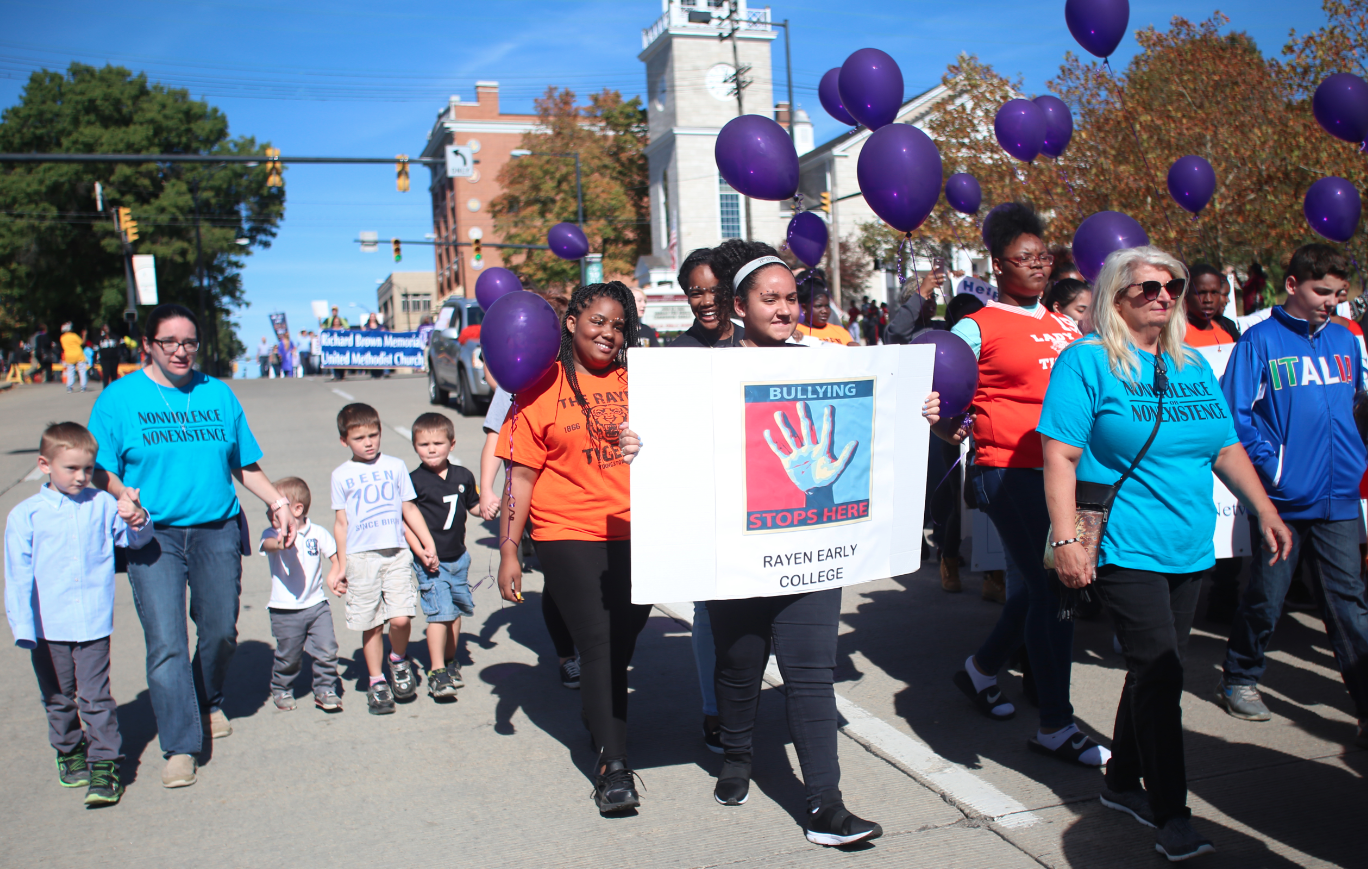
Youngstown Nonviolence Parade and Rally
 Gallery
By Sean Barron
YOUNGSTOWN
Civil-rights leaders from the 1950s and 1960s passed on an enduring legacy for social change that includes the philosophy of nonviolence.
And students Gabrielle Blake, Imani Greene and Blake Riley say they are ready to embrace that legacy in this generation.
“I think it’s motivated me to be a better person and to monitor my behavior,” said Greene, a Howland High School 11th-grader.
Given much of the current political turmoil and upheaval in the country, protesting wrongs and being socially active in a respectful manner is a valuable way to be a positive force in the community, said Blake, also a Howland High junior.
Photo Gallery: Youngstown Nonviolence Parade and Rally
Another key piece is to “not sit around, but to stand up and take action to correct wrongs and injustices,” and for young people to realize they have the inherent power to make positive differences in the world, added Riley, a Howland High senior.
The three youngsters shared their perspectives after having heard core messages on the subject that flowed through Sunday afternoon’s seventh annual Nonviolence Parade and Rally at the Covelli Centre.
The Mahoning Valley Sojourn to the Past organization initiated the event, which kicked off Nonviolence Week in Ohio. The first week of October has such a designation because of the work of Youngstown City School District students who in 2009 went on Sojourn to the Past, a San Francisco-area-based traveling American history journey through the Deep South in which participants learn the lessons of the civil-rights movement and meet people who were part of it.
Sponsoring the Nonviolence Week’s activities is the DeBartolo Corp.
The program’s key purposes included encouraging people to embrace and live by the six principles of nonviolence, reaching out to and accepting those who are different from oneself, stressing the importance of thinking before acting and realizing the link between using hate-filled language and acting violently, noted Penny Wells, Mahoning Valley STTP’s executive director.
The event, which Wells referred to as “a call to action,” also was to empower participants to see that they have a part to play in working toward positive social change, she explained.
A keynote speaker was Minnijean Brown-Trickey, one of the Little Rock Nine black students who in September 1957 integrated the all-white Central High School in Little Rock, Ark. Brown-Trickey implored her audience of several hundred to resist listening to and following those she contends are purveyors of violence, including some U.S. leaders.
Quite often, young people are more receptive to learning and incorporating the concept of nonviolence into their lives than older people. Speaking out against injustices is a significant aspect of social change, she noted.
“These children are the change we want to see in the world, and I challenge you to do the same,” Brown-Trickey said about the Sojourn students.
Acting as master of ceremonies was Emma Myers, a Joseph Badger High School senior who made the journey to the South in 2015 and who urged the young people at the rally to realize they can leave an indelible and positive impact.
“It’s taught me that being silent is not a privilege I have, but to fight against injustices to the best of my ability,” said Savannah Sockwell, an Ohio State University junior who also went on STTP in 2015.
Sockwell added she hopes to bring a prototype program on nonviolence to Columbus.
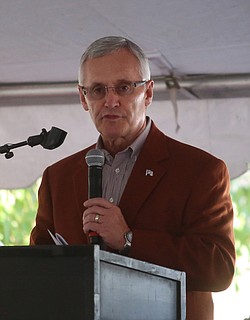
Similarly, Youngstown State University has a Culture of Community initiative that is part of the RISE (respect and well-being, inclusion and awareness, spirit and tradition and excellence through engagement) campaign, noted YSU President Jim Tressel.
A primary campaign thrust is to ensure everyone on campus knows they’re important, said Tressel, who added that living nonviolently and embracing inclusion are pivotal for making a difference in the community and world.
At one point, attendees announced the names of people they knew who lost their lives to violence. In addition, a bulletin board was set up to post the names and honor such loved ones.
Michael “Dre” Rushton, a Liberty High School student, asked the audience to remember 84-year-old Jane Larue Brown, who was slain earlier this year in her Church Hill-Hubbard Road home. Brown was affable and sociable, and would occasionally speak to Rushton as she walked her dog past his residence, he recalled.
Krish Mohip, Youngstown City Schools’ chief executive officer, said he dealt with violence regularly while working in the Chicago School District.
He said it takes tremendous courage and strength to act nonviolently, a skill he’s trying to help district students develop.
Additional remarks came from city Councilman Julius Oliver, D-1st.
Preceding the rally was a parade that featured 74 units and more than 2,000 people, Wells said.