 43
43

City officials: Nothing wrong with street signs posted on West Side
YOUNGSTOWN
Mario Poluse wasn’t happy.
After workers contracted by the city finished a resurfacing and signage replacement project on several West Side streets, something wasn’t sitting right with Poluse.
McCollum Road – Poluse’s street – was among six of the city streets Mayor John A. McNally characterized as “horrific” due to its potholes and general degradation, and it was included in the $1.7 million upgrade project.
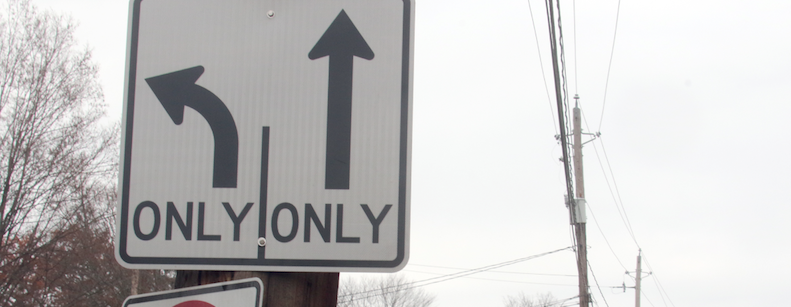
For Poluse, the resurfacing work was fine, but the placement of the street signs left much to be desired.
In his account, several road signs were hung on wooden utility poles as opposed to their own individual metal poles, and pieces of metal from the previous poles were still jutting from the ground.
“When I called the city, they said they did it that way to save money,” Poluse said. “If we’re using state money for the project, why not do it right? Why try to cut corners?”
The project was funded nearly entirely – $1.5 million of the total $1.7 million – by state funds from the Ohio Public Works Commission. But Chuck Shasho, the city’s deputy director of public works, argued no corners were cut and several of Poluse’s claims concerning the site were inaccurate.
“Posting the signs on nearby utility poles does save money as we don’t need to install new poles, plus the wooden utility poles last longer and require less maintenance,” he said. “The contractors aren’t ripping us or the state off, it’s a common practice as outlined in the Ohio Revised Code 5515.04.”
Shasho isn’t wrong. In ORC 5515.04, the code states: “Utility poles along the public highway may be used for the purpose of attaching thereto or placing thereon, signposts, guideposts, warning signs, or other signs when prescribed by the director of transportation or county engineer.”
Brent Kovacs, a spokesman for the Ohio Department of Transportation, provided the same answer when questioned about whether the sign placement was legal.
Regarding the fragments of old poles protruding from the ground, Shasho said all remaining bits of metal had been removed as of a city inspection of the work sites Oct. 22.
Councilman Mike Ray, D-4th, agreed with Shasho’s assessment of the project and said if there had been evidence of poor or incomplete work, he would pursue corrective action.
Despite the difference in opinion between the city administrators and Poluse, Ray said he was glad residents are reporting their complaints and keeping an eye on city projects.
“It’s good we have concerned citizens,” Ray said. “They’re our watchdogs, and I appreciate them looking out for the city.”