 43
43

 Photo
Photo
Neighbors | Abby Slanker.Brigid Ratcliffe, of The Sandy Hook Promise, asked volunteer C.H. Campbell Elementary School students what their favorite thing to do was during an ice breaker lesson while visiting the school to promote Start With Hello Week on Feb. 9.
 Photo
Photo
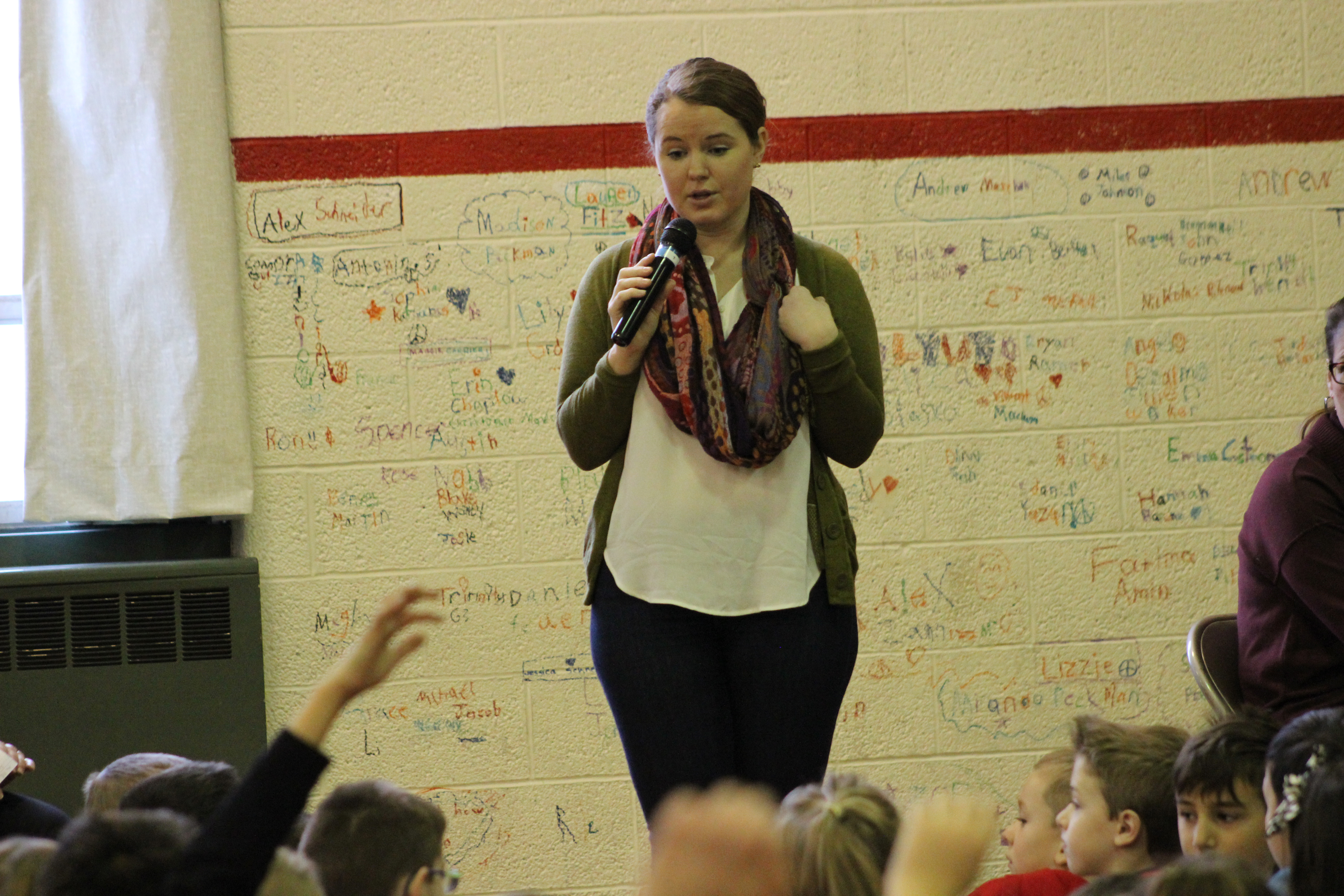
Neighbors | Abby Slanker.Brigid Ratcliffe, of The Sandy Hook Promise, spoke to C.H. Campbell Elementary School students during Start With Hello Week on Feb. 9.
 Photo
Photo
Neighbors | Abby Slanker.Brigid Ratcliffe, of The Sandy Hook Promise, engaged C.H. Campbell Elementary School students in a conversation about Start With Hello Week during a visit to the school on Feb. 9.
By ABBY SLANKER
Canfield Local Schools students joined hundreds of other students across the United States during the week of Feb. 6, as they participated in Start With Hello Week. As part of Canfield Schools’ commitment to participate in The Sandy Hook Promise, C.H. Campbell Elementary School hosted a speaker, Brigid Ratcliffe, for Start With Hello week on Feb. 9.
Start With Hello Week raises awareness and educates students and the community about the growing epidemic of social isolation in our schools and communities, and empowers young people to create a culture of inclusion and connectedness. Start With Hello teaches students the skills they need to reach out to and include those who may be dealing with chronic social isolation to help let every child know that they are part of the school community.
C.H. Campbell Guidance Counselor Diane Dankovich welcomed kindergarten through second-grade students to the Stat with Hello assembly and welcomed Ratcliffe.
“Today we are going to talk about how to be better friends with each other and how to stay good friends and how to stay safe. So now I am going to turn it over to Ms. Ratcliffe,” Dankovich said.
“Good morning everyone. The Sandy Hook Promise is based on the belief that the youth of this country are able to prevent violence and mistreatment moving forward. Today we will learn how to create a closer, more connected and inclusive classroom, school and community,” Ratcliffe said.
Ratcliffe listed the three steps the students can follow to create more connectedness.
“The three steps you can follow are first, see someone alone; second, reach out and help and third, start with hello,” Ratcliffe said.
Ratcliffe went on to explain to the students the signs and signals of isolation, including someone prefers to be alone, someone keeps to themselves, someone is anxious or uncomfortable around others, someone who is purposely left out by others both digitally and indirectly and the person seems removed.
“Social isolation can be found in the classroom, on social media, on the bus, in the lunchroom, at events and on a sports team,” Ratcliffe told the students.
Ratcliffe then moved to the second step, reach out and help, and explained that it can be hard to do that because it could make some students uncomfortable. She gave them several ideas on how to reach out and help someone.
“To reach out and help someone, you could sit with someone who may feel alone, you could reach out on social media, you could invite someone to join you, you can give a simple gesture to someone and you could even leave a handwritten note,” Ratcliffe said.
Ratcliffe also gave suggestions as to what the school could to make students feel included, such as ‘No One Eats Alone Day,’ ‘Get to Know Me Day’ and mixed grade socials.
Ratcliffe moved onto step three, Start With Hello, and gave the students some conversation starters to try out at their school. She encouraged them to ask questions and use ice breakers and to ask why and validate the person.
“We need to push ourselves and even though we may feel nervous, we can reach out and help someone and also create happiness for ourselves,” Ratcliffe said.
Ratcliffe suggested the students use such ice breakers as the Five W’s, which include asking who, what, when, where and why. She also suggested asking If You…, such as If you could do anything what would you do and why. She also said a good ice breaker is asking someone’s favorites, such as color, animal, holiday, food, musician, book, video game, class, sport, movie and TV show. Ratcliffe also gave the students the idea of sharing stories of where the students’ shoes have gone, such as vacations, parts of a city or country, different cities, states and countries or a beach, mountain or desert.
Ratcliffe then asked for volunteers to test out the ice breakers, asking the students their favorite thing to do and would you rather be a dragon or unicorn. She then had the volunteers ask each other questions, such as would you rather be a cat or dog.
Ratcliffe closed her presentation with a review of why the students should Start With Hello.
“You should start with hello to create a more connected and inclusive school and community. You will also inspire others and create lifelong friendships. You will make a difference in someone’s life and help them feel accepted, included and valued. You can help stop someone from possibly hurting themselves or others,” Ratcliffe said.
Ratcliffe encouraged the students to get started today by creating posters, announcements, videos and other reminders to post around the school, by setting up inclusion and connectedness tables at events and lunch and start a connected club and foster Start With Hello.
“Thank you so much for having me here today. You are so wonderful and I appreciate you. I hope you do Start with Hello,” Ratcliffe said.