 43
43

President must forcefully denounce domestic terror
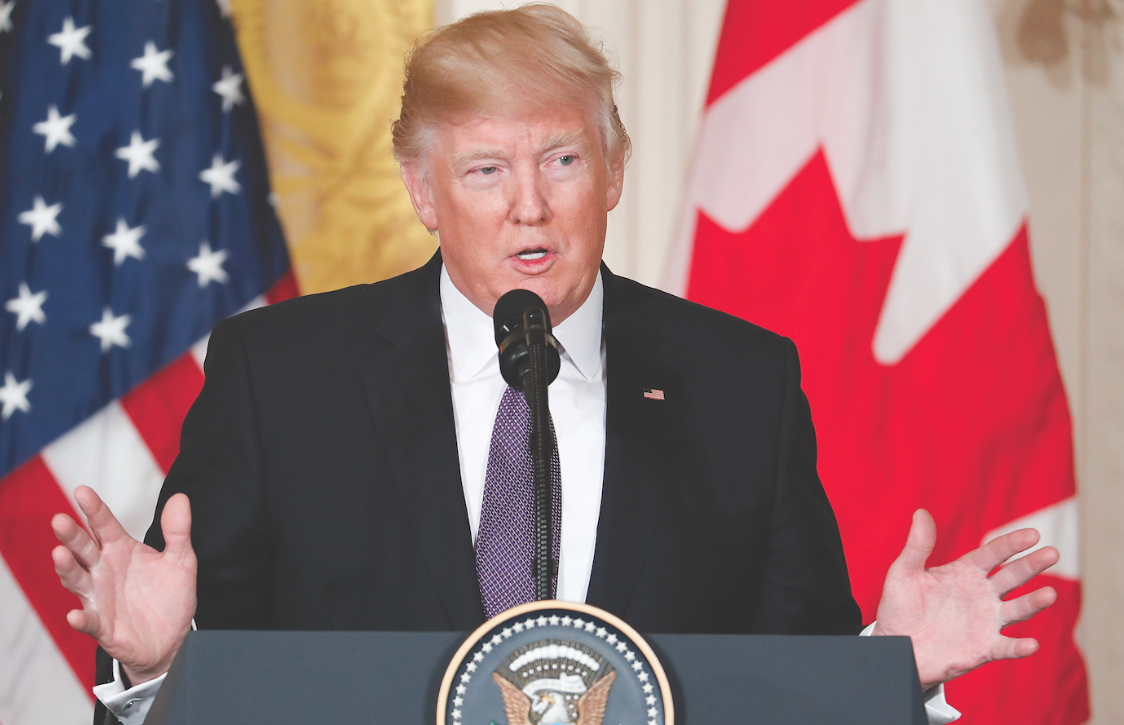
Since the inauguration of Donald J. Trump as president seven months ago, this nation has witnessed a disturbingly meteoric rise in racist and other hate crimes. That trend was punctuated over the weekend by a day of bigotry, violence and death unleashed by a band of white nationalist groups in a Virginia college town.
Some legitimately argue that our nation’s commander in chief has played a noteworthy role as an enabler to the growth of these voices of hate and bigotry. That argument grew all the stronger in the immediate aftermath of Saturday’s reckless violence in Charlottesville, Va. There, three people died in connection with Unite the Right, a raucous protest by members of extreme alt-right, neo-Confederate, neo-Nazi, white nationalist and white supremacist organizations deemed the largest in a decade in the U.S.
A car believed to have been driven by a suburban Toledo neo-Nazi sympathizer plowed into a crowd of peaceful counterprotesters, killing a woman and injuring about 20 others, some critically. Shortly after that tragedy, two Virginia State Police troopers died in a crash of the helicopter they were using to monitor the protest.
In response to the clear act of domestic terrorism in the mowing down of free-speech demonstrators, the president issued a decidedly tepid response:
“We condemn in the strongest possible terms this egregious display of hatred, bigotry and violence, on many sides, on many sides. It’s been going on for a long time in our country.”
Trump is indeed correct in noting that racism has long ripped at the American fabric of tolerance, freedom and equality. Over the decades, organized hate movements have waxed and waned. But since Trump’s ascension to the presidency, intolerance and tacit acceptance of it have soared to new heights.
TRUMP MISSES MARK
In that backdrop, the president clearly missed the mark Saturday. His repeated emphasis that the turmoil in the college town the size of Warren was caused by “many sides” failed to make the clear and obvious distinction that the neo-Nazis and white nationalists took the lead in instigating the violence that will forever mar the image of the home of the University of Virginia founded by Thomas Jefferson.
The White House attempted to save face by releasing an unsigned statement Sunday that said “white supremacist, the KKK, Neo-Nazis and all extremist groups” should be condemned.
Sadly, that was too little too late.
We therefore join the growing coterie of Democratic and Republican leaders across America who are calling on the chief executive to denounce the violence more specifically and more accurately. He must make an unequivocal statement condemning white extremists who have become increasingly emboldened by his tacit approval of their insidious goals.
U.S. Sen. Corey Gardner, R-Colo., reflects the sentiments of many Americans in this tweet: “Mr. President, we must call evil by its name. These were white supremacists, and this was domestic terrorism.”
Clearly, Gardner is correct. Saturday’s violence, particularly the use of a motor vehicle to mow down alt-right opponents, comes straight out of the playbook of the Islamic State group.
Under U.S. law, domestic terrorism involves acts dangerous to human life that appear to be intended to intimidate or coerce a civilian population or to influence the policy of a government by intimidation or coercion. The demonstrators sought to pressure city leaders to keep a statue of Confederate Gen. Robert E. Lee in place in a public park.
Trump’s failure to brand the extremists domestic terrorists also strikes us as duplicitous. After all, the president assailed his 2016 Democratic rival Hillary Clinton incessantly for not using the term “radical Islamic terrorist” to describe members and supporters of IS.
Trump’s refusal to call the Charlottesville disturbances the work of radical domestic terrorists should be regarded as equally egregious.
Clearly this is a defining moment for the presidency. Trump can choose to aggressively assail the leaders of the violence that unfolded over the weekend, or he can keep quiet. The latter choice likely would signal to the vermin extremists that they’re free to carry on and pillage anew.
Regardless of what the president chooses, others must act decisively. The U.S. Justice Department should proceed quickly and thoroughly with its civil-rights probe. The federal government also should launch an aggressive investigation of the disturbances as acts of domestic terrorism. The results of these inquiries ideally will offer insights toward minimizing the risk of any repeat of such a despicable day of hate and bloodshed.