 43
43

If you’re patient, this ‘cute’ flyer will eat from your hand Black-capped chickadee
By Katie Kane Shipka
Ohio certified volunteer naturalist
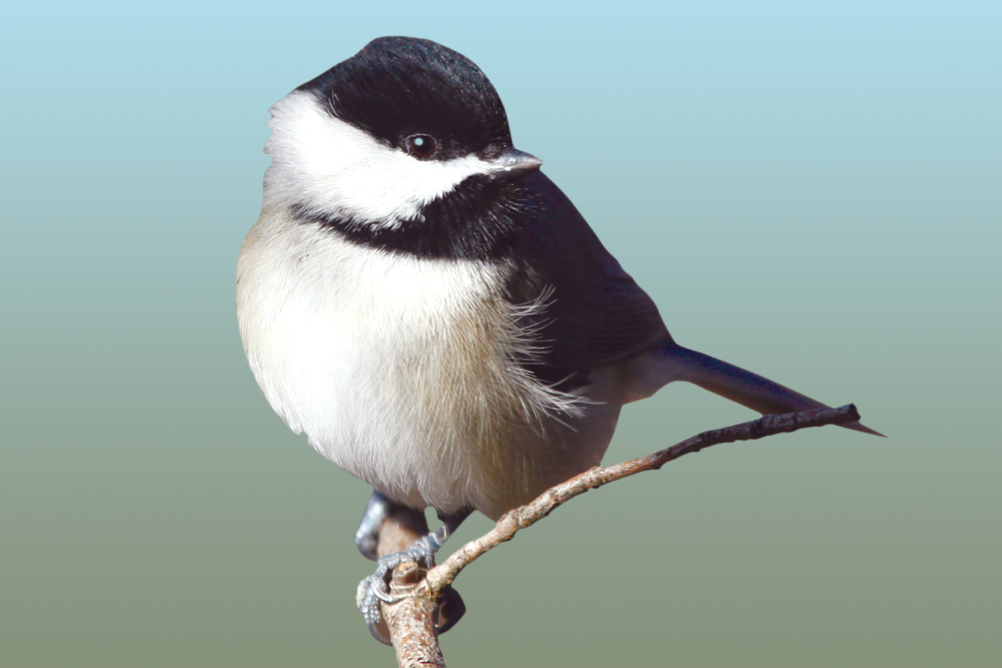
The black-capped chickadee, one of the most-recognized birds both at feeders and in the wild, is frequently referred to as “cute” because of its short neck and oversized head, tiny body and friendliness around humans.
Often noticed in snowy winter settings, it sports a black cap and bib, white cheeks, a gray back, wings and tail and buff sides.
The black-capped chickadee looks very similar to the Carolina chickadee, but the differences are noticeable with practice, and for the most part, their range does not overlap.
This state bird of Maine and Massachusetts is frequently the first bird to visit at backyard feeders, and will often eat from your hand if you are patient enough to stand quietly and wait for them to become familiar with you.
When observing backyard feeding, the black-capped chickadee will land on the perch, grab one seed and fly back to a tree branch to break the seed open and eat the meat.
They use significantly more energy for eating, and therefore more calories as compared with other birds that perch and feed.
They are acrobatic flock birds, often associated with winter scenes and Christmas cards, looking distinctive and attractive against a backdrop of a snow-covered conifer.
Undulating flight patterns are easily recognizable with their rapid wing beats, flying about 12 mph.
Nesting takes place once annually between April and June, but a second nesting will take place if the first brood is lost.
The female builds the nest, and while incubating the eggs, the male feeds the female.
Both protect and feed the juveniles after they leave the nest, until they are old enough to find their own food successfully.
Nests are often found in tree holes or nesting boxes, or if none are available, they usually build nests in birch or alder trees.
A clutch of 6-8 eggs is laid, with 11-14 days of incubation. Eggs are white with reddish-brown dots that become more pronounced at the larger end of the egg.
Chickadees are found in any habitat that has woody shrubs, deciduous forests, parks, thickets and residential neighborhoods with trees.
They also frequent weedy fields, cattail marshes and wetlands.
Their call is quite distinctive, seemingly repeating their name: chick-a-dee-dee-dee, which is most likely the origin of their name.
To attract these interesting and enjoyable birds, and help them and other songbirds through the freezing temperatures of the winter months, purchase black-oil sunflower seeds and suet.
Avoid purchasing a cheaper brand found in supermarkets or grocery stores, as there is “filler” seed contained in them which, because many birds will not eat, is wasteful and attracts undesirable critters to your feeder.
Bird-watching and feeding is a wonderful way to learn about a small part of nature and can be enjoyed as a shared family-centered activity for both outdoor and indoor lovers.
I encourage everyone to enjoy each other and the winter birds, especially with binoculars and a steaming cup of hot cocoa.
To learn more about this bird, go to http://go.osu.edu/blackcap.