 43
43

Marchers remember Bloody Sunday
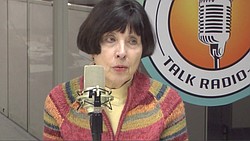
Penny Wells
 Video Set
By jeanne starmack
YOUNGSTOWN
In March 1965, it took them three tries.
Three tries before they would leave Selma, Ala., cross the Edmund Pettus Bridge and reach Montgomery, Ala., the state’s capitol, 54 miles away.
Black activists in the Dallas County Voters League and those who had come to help them were trying to bring attention to their cause: They wanted to be able to vote.
Between March 7 and 25 that year, though, the 54 miles to Montgomery was three times as far.
Mahoning Valley Sojourn to the Past, which takes high-school students on a 10-day journey to civil rights sites, commemorated the first of the three Selma marches Sunday with a march of its own.
March 7, 1965, was one of the country’s darkest days — a day that horrified the rest of the nation as images of it broke on TV news.
Six hundred marchers crested the Edmund Pettus Bridge, only to find themselves facing a sea of state troopers and sheriff’s deputies.
They were told to turn around and go back. But before they could, they were attacked with clubs, hoses and tear gas. They were trampled by police on horses.
Sojourn to the Past, along with the Mahoning Valley Historical Society, the city of Youngstown and the MLK Planning Committee, sponsored a commemorative march and presentation at the Tyler History Center on what came to be known as Bloody Sunday.
Sojourn students recalled the story of what led 50 years ago to one of the most infamous, but also one of the most galvanizing events in U.S. history.
Despite 15,000 black people living in Dallas County, just 200 were registered to vote.
When others tried, they were discouraged from doing so. Despite the passage a year earlier of the Civil Rights Act, the deep South was slow to change. White people had the power in government, and they did what they could to hold black people back.
The Rev. Martin Luther King Jr. and civil rights leaders from the Southern Christian Leadership Conference came to Selma to help.
On Feb. 26, an activist named Jimmie Lee Jackson died after being shot several days earlier by a state trooper during a march in Marion, Ala. He had been protecting his mother at the time.
In the outrage that followed his death, the idea for the 54-mile-long march to Montgomery to push for voting rights was born.
They knew when they set out, the students recounted, that they would not make it to Montgomery:
“It was close to 4 p.m. when I read a short statement for the press explaining why we were marching today,” SCLC activist John Lewis says in his book, “Walking with the Wind.” “Then we all knelt to one knee and bowed our heads as Andy [Young] delivered a prayer ... and then we set out, nearly 600 of us. ... We walked two abreast. Hosea Williams and I led the way. The march was somber and subdued, almost like a funeral procession. ... There was no singing, no shouting — just the sound of scuffling feet. ... The marching feet of a determined people. That was the only sound you could hear.”
After the bloodshed on the Edmund Pettus Bridge, there were protests throughout the rest of the country in support of the Selma marchers.
The Rev. King led a second march March 9 to the end of the Edmund Pettus Bridge, knelt and said a prayer, then ordered the marchers to go back. He refused to defy a restraining order from a federal judge against the march, which is known in U.S. history as “Turnaround Tuesday.”
The marchers would go on to reach Montgomery after setting out March 21. Alabama Gov. George Wallace refused to offer them protection, but President Lyndon B. Johnson ordered federal troops to guard them. They made it to Montgomery on March 25.
On March 15, Johnson introduced a voting rights bill in televised joint session of Congress.
“There is no negro problem. There is no Southern problem. There is no Northern problem. There is only an American problem,” Johnson said in his Special Message to the Congress that night.
What is the legacy of Selma?
“It’s an important way to remember,” said student Sarina Chatman, a Youngstown State University freshman, “that real political change is in the hands of the citizens.
“Without citizens’ pressure,” she said, “status quo usually wins. Within a few months of Bloody Sunday, 250,000 African Americans were registered to vote.”
Sojourn students and others who shared in the presentation went outside and crossed the Frank Sinkwich Bridge to commemorate the Bloody Sunday March.
Chatman; Shannon Sharp, a YSU junior; Savannah Sockwell, an East High School senior; Eushera McKinney, a Chaney sophomore; Shelby Johnson, an East High School/Choffin senior; Jabrell Walker, Youngstown Early College; Micah Smith; and Gregory Jones, a minister at New Hope Baptist Church and former student, walked two abreast and they kept silent.
Sojourn Director Penny Wells told them to be sure to think about what it must have been like cresting that bridge and seeing that sea of blue.