 43
43

City sewage discharge that killed fish exceeded 100,000 gallons
and David Skolnick
Youngstown Combined Sewer Overflow Plan
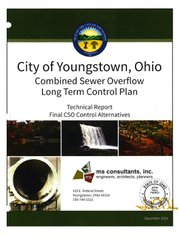
 Document
City of Youngstown's Combined Sewer Overflow Long Term Control Plan in response to the sanitary sewer overflow at Mill Creek MetroParks.
Ohio EPA IPIR for Mill Creek
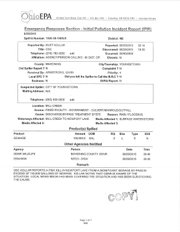 Document
Initial Pollution Incident Report regarding the sanitary sewer overflow at Mill Creek MetroParks.
YOUNGSTOWN
The city’s fish-killing sewage discharge into Lake Newport exceeded 100,000 gallons, according to an initial report by an Ohio Environmental Protection Agency emergency responder.
While the incident – and the smell that resulted – has some parkgoers upset, Youngstown Mayor John A. McNally said the latest fish kill won’t change the city’s schedule on a $48 million project to keep wastewater from flowing into Mill Creek.
The design work is to start July 11, 2020, with “substantial completion” by Dec. 3, 2033, he said.
“This is probably an unfortunate event,” McNally said. “You have discharge and storm water runoff in general. It’s unfortunate, but situations like this won’t be rectified for years down the road.”
But Ohio Senate Minority Leader Joe Schiavoni of Boardman, D-33rd, said Youngstown’s system, which dates back to 1913, of using Mill Creek’s lakes as overflow for its sewage is “outdated.”
A sewer put through the park in 1913 demoralized Volney Rogers, who had founded the park in 1891.
As predicted by Rogers, diminished water quality forced an end to swimming in park lakes.
“You see the result of it,” Schiavoni said. “It’s going to happen again and again not just here but throughout the state. We need to make investments at the state level in these projects.”
LATEST OVERFLOW
The initial pollution incident report came from Kurt Kollar, an OEPA on-scene coordinator.
Kollar said his agency was notified of the dead fish in the Mill Creek MetroParks lake by a state wildlife officer, who reported “a vast number of larger-sized dead fish in the lake,” which appeared to have been “dead for two days based on decomposition.”
Kollar’s report went via a June 29 email to a host of state environmental officials.
“Other fish in the lake were stressed and near surface, gasping for air. Smaller fish did not appear impacted,” Kollar reported, adding that parts of the lake were discolored dark or black.
Because the fish kill primarily affected larger fish, Kollar said he suspected a sewage discharge that had depleted the dissolved oxygen required for fish survival, rather than a chemical or oil field waste spill.
“It was later confirmed that a sanitary sewer overflow discharged into the main body of the lake, and officials believed hundreds of thousands of gallons of sewage may have been discharged into the lake over the weekend,” Kollar reported.
CITY SEWER PLANS
The city reached an agreement with the OEPA and the federal EPA in late 2014 that calls for $146 million in improvements over 20 years to its wastewater system, including a $48 million interceptor to keep wastewater from flowing into Mill Creek.
Despite the OEPA report, McNally said there is no reason to move up the date of the project to stop the overflow of wastewater into Mill Creek.
“The schedule we have with the EPA is the schedule we’re sticking with,” he said. “The EPA can live with it and I can live with it. It’s a schedule we’ve all agreed upon and it’s financial. That money isn’t around now. It will be paid with sewer fees. The residents have to pay for it, and they can’t afford it now.”
McNally said, “Our health and safety folks have said there’s no harm to use the water ways, and don’t eat what you catch in the lake for now.”
The EPA originally ordered the city in 2002 to spend $310 million on improvements to its wastewater system. Because of the high cost, the city entered into negotiations with the EPA from 2003 to 2011 to lower that figure while making $5 million worth of improvements to its wastewater system. In April 2011, the federal EPA acknowledged it wouldn’t seek the $310 million because city residents couldn’t afford it. Youngstown is increasing its sewer rate by 17 percent over the next four years to help pay for the improvements, and increased it by 40 percent between October 2002 and January 2006.
GOVERNMENT CONCERNS
The state adopted a plan in March 1995 to eliminate or relocate combined sewer systems from “state resource waters,” including Mill Creek, according to a study by MS Consultants Inc. in December 2014 for the city.
That study also includes an April 12, 2011, letter from Reginald A. Pallesen, the federal EPA’s associate regional counsel, to Charles Shasho, deputy director of the city’s public-works department, that eliminating the combined sewer system into Mill Creek was a top priority that would be part of the “first eight-year phase of” the city’s long-term plan.
In an April 11, 2012, letter to then Law Director Anthony Farris, Pallesen said the city’s plan contained “a number of deficiencies and omissions.” He specifically mentioned that the city’s plan at the time to finish the Mill Creek project by 2025, and wrote that “it appears the city is not fully committed to completing the entire Mill Creek” project.
He later wrote: “The failure to complete the entire Mill Creek” project “is unacceptable,” and that the issue “has long been the subject of discussions between the city, USEPA and the Ohio EPA. The city must commit” to “implementing and completing” the Mill Creek project on a fixed schedule.
Acknowledging Mill Creek is a “jewel of the area,” McNally said, “Issues like this don’t take away from that. We’re not going to change the agreed-upon schedule because of this issue.”
The mayor said he’d like state and/or federal financial help, but it’s not coming.
“We’re not going to magically get a check for $146 million or anything close to that,” McNally said.
OFFICIALS REACT
U.S. Rep. Tim Ryan of Howland, D-13th, said, “I am greatly concerned about this issue and will work closely with park authorities to ensure that Mill Creek Park remains one of the premier assets in the Mahoning Valley. The federal government needs to provide assistance that can help cities and parks to update sanitary sewers and keep contaminated water out of our rivers and park waterways. Unfortunately, we have pulled back from making these much-needed investments.”
Schiavoni agreed, saying the state “has to play a bigger role to provide funds to cities to address infrastructure issues. We need to make the investment in local governments. We’re not getting money into infrastructure projects like this that are desperately needed. It’s vitally important to the success of our cities and our state.”
Aaron Young, the Metro-Parks executive director, said he has spoken to McNally about the issue, adding the city should invest in upgraded infrastructure.
“They need to work toward that. They need to dedicate resources toward that,” he said. “We have to reinvest in ourselves and we have to reinvest in our infrastructure.”
“As far as the sewage being dumped into the waters, it’s fair to say that it’s a less-than-an-ideal situation,” Young said. “The unfortunate part of the situation is the system has been set up like this for many, many decades. The success or challenges that we experience in [lakes] Newport, Cohasset and ultimately Glacier are affected by all the things that run into those waters.”
The lakes’ water quality “is directly affected by the actions taken by the city to address their aging and antiquated system,” he said.
OEPA REPORT
On June 30 and again on Monday, the city measured between 3.52 and 7.23 milligrams of dissolved oxygen per liter of lake water.
In his Monday report to Allison Cycyk, an OEPA environmental engineer, Thomas Mirante, city wastewater superintendent, identified a city sewer outfall with an OEPA discharge permit, which is located off Glenmere Drive on the west side of the lake.
In an email to Ryan Tekac, environment health director at the Mahoning County Board of Health, Cycyk said the minimum OEPA water-quality standard for dissolved oxygen is 6.0 milligrams per liter of water.
She also reported that dissolved oxygen is normally low in shallow water areas, such as the wetlands at the south end of Lake Newport.
Tekac explained the sewage promotes the growth of bacteria that consume the dissolved oxygen needed by fish.
Cycyk said park officials reported large amounts of geese droppings are “not helping the situation” with regard to dissolved oxygen in the water.
In a controversial move a year ago, 238 Mill Creek Park geese were euthanized at the request of park officials.
The rainy summer poses a continued threat for the park’s tributaries, officials said.
“It’s not likely that there will be additional fish killed, but, when you have unstable weather conditions, it can happen again,” said Patricia Sweeney, county health commissioner. “This has been an incredibly wet period.”
Besides the city’s sewer overflows, runoff of farm and lawn fertilizers and bird and dog excrement during heavy rains also contributes to dissolved oxygen depletion in waterways, Sweeney said.
Although it’s unpleasant and disturbing to fish and wildlife, Sweeney said she does not believe the fish kill in Lake Newport is a public health threat.
Contributor: Jordyn Grzelewski, staff writer.