 43
43

Grandma’s garden
 Photo
Photo
A row of newly wetted bleeding heart flowers.
By Eric Barrett
OSU Extension educator
Grandma’s garden was always a happy place to be during the summer months. The thought of it brings up wonderful memories and great experiences.
This time of year is a great time to plan something similar to Grandma’s perennial garden in your own yard. You can plant some old-fashioned, easy-care herbaceous perennials to remind you of yesteryear.
If you have photos, this is a great way to get started on the path to matching some or many of the plants your own grandma grew. You’ll be surprised how many family pictures have plants and flowers in the background. Grandma might have kept a gardening journal or other notes about her garden. Just ask, you may be surprised what you can find.
Perennials are wonderful plants. They don’t need to be replanted each year. Saving seed is not necessary. You can divide them to get more. There are thousands and thousands to choose from and from these thousands, you can get blooms from March through October.
Although you may want to duplicate Grandma’s garden in detail, you might wish to choose some hybrids or look-alike plants for your new garden. Many of these have longer-lasting blooms, are more tolerant of diseases and can be more compact. Once you have a list of the plants, you can make decisions on what new-and-improved varieties will look like her garden, but require less effort on your part.
The site should be sunny with well-drained soil, although there are many shade-loving plants Grandma probably grew in a separate area. You may need to amend the soil or raise the soil to keep the plants’ roots up out of water in our heavy clay soils. Perennial gardens should be planted in masses. Select an odd number of plants, grouping them for the best effect. Pay attention to plant tags for spacing requirements.
Here are a few plants Grandma might have grown:
Iris germanica (Bearded iris): The rhizomes are barely covered with soil. Deep-planting iris will grow, but rarely bloom and are more susceptible to soft rot and iris borer. Fertilize in spring. Divide clumps when they’re crowded and flowering poorly (July-August.) Cut fans to one-third for root care.
Paeonia lactiflora: Peony plants prefers sun (not shade) Soils must be well-drained. Barely cover the eyes (less than 2 inches) on tuber. Cold treatment is needed to bloom well, so spring-planted plants will not flower until second year. Support plants with wire frame in mid-April to support rain-soaked blooms in May-June. Once established, leave alone. Divide with at least three eyes in September.
Aquilegia Canadensis (columbine): American columbine is easy to grow and native to North America. It has been used in breeding programs for garden varieties. Flowers are produced in the spring or early summer. Flower stalks may need staking.
Hemerocallis (Daylilies): They grow best in full sun or partial shade. Although minimal care is needed, plants will have more blooms of superior quality if grown in soil with ample humus, such as compost, bark mulch or manure. Fertilize in spring and water regularly while actively growing.
Dicentra spectabilis (bleeding heart): This is a touchy plant that prefers fertile, light soils in sun or light shade and ample water in spring/early summer. Mulching keeps soil moisture consistent. Once foliage dies down, clip to ground. Do not expose to strong wind. Take 3-inch root cuttings from large roots after flowering or from young shoots in early spring. Roots are brittle, so use caution.
Monarda didyma (bee balm/Oswego tea, bergamot): A member of the mint family with aromatic foliage and shaggy flowers. Attractive to hummingbirds and good cut flowers. Cut back after blooming to obtain second flowering. Full sun to partial shade and in any moist soil. Hollow, dead centers need to be divided. Powdery mildew? Divide for air flow or pinch lower leaves.
Stachys byzantina (Lamb’s ears): Woolly betony is grown for its woolly, gray foliage. Flowers are produced from mid- to late summer and are scraggly. Grows best in a sunny site that has well-drained soil. Divide in early spring or fall.
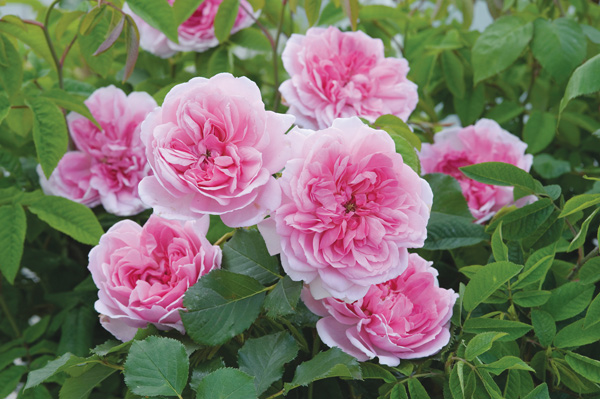
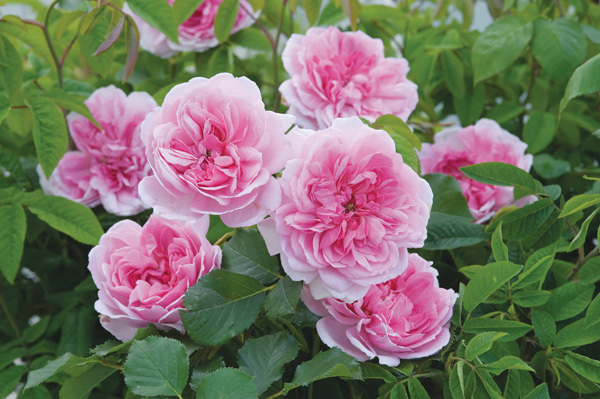
Rosa (climbing roses of many varieties, usually yellow or red): Just be sure to provide support and air flow for control of disease.
Althaea rosea (hollyhock): A self-seeding biennial. The 5 to 8 feet of flowers add great interest to the garden. Keep in full sun. Staking may be needed in most cases.
Make this a fun project for 2015 so you can share your love of gardening with the next generation.
To learn more about gardening with perennials, visit http://go.osu.edu/perennials.