 43
43

Oil prices are on roller-coaster ride
 Photo
Photo
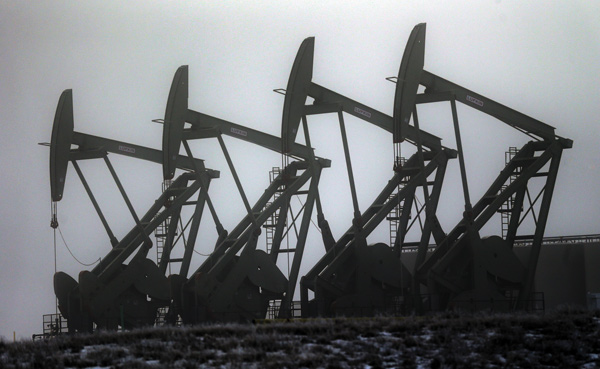
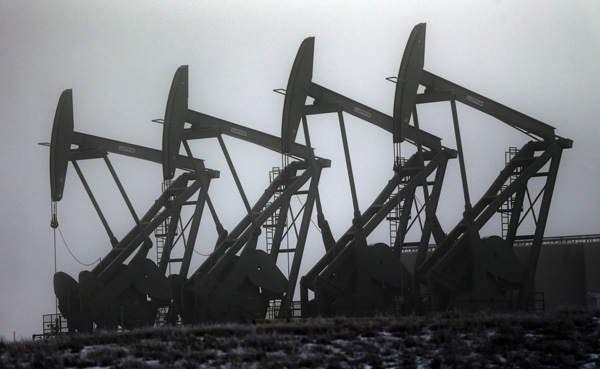
Oil-pump jacks work in unison in Williston, N.D. After falling nearly 60 percent from a peak last June, the price of oil has bounced back 19 percent since late January.
Associated Press
NEW YORK
The price of oil is on a wild ride, and there is little agreement on where it’s headed.
After falling nearly 60 percent from a peak last June, the price of oil bounced back more than 20 percent as January turned to February. Then, on Tuesday, it sunk 5 percent, closing just above $50. Oil has fallen or risen by 3 percent or more on 14 of 27 trading days so far this year. By comparison, the stock market hasn’t had a move that big in more than three years.
Predicting prices is especially tricky now because the oil market has never quite looked like this. Oil-price collapses of the past were triggered either by plummeting demand or an increase in supplies. This latest one had both. Production in the U.S. and elsewhere has been rising, while slower economic growth in China and weak economies in Europe and Japan means demand for oil isn’t growing as much as expected.
As recent trading shows, any sign of reduced production inspires traders to buy oil, and every new sign of rising supplies sends prices lower. In a report Tuesday, the U.S. Energy Department, citing unusual uncertainty, said the price of oil could end up anywhere from $32 to $108 by December.
“There are many more laps to come on this roller coaster,” said Judith Dwarkin, chief economist at ITG Investment Research.
As oil bounces up and down, so will the price of gasoline, diesel and other fuels. Almost no one expects a return to the very high prices of the past four years, so drivers and shippers will continue to pay lower prices. It’s a question of how much less, and for how long.
Those expecting a quick and lasting price jump see mounting evidence that drillers in the U.S. are pulling back fast because they’re no longer making money. A closely watched survey by the oil-services company Baker Hughes shows that the number of rigs actively drilling for oil fell to 1,140 last week, down 29 percent from a record high of 1,609 in October.
Oil companies have announced spending cuts in the billions of dollars; oil-service companies have announced layoffs of thousands of workers.
If companies stop drilling new wells in North Dakota and Texas, the centers of the U.S. oil boom, overall U.S. production could fall fast. Output from most of those wells declines far more quickly than production from more-traditional wells. Analysts at Bernstein Research estimate that U.S. production declines at 30 percent a year without constant investment in new wells.