 43
43

A growing number of tri-county food bank recipients are working poor
 Photo
Photo
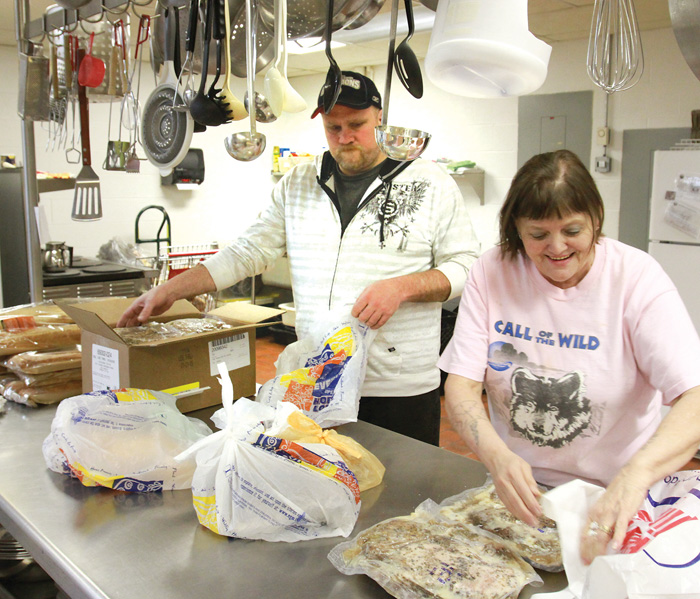
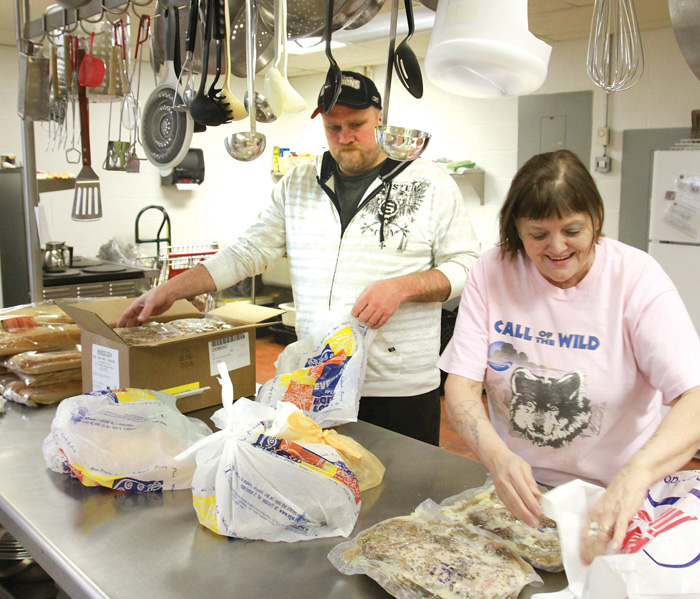
Volunteers Tim Wilson of Vienna and Sharon Steed of Warren sort frozen foods during a food give away at Pleasant Valley Church in Liberty.
YOUNGSTOWN
The working poor are the fastest-growing group of people in the tri-county area that helped make 2014 a food-distribution record breaker for Second Harvest Food Bank of the Mahoning Valley.
Last year, Second Harvest distributed 9.5 million pounds, the equivalent of more than 6.3 million meals, to people in Columbiana, Mahoning and Trumbull counties, said Michael Iberis, Second Harvest executive director.
It was the fourth consecutive year the food bank distributed more than 9 million pounds of food to its network of 153 food agencies, increasing distribution by 368,000 pounds over 2013.
“We are pleased with our efforts to meet the need, but saddened that the need is so great,” Iberis said.
The increased need among the working poor with limited ways to improve their finances is a result of the local and national economy lacking jobs to provide a decent living, he said.
“That is the pattern right now. Most will continue to work at low-paying jobs, if they have a job at all, and many of the jobs are part-time, meaning they have to work two jobs to make a living wage,” Iberis said.
Despite a slight upswing in the local economy, the Mahoning Valley’s poverty rate remains above the national average, he said.
Iberis noted another group in particular need are young couples, often with young children, who either can’t find work, have lost their jobs or had their hours cut and can’t make ends meet.
“I would say the local trend, which matches the national trend, is people having to turn to food banks regularly, not just on an emergency basis,” Iberis said.
Last year, Second Harvest’s 153 member agencies fed an average of more than 15,000 people each week.
“Unfortunately, we don’t see a lot on the horizon to give us hope that there will be fewer hungry people in 2015, but we are grateful so many donors and volunteers support our efforts” he said.
In 2014, Second Harvest increased distribution not only through member agencies but by expanding the BackPack Program, which provides food to school children for the weekend, and the Mobile Pantry Program, which takes food to outlying areas without pantries or other sources of food assistance.
Second Harvest is continually looking at ways to get more food to more people more efficiently by not only cultivating new agencies in outlying and underserved areas, but also providing immediate food assistance through the mobile pantry program.
Also, Iberis said, the food bank is committed to providing hungry children, seniors, veterans and families in the Valley with more nutritious foods, such as fresh fruits and vegetables.
In addition, individuals, groups and organizations conduct food and money drives for Second Harvest. The food bank relies on the financial support of donors. For every $1 given, the food bank distributes $15 worth of food, which is equivalent to six meals.
Second Harvest is a storehouse for large quantities of donated food and U.S. Department of Agriculture commodities that are distributed to hunger-relief organizations in the tri-county area that include church pantries, homeless shelters and soup kitchens, shelters for battered women, and after-school programs.
“Our ability to distribute more food is, in no small part, due to the donors who give so generously, the thousands of volunteers who come each week, food donors who give on a regular basis, the support we receive from the businesses that conduct food drives and fundraisers throughout the year, and the numerous in-kind donors who maintain our vehicles, provide gasoline for our trucks and publish our newsletter,” said Iberis.
In 1994, Second Harvest became a certified member of Feeding America, the nation’s largest domestic hunger-relief organization. As a member of Feeding America, it is the designated recipient of national food donors and retailers. The Food Bank also gets food donations from local companies such as Giant Eagle and Sparkle Markets, as well as through food drives and campaigns such as Harvest for Hunger, Iberis said.