 43
43

Our rainy June + hot, humid July & August = Mosquitoes GALORE
By Bill Snyder
Mahoning master gardener volunteer
With all of the rain that we experienced in June, combined with the elevated temperatures of July and August, we are experiencing an abundance of mosquitoes this summer.
It is well-established that high rainfall totals and warm temperatures favor mosquito development. It is clear that the summer of 2015 will produce a bumper crop of these insect bloodsuckers.
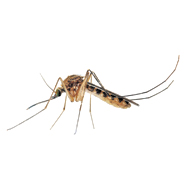
Mosquitoes are small, long-legged aquatic flies. The males have antennae that are featherlike, while the females’ antennae have only a few short hairs. The males (and occasionally females) feed on nectar and other plant liquids, while only the females require blood meals. Adult females require blood to produce viable eggs.
The eggs are laid on the surface of standing water or in places where water is likely to accumulate. Mosquito eggs are laid either singly or together in a raftlike structure that floats on water.
The hatched larvae (wigglers) remain at the water surface and feed on algae and organic debris, while breathing at the surface usually through a breathing tube at the posterior end. In general, there will be four larval stages with growth and molting in between. Larvae reach full growth in about a week. The pupal stage lasts about three days. Pupae are also aquatic, breathing at the surface. Unlike most insect pupae, the mosquito pupae are quite active (often called tumblers).
Adult female mosquitoes are ready for a blood meal one to two days after emergence. These females are usually active during the twilight hours or at night, spending the day in protected areas. This time frame is contrary to the myth that high-flying, day-feeding purple martins will have any effect on the mosquito population.
While feeding, the females inject a fluid containing anticoagulants, preventing the host blood from clotting. Because mosquitoes take numerous blood meals from multiple hosts, they can acquire disease organisms from an infected host and later transmit it to a previously uninfected host.
Control of mosquitoes can be successful with a number of different tactics. First, a large mosquito population can be avoided by eliminating breeding sites. The elimination of standing water is critical because the eggs do not hatch unless they are in water. An extensive list of likely containers are listed at http://go.osu.edu/mosquitos.
Standing water that cannot be eliminated like wading pools and bird baths should have the water changed once or twice a week. Stored water (for example for garden use) can be treated with larvicides to prevent development of adult mosquitoes. See http://go.osu.edu/mosquitolarvae.
Repellents containing DEET applied to skin and clothing will prevent bites from one to five hours. Mosquito traps that produce carbon dioxide and release other attractants are effective, but may attract replacement populations so that the numbers will be comparable to those observed without the attracting devise. A recent report from Consumer Reports tested repellents, finding that a simple fan can be one of the best options you use!
For further information, see: http://go.osu.edu/controls.