 43
43

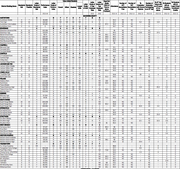
State report card: Youngstown struggling, Canfield excelling
By DENISE DICK
denise_dick@vindy.com
YOUNGSTOWN
 Document

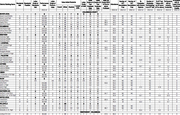
Youngstown City Schools’ latest state report card is a parent’s nightmare with all D’s and F’s, but Superintendent Connie Hathorn contends the letter grades don’t show the district’s growth.
Canfield, on the other hand, is a parent’s dream with seven A’s, a B and a C. It’s the only Mahoning County school district, and only one of two in the Mahoning Valley, to earn an A in the performance-index area, the measure of student performance on the Ohio Graduation Test and Ohio Achievement Assessment. Trumbull County’s Maplewood is the other district.
Other Mahoning Valley districts are somewhere in between.
“We continue to be an F district and I’m not happy about that,” Hathorn said. “But we’re going in the right direction.”
The district’s performance index continues to increase, rising from 76.9 last year to 77.7 this year.
“We’re going in the right direction toward being an A/B school district,” Hathorn said.
The district also saw growth in the gap-closing, or annual measurable objectives, category. This gauges proficiency of students in 10 subgroups in different subject areas. The subgroups are: all students, economically disadvantaged, Asian/Pacific Islander, African-American, American Indian or Alaskan Native, Hispanic, multiracial, white, special needs and limited English proficiency.
Districts must have at least 30 students in each subgroup to receive a score. Youngstown has sufficient population in all subgroups except American Indian/Alaskan Native and Asian/Pacific Islander.
The district saw gains in reading in most subgroups with some growth and some losses in math.
CANFIELD
Canfield Superintendent Alex Geordan said that district focused on areas that needed improvement and he’s happy with the results.
“We’ve got wonderful families sending us some great kids, and we have great teachers who delved into the data,” Geordan said.
District staff focused particularly on special-needs and gifted students to generate improvement.
“We made a special effort to embed it in the curriculum and the kids responded,” Geordan said.
He said the district plans to continue those efforts this school year and also will focus attention on students who don’t fall into the special-needs category but are considered borderline because they fall into the lowest 20 percent in performance.
STATE’S VIEW
Richard Ross, state superintendent of public instruction, said in a news release that some districts’ grades were lower in some categories “because Ohio has raised the bar.”
One example is the Performance Indicators Met category, which measures the number of students who are proficient on state tests. Last year, the standard to meet proficiency was 75 percent. This year, that mark increased to 80 percent. There are 24 total indicators.
“The goal is to continually challenge the 1.6 million girls and boys in Ohio’s classrooms and make sure they are prepared to succeed as they complete school and graduate to college and careers,” Ross said.
The report cards include grades in nine categories. Overall grades for districts and buildings won’t be given until 2016.
New this year is the K-3 Literacy category that tracks students who are reading below grade level from the beginning of the school year to determine if they improve. Grades for this measure have not been calculated.
Also new is the Prepared for Success category, but no grade is assessed for that data yet. It lists students from last year including ACT and SAT scores, numbers who earn honors diplomas, Advanced Placement exam performance and other information.
AUSTINTOWN
Austintown racked up three B’s, one C, one D and four F’s.
Superintendent Vince Colaluca points out that larger districts such as Austintown have students in each of the subgroups, meaning those districts are scored on the performance of those students as well as the rest of the student population. Smaller districts likely don’t have students in most of those groups.
Still, Colaluca said he’s not making excuses.
“We’ll continue to grow academically,” he said. “We’re never satisfied with where we’re at.”
The district realized growth in middle-school scores.
School employees continue to review data to determine those students who need help and in what areas, the superintendent said.
BOARDMAN
Boardman schools scored three A’s, three B’s, two C’s and a D on the latest report card with the low score in the value-added, disabled category.
GIRARD
Girard schools scored five A’s, two B’s and two C’s on the latest report card, and some grades include substantial increases compared with last year.
The value-added, overall measure, which shows whether a district met a year’s growth for all students, jumped from an F last year to an A this year. And value-added for gifted, which measures whether the district met a year’s growth for gifted students, rose from an F to a C. The annual measurable objectives, which measure academic performance in reading, math and graduation rates among specific racial and demographic subgroups, increased from a D last year to an A this year in Girard schools.
“The energy was there and the focus was there. We just did a little bit more and worked hard,” said Superintendent David Cappuzello. “I’m so proud of the staff.”
The district refocused on students identified as gifted and plans to continue those efforts, hoping to see a B or an A on next year’s report card, the superintendent said.
HUBBARD
Hubbard Exempted Village Schools logged one A, three B’s, four C’s and an F on the report card.
“District administrators and teachers are going to develop a plan and strategies for improvement,” said Superintendent Raymond Soloman.
The district receives support from the school board, community and families, he said.
“We have some areas we did very well in and some areas we’re going to continue to work on as well,” the superintendent said.
LIBERTY
Liberty’s report card is a mixed bag, too, with two A’s, one B, four C’s, a D and an F.
“Parts of it I’m really happy with; other parts, not so much,” said Superintendent Stan Watson.
The district’s four-year graduation rate rose from a D to a C between last year and this year while the five-year graduation rate dropped from a B to a C.
Watson attributes that to the district’s transient population and determining if students remain in the district throughout their high-school careers.
“I attribute that to more of an accounting and an attendance issue than an academic issue,” he said.
POLAND
Poland earned five A’s, two B’s and two D’s with the low scores for value-added, disabled, and value-added, lowest 20 percent in performance.
SOUTH RANGE
South Range scored three A’s, three B’s and three C’s in its latest school report card.
“We did a good job on achievement,” said Superintendent Dennis Dunham.
The C’s were in value-added, overall; disabled and lowest 20 percent in performance.
Dunham said the district plans to continue to work on the areas that need improvement.
“Overall we’re definitely making strides,” he said.