 43
43

American chestnut, a mighty heritage

 Photo
Photo
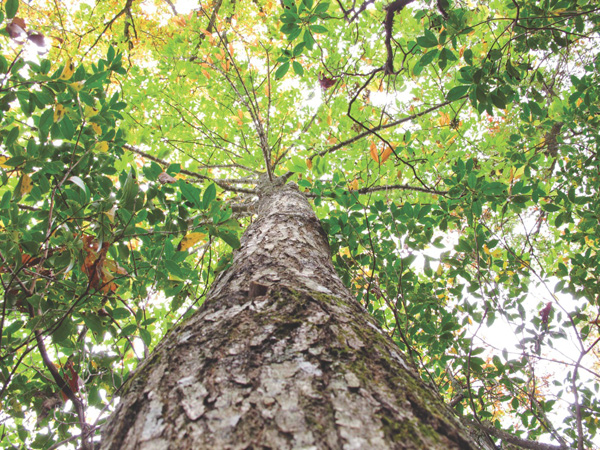
An American chestnut tree on Traylor Renfro’s mountaintop retreat in Grassy Creek, N.C.
By STEPHANIE HUGHES
Ohio Certified Volunteer Naturalist
CANFIELD
I had the honor of confirming that the sample was indeed from an American chestnut tree.
I was thrilled, so I continued to study this great tree. In the late 1800s, imagine a forest filled with many trees, mostly chestnuts. So many animals and people benefited from the nuts — deer, turkeys, bears, birds, small animals, insects and other invertebrates.
The “chestnuts roasting on an open fire” were the fruit of this tree. Passenger pigeons, once in the millions, ate these nuts, took refuge in the boughs of the tree, and many other species of plants and animals were renewed by the leaves.
They return more nutrients to the water and soil than they take — nitrogen, phosphorus, potassium, to mention a few. The hardwood was used extensively, as the grain is straight and easy to work with. The trees grow fast, replenishing the stock. Tannins were used to make leather, as well as to protect the wood.
The nuts were so prolific in the woods, people used shovels to gather them. In the forests, one of every four trees was the American chestnut, growing to 98 feet tall and 10 feet in diameter. This species was common to our area.
Then, by 1904, a blight from Asia wiped out almost every tree. Some say it is what hastened the demise of the passenger pigeon as well.
Today, people are working hard to find a way to bring them back — from cross-breeding to improving strains — to make a resistant species, as the blight is everywhere (oaks play host for it). A nut will sprout, grow to five years, then wither and die.
In 2007, a stand of trees was found in Braceville, and in 2008 one was found in an obscure location in a marsh by Lake Erie. In other states there are a few, as well as sprouts from dead stumps. A far cry from the massive numbers — up to 4 billion — a 100 years ago.
Hope is on the way due to organizations’ pledging to reintroduce this once-majestic species to our area. I will plant the nuts brought into the office with the hope that it is a resistant species. I feel confident the tree is resistant to the blight because the owner says it is a large, mature tree.
As you enjoy chestnuts this holiday season, consider planting one for your family to enjoy. Join the effort to bring back the American chestnut.
To read more about this great tree and to join the effort, go to: http://go.osu.edu/chestnut .