 43
43

Report: State of farming in Ohio above the curve
 Photo
Photo
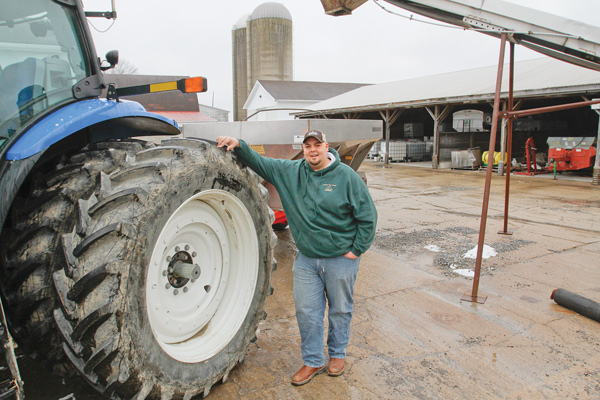
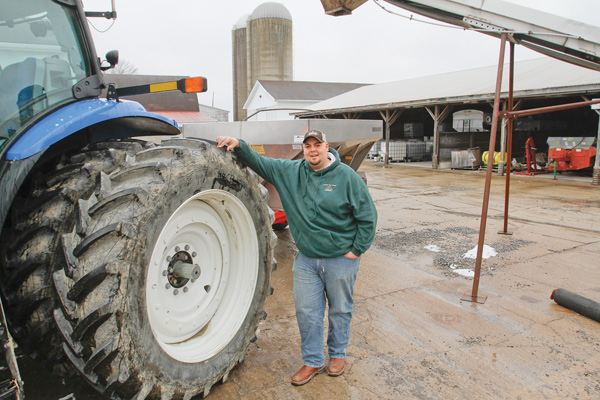
Wayne Greier, owner of Greier Ag Center, gets a fertilizer spreader ready as he prepares to start the year.
YOUNGSTOWN
Data from the 2012 Census of Agriculture show that the state of farming in Ohio was strong, as the industry began to move into a more-turbulent period than the previous five years.
The preliminary report, released last month, is the most recent and comprehensive snapshot we have of the agriculture industry, both in Ohio and the nation. It reflects information collected as a complete count of America’s farms and ranches and those who operate them.
A final version of the report is set to be released in May.
According to the data, Ohio ranks seventh in the nation with 75,462 farms. Though that number is down a slight 0.5 percent from the last census in 2007, it exceeds the pace of U.S. farm growth, which dropped 4.3 percent in five years.
Over that time, Ohio agriculture has benefited from a steep rise in crop values, which outpaced a national increase.
According to the Ohio Department of Agriculture, the value of the state’s crops and livestock has jumped by 42.3 percent, compared with a 32.8 percent bump nationally. That ranks Ohio 13th nationally, with the total value of crops and livestock just over $10 billion in 2012.
But crop prices — most notably for corn and grains — have started to fall since the 2012 snapshot as a result of international competition and cyclical pressures.
“It was a good five years, but we are well on the off side of that cycle where prices are heading down,” said Joe Cornely, spokesman for the Ohio Farm Bureau Federation.
Wayne Greier, a third-generation farmer and owner of Greier Ag Center Inc. in Canfield, said the sting would be felt by farmers across the country in the short run, but growing populations both domestically and abroad should drive up demand over time.
“It’s going to be a tough few years,” he said.
But as populations increase, the market should return to “an up-and-down cycle.”
Meanwhile, certain segments of the industry have continued to surge, with cattle prices near record highs, Cornely said.
As the U.S., as a whole, has lost 7.5 million acres since the 2007 census, Ohio has managed to add 4,000 acres of farms in five years, bringing its total in 2012 to more than 13.96 million acres.
Andy Londo, assistant director of agriculture and natural resources at Ohio State University Extension, said acres have held strong because they are being passed on within families.
More importantly, younger generations are staying in agriculture, and the property is generally not being sold off or subdivided.
That was true for Greier, who has expanded his father’s business and now farms about 1,000 acres at Green Gate Farms on the same site as the Ag Center on Columbiana-Canfield Road.
Though high costs for land and equipment make it hard for new farmers to break into the business, more-established operations with lots of land and high yields have done well, particularly in recent years, he said.
Ohio’s $105 billion food and agriculture industry remains the largest in the state. And with one in seven jobs in the state tied to the business, farmers have significant political clout.
“Our lawmakers over the years have tended to remember the impact of the role that agriculture plays,” Cornely said.
He said legislating for the agriculture industry in Columbus and in Washington is a balancing act of negotiating taxes and regulations, environmental issues and assistance.
For example, the recently passed federal farm bill did away with direct cash payments to farmers in favor of a crop-insurance program that will become the main safety net for producers.
The U.S. Department of Agriculture still will pay for up to two-thirds of the cost of crop-insurance premiums when all the changes take effect in 2015.
It’s all part of a partnership between the public and the farmers, who often operate at high risk because of various factors that could affect yields, Cornely said.
“It’s not going to make you rich, but it’s going to keep you from going out of business,” he said.
In Ohio, lawmakers are considering a nutrient-management bill that would require anyone who fertilizes more than 50 acres to receive a license and proper training. The legislation, which has cleared the state Senate, would affect both farmers and agro-businesses that sell the fertilizer.
The bill has widespread support in the agriculture industry as a way to “protect the environment before the federal government mandates” the safeguards, Londo said.
“It’s a good thing as far as making sure we’re using the right product at the right time,” Greier said. “I want to produce the healthiest, safest food for the consumer.”
For Greier, agriculture forms the backbone of all other industry in Ohio.
Though only a relatively small portion of the population produces the goods, agriculture’s impact is felt in every corner of life in this state.
“Without agriculture, we don’t have industry,” he said. “It touches 100 percent of people.”