 43
43

Help for homeless cats
 Photo
Photo
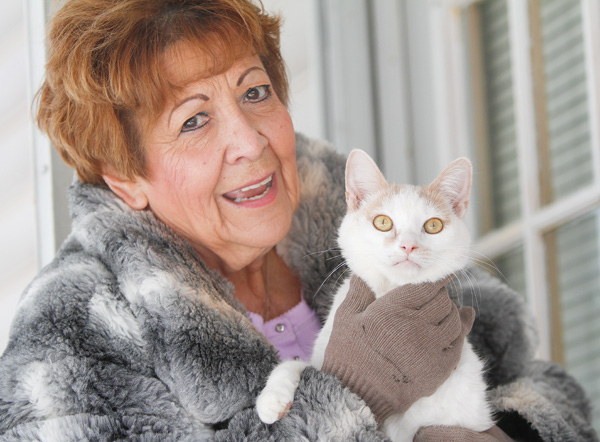
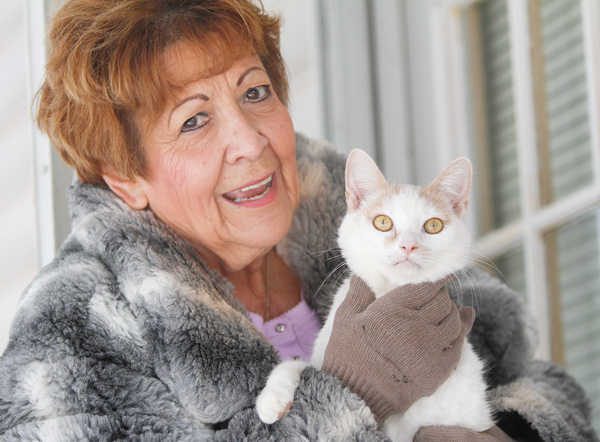
Roni Caruso, who runs Small World Animal Shelter in Girard, holds one of the 27 cats who hang out at her home in Niles.
By Jeanne Starmack
Niles
On a small side street in Niles, Roni Caruso lives with 27 friends.
Only three of them were around Thursday morning, hanging out in the yard mostly, though Jerry did venture up to the house — going in for the first time in four years.
Thursday’s temperatures were in the teens, but Jerry, Louie and Bob are outside dwellers because that’s the way they want it. Along with the rest of their feline cohorts, they come for the food and stay for the old couch in Caruso’s garage.
But food and shelter isn’t all Caruso, who runs Small World Animal Shelter in Girard, is offering her outside gang.
They are all spayed and neutered, she said.
For that, she gets help from TNR of Warren — Trap, Neuter, Release.
A core of 40 TNR volunteers keep an eye on 110 cat colonies throughout Trumbull County, said Corky Stiles, treasurer of the organization. Stiles looks after 22 cats spread among three colonies.
She monitors them constantly, she said. They are spayed and neutered, with the help of two local veterinarians and a mobile clinic that comes once every two months and sets up for two days at the Tractor Supply store on Elm Road in Warren. The cats get rabies shots. The ones that are friendly are put up for adoption, she said. The others are returned to their colonies, where they get help with their outdoor life.
Homeless cats have a hard time in winter — perhaps more so than dogs, Stiles said, because people have more sympathy for dogs.
Cats are magnets for abuse — people poison them and shoot them, and the outcry usually isn’t there for cats in harsh conditions like it is for a dog chained to a tree in below-zero temperatures. The people who tend the colonies won’t ever reveal where they are, hiding food bowls and camouflaging shelters.
“Because they seem more aloof, people don’t think the same way about cats as they do about dogs,” Stiles said.
Cats lose their body heat very quickly, and they won’t eat snow; hence, they need a water source, she said.
The mindset that they can take care of themselves because they hunt is wrong, she said, because they can’t live on what they might be able to catch.
The only way to humanely deal with what Stiles calls “community cats,” preferring that term to “stray,” is to trap them for their vet care and release them again, she asserted.
Cats reproduce very quickly, and the shelters are full.
Trapping and killing them creates “the vacuum effect,” she said — killing a colony sets the stage for a whole new one in the same place a year later.
“More cats move in because there’s no competition,” she said.
Not feeding them and hoping they’ll go away doesn’t work either, she said, because they stay and forage through garbage to survive.
Neutering, vet care, sturdy shelters and food — preferably wet for the moisture and protein, are what TNR volunteers provide, and they’ll go far afield to do it.
“We get calls from Ashtabula, Pennsylvania, Struthers, Geauga,” said Stiles.
“We encourage anyone who is feeding community cats to call us — we can help get them fixed,” she said.
The organization also helps low-income families with the costs of neutering, she said.
A nonprofit 501-c3, TNR runs on grants, donations and fundraisers, such as the upcoming Vera Bradley Bingo, which will offer designer purses as prizes. It’s set for April 1, and reservations are available at tnrofwarren.org.
Stiles urges people to spay and neuter all cats, even inside ones because escape from the house is certainly possible.
“It’s great to feed outside your door, but get the cat fixed,” she said.