 43
43

HOW INSECTS SURVIVE WINTER Staying Alive!
By BILL SNYDER
 Photo
Photo
OSU Ext. Master Gardener Volunteer
The thought of the potential elimination of Japanese beetles, emerald ash borers and stink bugs has many rooting for a harsh winter.
Insects living in our area, however have evolved to where they are incredibly prepared for surviving even the harshest of winter conditions. This is great news for the more than 99 percent of insects that are considered not harmful or even beneficial.
For those annoying few species that are considered pests, we must learn to accept their winter survival.
Some insects avoid harsh winters through migration. The monarch butterfly is a well-known example for using this survival tactic. Unlike migratory birds, insects have relatively short life spans.
Individual insects do not complete the entire migration. The monarchs migrating North in spring will be descendants of those that made the winter-avoiding trip South in autumn.
Insects that do not migrate must find a way to avoid freezing temperatures or develop a tolerance to harsh winter conditions.
Tactics have been observed for winter survival that do not involve migration. These survival strategies can be expressed during any of the insect’s developmental stages — egg, larva, pupa, nymph or adult.
The simplest tactic involves finding a location where there is shelter from temperature extremes. Adult native lady beetles form aggregate groups in firewood piles or under the bark of fallen trees. Multicolored Asian lady beetles locate their masses of adults inside our homes and await spring.
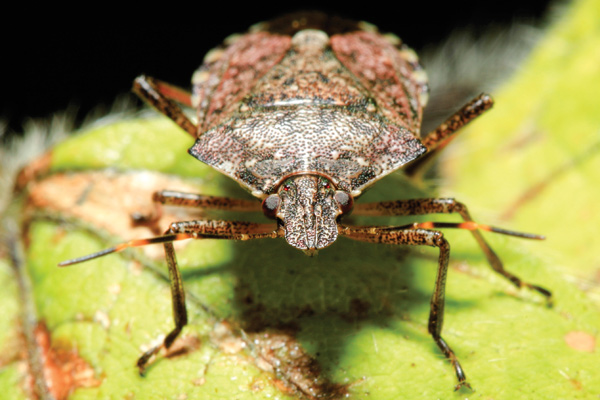
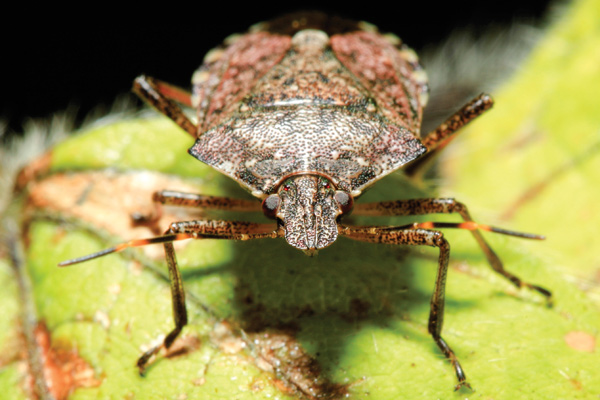
Japanese beetles winter deep in the soil in their larval stage as grubs, while the emerald ash borer survives in a pre-pupal stage protected by the ash tree bark. Brown marmorated stink bugs overwinter as adults in protected areas such as our homes, garages and outbuildings.
An important strategy for insect survival at freezing temperatures involves going dormant during winter. For insects, this is referred to as entering a state of diapause. Insect diapause is genetically controlled and turned on and off by environmental conditions such as temperature and length of day.
Because insects cannot produce their own body heat, they tend to protect against extreme cold by two methods, one by avoiding freezing and the second by controlling freezing.
Many insects can produce antifreezelike molecules to allow their internal temperature to become very cold but without freezing. This is similar to placing antifreeze in a car radiator to avoid ice formation.
Another strategy used in the insect world is not to avoid freezing but to control the production of ice. Many insects are able to produce proteins, which act as centers for freezing water. The presence of these proteins can control the freezing process and avoid cell destruction.
Insects are able to survive cold winter temperatures best when temperatures remain stable. Large temperature variations leading to freeze-thaw cycles can disrupt the insect’s winter- weather defense system.
In summary, nature has provided insects with too many effective strategies to combat severe winter temperatures. For information, http://go.osu.edu/antifreeze.