 43
43

WIVES’ TALES
 Photo
Photo
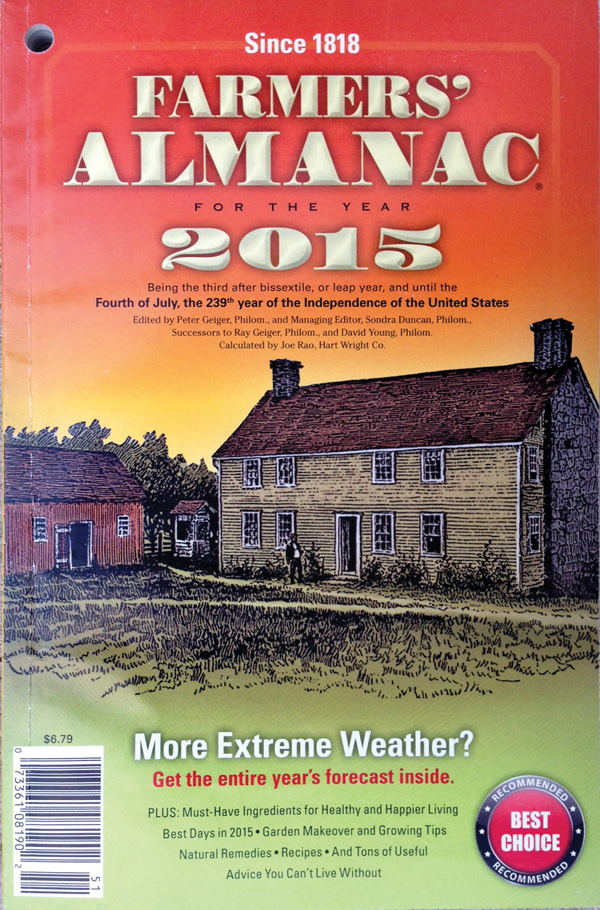
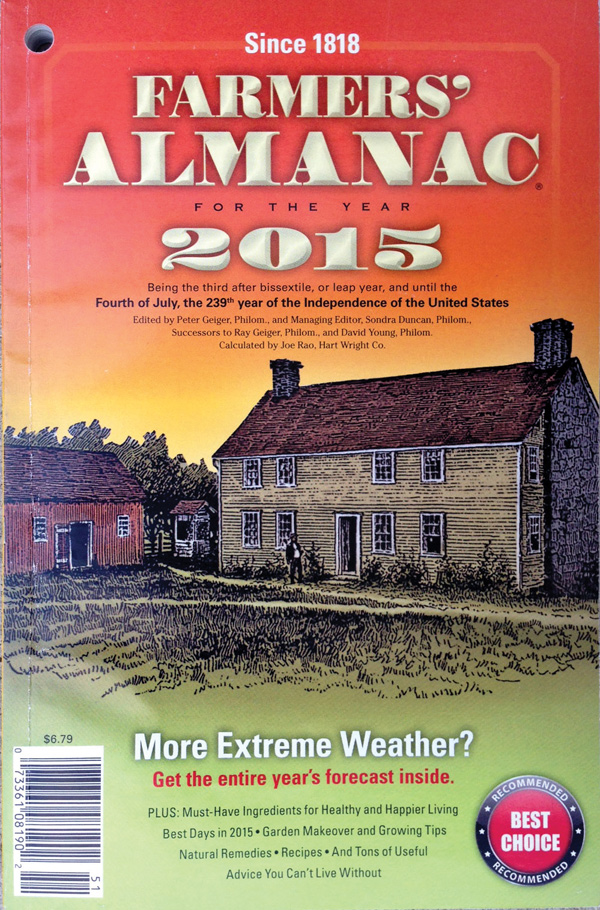
The 2015 edition of the Farmers’ Almanac.
POPULAR GARDENING FOLKLORE
WIVES’ TALES
By ERIC BARRETT | OSU Extension Educator
CANFIELD
We are all intrigued by these stories of planting our gardens or our crops by the signs of the zodiac or the phases of the moon. But, is there any truth to this stuff?
There are many reports in which people state these methods grow the best crops ever. They keep detailed records and plant only at the appropriate time.
But, there are very few reports of farmers using astrological or moon phases in their crop production on any type of large scale.
Most researchers and specifically United States Department of Agriculture researchers stated in a 2003 article by National Geographic that the rewards from these practices are probably more based on the total care of the plants by a gardener who is attentive in their care of the garden.
Thus, there seems to be no scientific research to back up the claims of planting by the moon phases or astrological signs.
Or, is there?
I could find only one research project which shines some shred of scientific light on this age-old question. The research was completed by USDA-Agriculture Research Service in 1995. Although not specific to moon phases or astrological signs, it may present the reasoning behind why some gardeners believe in planting by the phase of the moon (or not).
Basically, the research found that 50 to 60 percent of weed seeds of certain species of weeds did not germinate if tillage was done in complete darkness. That is, no tractor lights and no “light of the moon” during tillage of the field. This sounds rather dangerous to me.
What gardeners should do is use their “attentive gardening skills” to do their best job planting, caring for and harvesting their plants in the coming year. But, you can still experiment, for fun or to find your ‘best practices.’
Here are some other gardening folklore tales:
The frost will come during a full moon.
A Cornell Extension Agent looked into this and tells us, “in reviewing weather records of four locations in the Northeast for the last 100 years, a full moon did not increase the chance of a frost. It was just as likely to occur when no moon was present as when the moon was full.” (go.osu.edu/moonfrost)
The truth to the folklore? If you can see the moon and stars, there are of course no clouds in the sky. Thus, heat is leaving the atmosphere and a frost is more likely – but not guaranteed. It is in fact the clouds which hold in heat, lessening the possibility of a frost.
Soap, human hair and mothballs are a sure bet.
Many people like to tell me everything they have found to work to distract wildlife. There are many scientific reasons behind why certain things really do work. Moth balls are often suggested, but this is an illegal pesticide use and most certainly ineffective. Another thing to consider is that the moth balls themselves present an attractive nuisance to both children and pets, making the garden an unsafe place for them.
The truth to the folklore? Yes, deer will stay away if they have tasted soap in their mouths or maybe because the smell of human hair sets off a natural instinct to stay away. But, how much of the garden did the deer eat until they took the first bite of soap? What happens when rain washes away the smell of the hair? How much of each should we use in the garden? You can try these, but be sure to change methods frequently to keep ahead of wildlife or just install fencing specific to the wildlife in question.
Hedge apples will eliminate spiders.
If you place these soft-ball-sized fruit of the osage orange tree (Maclura pomifer) around your home, they supposedly keep the spiders out.
The truth to the folklore? Every person living in an old house would love it if this folklore was indeed true. Toxicologists from Iowa State University did a research experiment and found that compounds from hedge apples could repel insects — but only when concentrated.
Scientists reported that natural concentrations of these compounds in hedge apples were too low to be an effective repellent. Stick with the best way to eliminate spiders and other insects: eliminate areas around your home where they will gather (weeds, wood piles) and eliminate cracks and small entry points around your home with caulking, door sweeps and screening.
So, maybe you are better off purchasing a gardening reference for your gardening friends which helps them understand the science behind plant growth or deterring wildlife. We suggest our Midwest Fruit Production Guide or similar publications which outline best-production practices. Better yet, give them a gift certificate.