 43
43

Ex-deputy testifies in hearing
 Photo
Photo
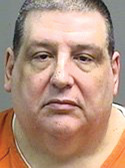
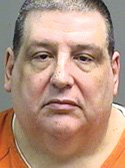
Ferrara
By Joe Gorman
Youngstown
A Mahoning County Common Pleas Court judge Wednesday allowed fingerprint evidence to be introduced in the cold-case homicide trial of James Ferrara.
Judge R. Scott Krichbaum ruled after an almost hourlong hearing in which a former deputy sheriff testified that he was present when the fingerprint evidence was collected at the South Turner Road home in Canfield Township of Benjamin Marsh, who was killed Dec. 14, 1974, along with his wife, Marilyn, and 4-year-old daughter, Heather. Their 1-year-old son, Christopher, was found unharmed by deputies when they arrived.
Ferrara, 64, was linked to the crime in 2009 by fingerprint evidence collected at the scene that night by former state Bureau of Criminal Investigation Agent Bernard Albert. Ferrara, who is serving a prison sentence for a 1983 double homicide committed in the Columbus area, was indicted this summer in the crime.
Prosecutors have not disclosed a motive. Benjamin Marsh was a security guard at the General Motors Lordstown plant when he was killed, and Ferrara worked at the plant at the same time, but he was never a suspect until his prints were matched in 2009.
Ferrara’s attorney, Tony Meranto, had asked that the fingerprint evidence be excluded because he cannot cross-examine Albert, who has since died. Under the U.S. Constitution, Ferrara has a right to cross-examine any witness against him.
Assistant Prosecutor Rebecca Doherty called former Deputy Michael Finamore to testify. Finamore left the department in 1978 and now runs a security firm in North Carolina. At the time of the Marsh murder, he had been a deputy for almost two years and testified that he had learned how to collect fingerprints through his training at the Ohio Peace Officers Training Academy. He said deputies at the time had evidence-collecting kits and cameras in their cruisers.
Finamore testified that he was called out to the crime scene about 9:30 p.m. that evening and was told when he got there that BCI would be processing the scene and he was to assist. He explained how fingerprints were collected at the time and how Albert identified fingerprints and collected them and preserved them on an evidence card and signed, initialed and dated the card.
Under cross-examining by Meranto, Finamore said that though he had training to lift prints, the decision was made by the command staff at homicide to have BCI collect evidence.
“Because a crime of that magnitude and that much evidence in that many spots in the house, that’s what BCI is for,” Finamore said.
At that time the department did not have a crime lab, Finamore said. Meranto asked, if he was trained to lift prints, why he wasn’t given the job, but Finamore said that was not his decision.
“Any deputy could have [processed the crime scene],” Finamore said. “The decision was made not to.”
However, Albert used all of his own equipment, and in case notes that were compiled after the crime scene was processed, Finamore’s name is not mentioned, he acknowledged on cross-examination.
Judge Krichbaum also asked a few questions, including whether Finamore had collected fingerprints before the Marsh case. Finamore estimated he had collected prints between 20 and 30 times before then, mostly on burglary calls, and could not recall if a print he collected was ever used in court.
Judge Krichbaum said he believed there were other ways for Meranto to attack the fingerprint evidence than by questioning the person who collected the prints. He did say his ruling was limited in the sense that it could be revisited again during the trial and it could be reversed then.
A final pretrial in the case will take place Tuesday. Jury selection is set to begin Nov. 18.