 43
43

Rabbi leads Seder at St. Patrick Church
 Photo
Photo
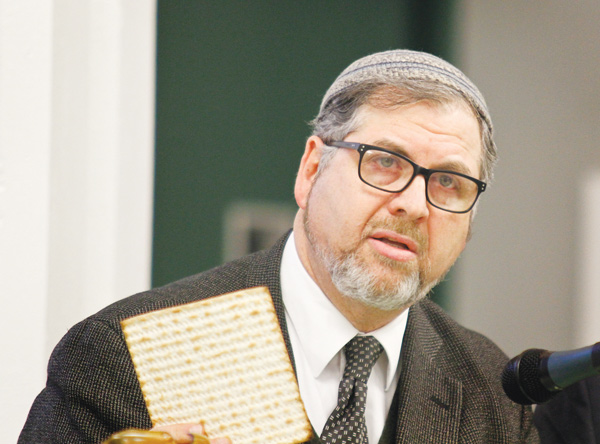
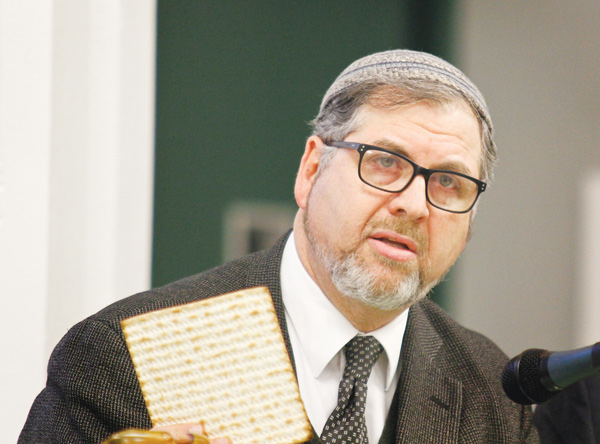
Rabbi Joseph Schonberger of Temple El Emeth in Liberty breaks the matzah during Wednesday night’s Seder at St. Patrick Church in Youngstown. The event, sponsored by Generations of Faith, was a learning experience about the ritual meal.
By LINDA M. LINONIS
YOUNGSTOWN
About 125 members and friends of St. Patrick Church shared in a real taste of a Seder as Rabbi Joseph Schonberger of Temple El Emeth in Liberty led the ritual meal.
The Generations of Faith-sponsored event was Wednesday night in the church hall on Oak Hill Avenue.
Jess McClain, a church member for more than 30 years, arranged the program with Rabbi Schonberger, a friend from Holocaust studies.
“The rabbi leading it lends authenticity,” he said. “I think when you get together like this, you see you’re not too different, and it promotes understanding.”
Mary Lou Eicher, a church member for some 35 years and a retired teacher and guidance counselor from Cardinal Mooney High School, said she suggested having a Seder some 25 years ago, and the church has had it since then. The idea came out of her world-religion class, which hosted speakers from different faiths. The late Rabbi Samuel Meyer of Temple El Emeth spoke to her students about Judaism, she recalled.
“I think it adds to your spiritual life,” she said of the event. “It recalls Jewish roots.”
The Rev. Ed Noga, pastor at St. Patrick, echoed that sentiment. “I think Christians need to be reminded of their Jewish roots. They need to remember that Jesus was a Jew.”
The priest said he believes such an event is a “way to connect” which has a “spiritual and prayerful” meaning.
Rabbi Schonberger said the Seder was a shorter version of a traditional Seder, but it included the symbolism and rituals.
“The Seder is about teaching traditions and values in community,” he said. “Those are the things we live by.”
The rabbi said the Seder involves the family and focuses on the relationship with God. It represents religious tradition in a world that is increasingly secular, and the celebratory meal promotes the value of traditions, he said.
Kris Harper, director of religious education at St. Patrick’s, said the Generations of Faith program encompasses youths to older adults.
“It’s mixing together and learning from one another,” he said.
The Seder “takes us back to Jewish roots” and gives another perspective, he said, adding that having a rabbi lead it made it more authentic.
Rabbi Schonberger said the Seder meal is designed to be a “learning experience” about Passover. The holiday recalls the Jewish people’s exodus from Egypt, where they had been enslaved.
“Seder is Hebrew for order,” he said. And the meal has its order of food, questions and songs.
The plate includes maror, bitter herbs such as horseradish that symbolize the bitterness of slavery; z’roa, a roasted bone for the lamb sacrificed to God; haroset, a mixture of apples, nuts and wine, reflecting the clay with which the Israelites made bricks for the Egyptian pharoah; hazeref, a bitter vegetable; yayin, four cups of wine or grape juice for God’s four promises of freedom to the Jews; three matzah, representing people who are not yet free, those who don’t care about others and those who work to help others be free; karpas, fresh vegetable such as celery or potato, a reminder of spring and new life; and beitsa, roasted egg, symbolizing an offering in the temple.
Debbie Lawler, who attends St. Patrick and is converting to Catholicism, said the Seder was a marvelous experience.
John and Melanie Timlin, members of St. Charles Borromeo Church in Boardman, said they wanted to learn more about the Jewish ritual because a family member converted to Judaism.
“I love the rituals. They are so meaningful,” Melanie Timlin said.