 43
43

Struthers woman finds hope in Project Walk Orlando
 Photo
Photo
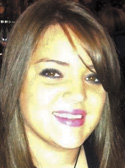
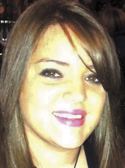
Ellen Becker
By EMMALEE C. TORISK
STRUTHERS
Ellen Becker can’t recall anything from the car accident four summers ago that left her paralyzed and almost killed her.
“The first thing I remember is extremely vague to me,” Ellen said. “I don’t remember seeing anything, but thinking in my mind, ‘If I go to sleep now, maybe this won’t be real.’”
Ellen, then 18 and a recent graduate of Struthers High School, spent the first two weeks after her August 2009 accident on life support and in a coma. Doctors told family members that Ellen would likely have the mentality of a third-grader — if she recovered at all, that is — and that she’d probably never walk again.
“Everyone was crying and sobbing,” said Lisa Becker, Ellen’s mother. “I refused to cry. I kept saying to myself, ‘You don’t know my daughter. You don’t know who you’re dealing with.’”
Today, at the age of 21, Ellen’s mental abilities have been restored. She’s able to move her arms, and is re-learning how to use her hands and fingers. And although she hasn’t yet achieved her long-term goal of being able to walk, she’s regaining core strength, balance and sensation in her legs — as well as, perhaps most importantly, her independence.
These strides are partly the result of Ellen’s own determination not to spend the rest of her life in a wheelchair, and partly the result of Project Walk Orlando, an aggressive exercise-based recovery program located in Longwood, Fla., in which Ellen has participated since 2011.
Instead of teaching patients simply how to adapt to living with a spinal-cord injury, as traditional physical therapy often does, Project Walk Orlando takes a different approach: Specialists work one-on-one with patients, moving their bodies in ways they’d move if they were walking.
The program’s objective is to help patients retrain the body’s nervous system and bring back any functions that the body remembers, said Amanda Perla, a 24-year-old patient and the daughter of Project Walk Orlando’s founder.
“It’s for people who want more out of their recovery,” Perla said. “Patients all share a common goal: They want to walk again one day. They don’t have to feel embarrassed about this goal. We’re here to restore hope.”
Ellen said she was immediately drawn to the program, even though she was also reluctant to leave behind family members and friends in Ohio. It was so different from the various types of therapy that she’d tried, where most patients were older and dealing with other issues, like hip replacements or broken legs.
At Project Walk Orlando, most patients are between the ages of 17 and 30, and they’re all paralyzed, Ellen said.
“I can relate to all of them,” she said. “We have the same mindset and focus. We want to become more independent, gain our strength back and learn new things with our bodies.”
Ellen now attends three-hour therapy sessions, three days a week, at Project Walk Orlando. She performs all exercises, like standing and stretching, without the aid of her wheelchair, Lisa said, and has grown noticeably stronger.
“She’s progressed, and is always hopeful,” Lisa said. “I want her to have her own life, and be able to live a normal life that someone her age would live. She’ll have a lot more challenges and obstacles with everything, but for her still to be able to do [those things], that’s been my goal.”
Ellen admitted she’s impatient, though. The former high school softball player who had planned to attend college on a pitching scholarship has high expectations for herself. Right now, she doesn’t know quite how long it will take until she can get ready on her own, or drive a car, or go to school — “the things that most 21-year-olds would be doing,” she said.
“I hate asking people for help, but I know there’s things I can’t do that I need help with,” Ellen said. “But I say, ‘Don’t feel bad about yourself. Keep your head up. You could’ve died, but you’re still alive. You have God to thank for that and help you get through that.’”