 43
43

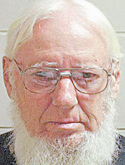
Amish man sentenced in $16.8M fraud case
 Photo
Photo
Beachy
YOUNGSTOWN
A 78-year-old man who defrauded Amish people and other investors in 29 states out of $16.8 million will spend 61/2 years in prison.
Judge Benita Y. Pearson of U.S. District Court imposed the sentence Wednesday on Monroe L. Beachy of Sugarcreek, who also is Amish.
The U.S. Bureau of Prisons will tell Beachy in 30 to 60 days when and where to report to a U.S. Marshal’s office or federal prison to begin serving his time. The prison term will be followed by a year of supervised release.
Beachy pleaded guilty in March to a single-count, mail-fraud indictment charging him with promising investors safe securities but moving money to riskier investments.
“This was fraud on a massive scale,” said Steven M. Dettelbach, U.S. attorney for the Northern District of Ohio. “This defendant took advantage of people’s trust in him and squandered the life savings of hundreds upon hundreds of families,” he added.
“It sends the appropriate message, which is that you cannot deceive people and tell them that they’re going to be realizing a gain that they’re never going to realize,” Linda H. Barr, the assistant U.S. attorney prosecuting the case, said of the sentence.
Dozens of Amish people sat on the courtroom’s spectator benches during the sentencing hearing.
Citing Beachy’s age and physical ailments, Beachy’s lawyer, J. Gerald Ingram of Boardman, called for Beachy to be sentenced to home confinement and community service.
Beachy simply wanted the investments to grow faster for the benefit of the investors, and he had no personal profit motive and “did not realize a personal gain,” Ingram said. “There was no diversion or misappropriation of assets here. The fraud was in the concealment of losses.
“The losses were caused by the decline in the stock market,” Ingram told the judge. Beachy has no prior criminal record, Ingram added.
Barr, however, cited the need to deter others from committing similar crimes and urged the judge to sentence Beachy to 151 to 188 months in prison. Barr said Beachy defrauded about 3,200 investors.
She added that the federal prison system is capable of treating Beachy’s heart disease, diabetes and other ailments.
Judge Pearson asked Beachy why he didn’t tell the investors when the investments started losing money.
“There were losses from a certain broker who misled me,” Beachy replied, adding that the broker, who he did not name in court, assured him the problem eventually would be resolved.
“It’s a pity, sir ... that you stand before me today” as a violator of federal law, Judge Pearson told Beachy before sentencing him and ordering him to make restitution to the victims.
When Beachy’s firm, A&M investments, closed in 2010 after 20 years in business, less than $18 million remained of about $33 million invested by victims, Barr said.
Ingram said he expects the actual total loss to be pegged at $10 million and $12 million once Beachy’s bankruptcy case is resolved.
Expressing the willingness of the Amish to forgive, some 75 letters were sent to the judge, all but two of them urging a nonprison sentence, Ingram said.
Among the victims was the Amish Helping Fund, of which Beachy was treasurer. It assisted Amish people in buying land and buildings.
The case was investigated by the Securities and Exchange Commission, the U.S. Postal Service, and the FBI.