 43
43

Third-graders explore winter animals

 Photo
Photo
Neighbors | Sarah Foor .Third-grader Josh Demski played the part of an active winter animal on Dec. 19. during the colder months, active animals often grow a thicker coat and are constantly on the lookout for food, Demski's winter tasks were represented by toys like his binoculars, which would help him look for food.
 Photo
Photo
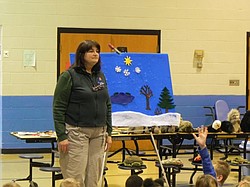
Neighbors | Sarah Foor .Mill Creek Park naturalist Carol Vigorito (left) visited Woodside Elementary on Dec. 19 to teach the school's third-graders about winter animals.
 Photo
Photo
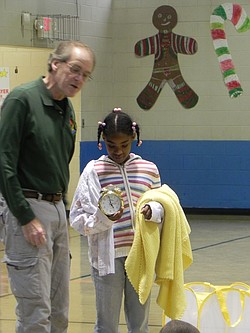
Neighbors | Sarah Foor .Mill Creek Park naturalist Bob Coggeshall (left) asked Woodside third-graders to participate in a game where they placed plush versions of animals into hampers denoting how each animal survived through the winter time. Student Arreonia Lewis (right) was given a blanket and an alarm clock after being told she would represent hibernation.
By SARAH FOOR
Although it wasn’t technically winter yet, Mill Creek Park naturalists Carol Vigorito and Bob Coggeshall visited Woodside third-graders on Dec. 19 to share their knowledge of winter animals.
“Animals feel the effects of colder weather and shorter days even though the winter season doesn’t officially start until Dec. 22. That first day is called the winter solstice and we will experience the longest night and shortest day of the year,” Vigorito explained.
The third-graders at Woodside understood many of the signs of approaching winter, including snow, cold winds, trees without leaves and absences or decreased sightings of animals in their natural habitats.
Vigorito explained the choices made by winter animals, illustrating her discussion with a felt landscape that showed the homes and supplies they will use to survive.
Vigorito showed that some animals stay active during the winter, while others hibernate, migrate or go dormant for shorter periods of time.
“We are active animals in the winter because we still go about our regular lives, except with warmer houses, blankets, and extra coats, gloves and scarves,” she said.
To further explore the choices of winter animals, Coggeshall took the stage to play a game with the students. The third-graders were asked to think back on Vigorito’s discussion and to place the correct plush animal in a hamper denoting whether they are active, migrate, hibernate or are dormant in freezing weather.
The students correctly placed all of the animals and were celebrated as winter animal experts by the naturalists.