 43
43

Amid riots, Greece’s parliament OKs debt-bill measures
 Photo
Photo
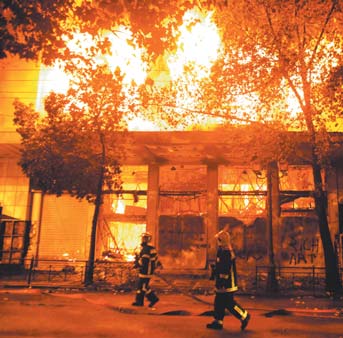
A cinema burns in Athens, Greece, on Sunday. Riots engulfed Athens, and at least 10 buildings went up in flames in mass protests late Sunday as lawmakers prepared for a historic parliamentary vote on harsh austerity measures demanded to keep the country solvent and within the eurozone.
Associated Press
ATHENS, Greece
Greek lawmakers approved harsh new austerity measures today that were demanded by bailout creditors to save the debt-crippled nation from bankruptcy, after rioters in central Athens torched buildings, looted shops and clashed with riot police.
The historic vote paves the way for Greece’s European partners and the International Monetary Fund to release $170 billion in new rescue loans, without which Greece would default on its debt mountain next month and likely leave the eurozone — a scenario that would further roil global markets.
Also today, Greece’s coalition government expelled 43 deputies from its ranks in parliament over dissent in a crucial debt vote.
The Socialists and conservatives expelled 22 and 21 lawmakers, respectively, from their parliamentary groups, reducing their majority in the 300-seat parliament from 236 to 193.
Sunday’s clashes erupted after more than 100,000 protesters marched to the parliament to rally against the drastic cuts, which will eliminate one in five civil-service jobs and slash the minimum wage by more than a fifth.
At least 10 buildings were on fire, including a movie theater, bank and cafeteria, and looters smashed dozens of shops in the worst riot damage in years. Dozens of police officers and at least 37 protesters were injured, 23 suspected rioters were arrested and another 25 were detained.
As the vote got under way early today, Prime Minister Lucas Papademos urged calm, pointing to the country’s dire financial straits.
“Vandalism and destruction have no place in a democracy and will not be tolerated,” Papademos told Parliament. “I call on the public to show calm. At these crucial times, we do not have the luxury of this type of protest.”
Since May 2010, Greece has survived on a $145 billion bailout from its European partners and the International Monetary Fund. When that proved insufficient, the new rescue package was approved. The deal, which has not yet been finalized, will be combined with a massive bond swap deal to write off half the country’s privately held debt.
But for both deals to materialize, Greece has to persuade its deeply skeptical creditors that it has the will to implement spending cuts and public sector reforms that will end years of fiscal profligacy and tame gaping budget deficits.