 43
43

Woodside kindergartners learn about winter animals
 Photo
Photo
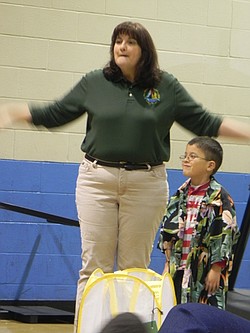
Neighbors | Sarah Foor .Kindergartner Joey Arreaga (right) wore a tropical shirt during a Mill Creek Park presentation because he represented a migrating winter animal. Carol Vigorito (left) explained that migrating animals usually fly to their winter homes.
 Photo
Photo
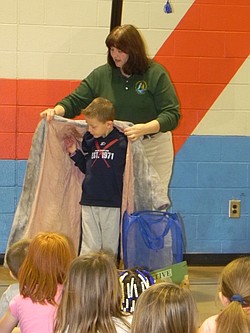
Neighbors | Sarah Foor .Mill Creek naturalist Carol Vigorito (back) played a game with the Woodside kindergartners where they had to place the correct animal in a hamper denoting whether they were active, hibernating, or migrating animals. Kindergartner David Olson played a active winter animal, and had to wear a fur coat, like many animals that grow thicker fur during the winter months.
 Photo
Photo
Neighbors | Sarah Foor .Kindergartner Ray'ziyah Wilkins (left) played Mill Creek Park's winter animals game on Jan. 26. She was asked to place an animal in a hamper that best explains their winter choices. With the help of classmate David Olson (right), Wilkins identified a white-tailed deer as an active winter animal.
By SARAH FOOR sfoor@vindy.com
Now that winter weather is in full swing in the Mahoning Valley, Mill Creek Park naturalists Carol Vigorito and Bob Coggeshall taught Woodside kindergartners about the deceptively busy world of nature in the wintertime on Jan. 26.
“We’re definitely having some odd winter weather this year, but animals still know the season and have done a lot of interesting things to prepare for the season,” Coggeshall explained.
Together, Coggeshall and the kindergartners listed cold winds, trees without leaves and decreased sightings of animals as surefire signs of the winter season.
With a felt landscape and felt animals, Coggeshall illustrated how many species native to Ohio will survive in the cold weather. Coggeshall showed that some animals stay active during the winter, while others hibernate or migrate.
“We are active animals in the winter because we do many of the same things, but we prepare in advance. Other active animals in Ohio are foxes, deer and squirrels, for example,” Coggeshall explained.
To further explore winter animals, Vigorito played a game with the students. The kindergartners were asked to place the correct plush animal in a hamper denoting whether they are active, migrating or hibernating animals. The naturalists and fellow students offered plenty of support during the game so that all the animals were placed with the correct winter survival method.
“Woodside’s kindergartners are true winter animal experts,” said Vigorito.