 43
43

Warren transitional facility lives up to its purpose
 Photo
Photo
A transitional housing facility run by Coleman Behavioral Services in Warren was recently honored by the Ohio Department of Development for its innovation and community development.
By Ed Runyan
WARREN
“If I would not be living here, I would be homeless,” Heather Fritz said of the newly renovated century home for young adults with mental health disorders and other risk factors.
Fritz, 19, who grew up in Lorain and later came to Warren to live with her mother, says the transitional housing facility run by Coleman Behavioral Services has given her a place to live while she begins her adult life.
The program being run out of the home was recent- ly honored by the Ohio Department of Development for its innovation and community development.
“It helps me with responsibility, and my case manager helped get me my Social Security. It’s a very helpful place,” Fritz said.
One of her house mates, Courtney Greathouse, 22, says Coleman and its new home for young adults has helped her learn how to manage living expenses. Coleman personnel also helped her get a job as a painter.
“We all get along great,” she added of the three young women and one young man who live there with supervision from two house monitors. “We all take turns with the shopping. Me and Jessica do most of the cooking,” she said of the third woman, Jessica Brom 21.
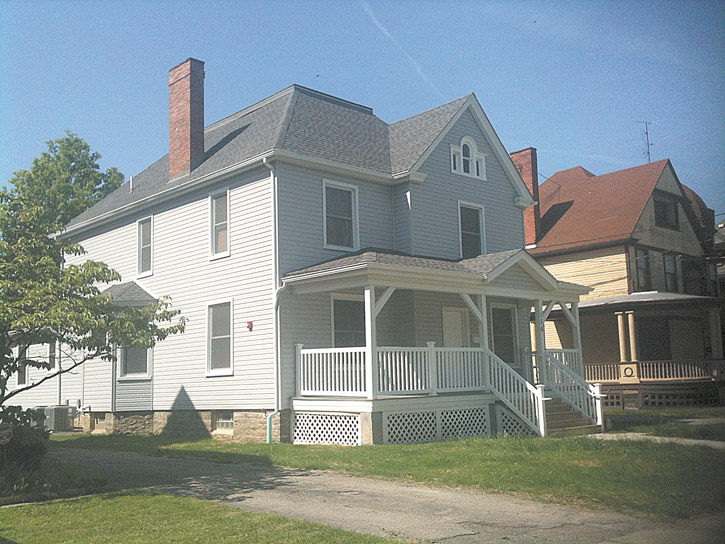
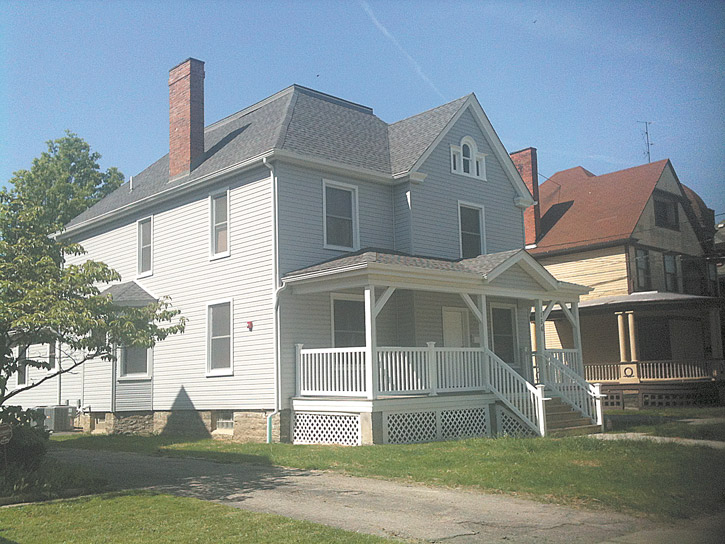
The Washington Street Northeast home, which opened in April after undergoing a $341,000 renovation, has space for four men and four women, plus living quarters for a live-in monitor.
Funding for the renovation and other costs came from Trumbull County’s allotment of federal Neighborhood Stabilization funds, and Coleman is using an Ohio Department of Development grant to operate the home.
Tammy Weaver, vice president of clinical services for Coleman, says the reason Coleman, the Trumbull County Planning Commission and other agencies developed the project was to provide something that didn’t exist — a place where young adults with mental health disorders and the likelihood of being homeless could spend one to two years to learn how to live on their own.
Coleman staff members are following the “Youth Model of Care,” an evidence-based program, to help the clients transition into adulthood, Weaver said.
The young adults referred to the program generally have had conflicts with their parents or other caregiver, and they frequently live on the streets or “couch-hop” at the homes of various friends, Weaver said.
From 18 to 26 — the age of the people allowed to stay at the facility, young people need to start taking responsibility for themselves and “be engaged” in their recovery from mental health problems, Weaver said.
“The goal is for them to move out and into their own apartment,” Weaver said.
A reason Weaver said she felt a program like this was important is because young adults have a high likelihood of becoming productive adults if they receive help at that stage of their lives.
“I want them to become employed. I do not want them to get on Social Security,” Weaver said.
Coleman, which operates counseling centers in seven Ohio counties and has several Trumbull County offices, operates several housing centers, such as one on Youngstown Road for women 18 years and older.
The renovation of the former foreclosure home helps the neighborhood because it is now the “nicest house on the street” and will encourage additional improvements to the neighborhood, said Julie Green, grants coordinator of the Trumbull County Planning Commission who worked on the project.
The planning commission bought the house in 2010 for $25,000. It was renovated throughout, including the original fireplace and mantle. Nearly 1,000 square feet of living space also was added to the first floor.
The neighborhood has its share of blight and social problems, but a 10:30 p.m. to 8:30 a.m. curfew helps keep the house mates from danger, Weaver said.