 43
43

Steel museum forges ahead
 Photo
Photo
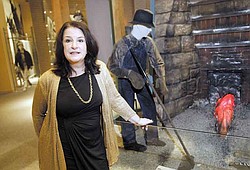
Martha Pallante, Youngstown State University history department chairwoman, tours an exhibit at the Youngstown Historical Center of Industry & Labor during a fundraiser for the museum Thursday.
YOUNGSTOWN
As the Youngstown Historical Center of Industry & Labor nears its 20th anniversary, museum supporters from around the state are looking forward.
About 80 people attended an invitation-only fundraiser Thursday at the center on Wood Street. The Friends of the Youngstown Historical Center of Industry & Labor organized the event.
The group’s president, Suzyn Schwebel Epstein, said the museum is “reinventing itself.”
“We want to share the vision and reacquaint those who have been here before and interest those who are new to the center. We have very big plans,” she said.
Not only will the museum mark its 20th year in 2012, but next year also is the 75th anniversary of the Little Steel Strike and 35th anniversary of Black Monday — the day when Youngstown Sheet and Tube Co. announced that it would shutter most of its operations in Youngstown. The museum will have several events to coincide with those anniversaries.
Kathy Wyatt, development officer for the Ohio Historical Society, said the statewide organization’s budget has been cut by 42 percent over the last five years, making it difficult to maintain the 58 historical sites in Ohio.
“We get less and less public funding, and as we’re less able to support these sites, these community organizations give us some relief,” Wyatt said.
The statewide historical society has an $18 million budget this year.
The event Thursday also celebrated the relationship between the center, more commonly referred to as the The Steel Museum, and Youngstown State University. YSU now manages the museum under a contract with the Ohio Historical Society.
“This is a relatively new arrangement but hugely successful,” said George Kale, director of historic sites and facilities for the Ohio Historical Society.
Donna DeBlasio, director of YSU’s Center for Applied History and the museum’s first manager, said the relationship allows YSU students hands-on experience in the fields of historical preservation and museum management, among others.
“The new management agreement has revitalized [the museum],” she said of the influx of YSU students.
YSU President Cynthia E. Anderson praised the collaboration between the university and museum.
“Every one of us owes our heritage to the steel industry,” she said. “... I see that [YSU students] have a true sense of pride for the Valley. They are committed and interested.”
Martha Pallante, chairwoman of the YSU history department, is part of the Friends of the Youngstown Historical Center of Industry & Labor board. She said local residents might be more willing to visit the museum and engage with it now than when it first opened nearly two decades ago.
“People have reacted in the Mahoning Valley much as people in the nation dealt with Vietnam. We didn’t talk about it or deal with the history. Now we have some degrees of separation,” she said.
The rise and fall of the steel industry is part of the local collective history, she said.
“There is every opportunity to come back and be something better. This is not a memorial to the past. It’s about where we have been and where we’re going,” Pallante said.
The museum features a permanent exhibit called “By the Sweat of Their Brow: Forging the Steel Valley,” and next month, it will be the site of several cultural programs to complement the Smithsonian Institution’s traveling exhibit, “New Harmonies: Celebrating American Roots Music.”