 43
43

Hotline center to mark 40 years
 Photo
Photo
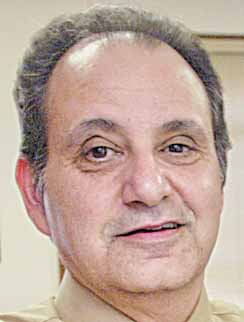
Help Hotline CEO Duane Piccirilli
HELP HOTLINE PROGRAMS
Help Hotline Crisis Center has established numerous programs and services to go along with its 330-747-2696 phone listening service. Here are a few:
Cold Weather Emergency/
Homeless Shelter: Serving the homeless with shelter and transportation from
December to March.
Community Center (drop-in center), 1344 Fifth Ave., Youngstown.
330-746-7721
PATH (Project for Assistance in Transition from Homelessness).
Senior Line: 24-hour
information and referral.
Victims Assistance
Program: 24-hour crisis
intervention, referral and
information.
WRAP (Wellness Recovery Action Plan): Mental-
health class to promote wellness, stabilization and recovery of mental-health consumers.
Source: Help Hotline Crisis Center
HELP HOTLINE CRISIS CENTER
Chronology
Help Hotline Crisis Center, created in 1971 as Help Hotline, a drug hotline, is celebrating its 40th anniversary. Here are some important dates during the 40 years.
1971: Established and housed at St. Elizabeth Hospital.
1976: Dolores M. Elias was hired as its first full-time director.
1977: Expanded to 24-hour services.
1979: Began servicing Columbiana County.
1984: Certified by the American Association of Suicidology.
1986: Became a Youngstown/Mahoning Valley United Way agency.
1989: Changed name to Help Hotline Crisis Center.
1991: Duane J. Piccirilli was hired as executive director; certified a mental health agency by the Ohio Department of Mental Health; purchased its own facility.
1994: Established a senior line.
1995: Became a contract agency of the Ashtabula Alcohol, Drug Addiction and Mental Health Services Board.
1998: Established a full-time Mental Health Guardianship Program.
2003: Completed a $500,000 capital campaign to renovate and expand its headquarters.
2006: Drop-in center opened.
2008: Received a $300,000 Wean Foundation grant to modernize equipment.
2010: Received $50,000 from National Lifelines for a new phone system.
Source: Help Hotline Crisis Center.
State official to speak at May 24 celebration
YOUNGSTOWN
For 40 years, Help Hotline Crisis Center volunteers and staff have comforted thousands of lonely people, young and old, many who call in the middle of the night just to talk to another person.
Hotline telephone listeners find safe places to stay the night for frightened, battered women and their children; calm teenagers with suicide on their minds, and offer a sympathetic ear to middle-age men who have lost their jobs and don’t know how they will take care of their families.
“We’re state-of-the-art, but we’ve never lost the human touch. It’s old-fashioned social work helping people one person at a time. If it means finding money for a bus ticket home, we do it. We do whatever it takes,” said Duane Piccirilli, chief executive officer of the agency.
In fiscal year 2010, Help Hotline received 141,064 calls.
People call when they have nowhere else to turn, when they don’t have the money to pay the utilities or buy Christmas presents for their kids, have lost their significant other or for many other reasons, he said.
“We are also a safety net for the area’s social-service agencies,” he said.
Help Hotline Crisis Center, which began in 1971 as Help Hotline, a drug hot line housed in St. Elizabeth Hospital, will celebrate its 40th anniversary May 24 at The Lake Club in Poland.
The speaker is Tracy Plouck, director of the Ohio Department of Mental Health. The emcee for the event, from 5 to 7 p.m., is Madonna Chism Pinkard, community- relations director for WFMJ/WBCB Television. Reservations, due May 10, are $25 for individuals and $180 for a table of eight. Make checks payable to Help Hotline Crisis Center Inc., P.O. Box 46, Youngstown, OH 44501.
The agency, renamed Help Hotline Crisis Center in 1989, is a far cry from its beginnings at St. Elizabeth when the phone lines, manned by a handful of volunteers, were open six hours a day.
Now, Help Hotline provides services to Mahoning, Columbiana, Trumbull and Ashtabula counties, and has a staff of 22 full-time and 24 part-time employees that include licensed mental-health professionals, and a pool of 22 trained volunteers. It has phone lines manned 24 hours a day seven days a week and paid professionals on-site to supervise and assist volunteers.
“It’s the wonderful volunteers who have built this agency, from telephone listeners to the board of directors,” Piccirrilli said.
“We have funding sources who understand us and what we do, and a 16-member board of directors who believe in the mission and see that things get done,” he said. Kenneth M. Tkatch is board president.
The agency also contracts to provide specific services as far away as Chicago and several Midwest states.
Help Hotline, as part of the National Lifeline Network of Crisis Centers, is paid by that organization to be its Region 5 surge center and handle overflow calls from Wisconsin, Illinois, Indiana, Michigan and Ohio.
For example, after 5 p.m., when Chicago’s crisis line closes, its calls are answered in Youngstown, said Piccirilli, who came to Help Hotline 20 years ago from Easter Seals where he was program director.
Piccirilli, a 1973 graduate of Sharpsville, Pa., High School, received a bachelor’s degree in social work from Pennsylvania State University and a master’s degree in counseling from Slippery Rock University, Slippery Rock, Pa. He is president of the Hermitage, Pa., Board of Commissioners.
The three most at-risk population groups in the area are youths in their teens, middle-aged men and the elderly, said Catherine R. Grizinski, Help Hotline’s associate director and chief clinical officer.
“We are here for everybody, but those groups are the ones we particularly reach out to,” said Grizinski, who has been with Help Hotline since 1975, the first two years as a volunteer phone listener and then hired as a staffer.
A 1973 graduate of Lowellville High School, Grizinski, of Boardman, received a bachelor’s degree in social work and a master’s degree in counseling, both from Youngstown State University.
“We’re not critical or judgmental of people who call. We take people as they are, and we have the training to help them,” she said.
“It bothers me that people aren’t checking on their neighbors and looking out for each as much as they used to. But if they can’t help, we want them to at least call Help Hotline. We want to be that one person that says, ‘Hey, you are not alone,’” Piccirilli said.