 43
43

Boardman Township ambulance awaits input of new chief
 Photo
Photo
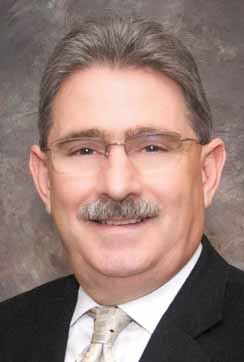
Boardman Trustee Tom Costello
BOARDMAN
No decision about township ambulance services will be made until a new fire chief is hired, officials say.
“We will make a decision with a new chief because he has to live with that decision. I think that’s the appropriate response,” said Trustee Chairman Thomas Costello.
The township is researching contracting with an outside ambulance service and reviewing a study previously presented by the fire department.
“The firemen did their study before Brad [Calhoun] and I took office. The business committee came back with more questions than answers. Knowing [the fire chief] was going to retire this year and our finances, we put it on hold,” Costello said.
Administrator Jason Loree said trustees will interview the top three fire chief candidates screened by the Ohio Fire Chiefs’ Association next week.
A fire department report advocating the start of a township-run ambulance service was presented to trustees several years ago, and in February 2009, then-Fire Chief James Dorman presented a feasibility study.
“It’s been drawn out for so many years,” said Harry Wolfe, president of the International Association of Firefighters Local 1176.
The Boardman Business Citizens Committee reviewed the proposal and gave its findings to trustees in July 2010, saying the proposal looked “at best, a break-even” business, said Jim Rosa, who led the study.
The fire department’s proposal called for one ambulance, saying it may produce additional revenue for the township. The proposal drew on information from departments in Howland and Liberty townships that already have an ambulance service.
The fire department proposal stated that if the township collected an average of $325 per patient billed, it would generate about $429,650. Billing fees would likely be about 7.5 percent or $32,000.
The insurance companies of those who receive ambulance services would be billed as would Medicare or Medicaid where applicable, according to the proposal. Township residents would not be billed for the amount not covered by insurance, but nonresidents would.
Another criteria for the revenue estimate was that the township be able to provide service to 1,500 medical calls per year, Rosa said.
“One of our concerns was whether they could achieve both the number of calls and that level of $300 per call,” he said, noting information provided on other local townships showed the average collection per patient in 2008 was between $175 and $225.
The proposal also focused on the first year, and the business committee recommended creating a five-year plan.
“It looked to us that this is at best a break-even,” Rosa said. “We did some projections on revenue streams they showed in the proposal and the numbers we were looking at, without considering other costs that aren’t really in there. ... They have more homework to do.”
The committee recommended that trustees consider other opportunities, such as proposals from private ambulance service and evaluating the fire department structure to determine if there were alternatives of using part-time and volunteer firefighters.
A lot has changed since those reports were released and reviewed, most notably a drop in minimum staffing levels to six firefighters per shift.
“Everything would be difficult with our staffing levels. Fighting simple bedroom fires is difficult with our staffing levels,” Wolfe said. “The reality is [the trustees] have chosen to go down to six.”
But can it be done? “Absolutely,” he said.
When the report originally was presented to the administration, officials “were worried about staffing and having firefighters run medical calls and run fire calls. The argument before was if you have ambulance calls, then we’ll have less firemen for fire calls, but now we’re OK with less firemen for every call all the time,” Wolfe said.
All township firefighters receive first-responder first aid training and CPR certification. Most firefighters also received EMS training in EMS operations, trauma and pediatric, medical and cardiac emergencies.
Wolfe said 10 firefighters, including himself, are paramedics. The union contract does not provide extra pay for that certification, and the proposal “concluded that we would not ask for additional paramedic stipends or fees,” he said.
Loree said he is compiling information from all private ambulance companies to give to trustees at their May 9 meeting.
“There is not a fee to contract with a private ambulance company. We have companies in the area and their capabilities vary so we’re looking at this very carefully,” he said. “We want two ambulances dedicated to Boardman at all times. ...By dedicating [two ambulances], that would cut the response time.”
The township already relies on Clemente and Rural Metro for ambulance transport, Loree said. The township’s contracts with those agencies stipulate the ambulance has to be on the scene within nine minutes of the call 90 percent of the time.
The fire department’s proposal estimated about $200,000 in start-up cost, Costello said.
“They never addressed where that money was supposed to come from,” he said. “I want what’s best for the community, employees and I have a budget I have to stay within. If I can provide the same or better services at lesser cost, that’s what I’ll do.”
Wolfe disagreed and said the fire department did provide options to cover the start-up cost.
“We had accounted for financing on the initial start-up. Defer the cost for a year, build up service to pay down the cost. You could finance it over five years if you wanted to,” he said, confirming that depending on the ambulance, the initial cost could be about $200,000.
The fire department’s 2009 proposal and several annual reports are available online at http://www.boardmantwp.com/fire/fire_admin_reports.asp