 43
43

Japanese plant poses little threat to US — for now
AP
 Photo
Photo
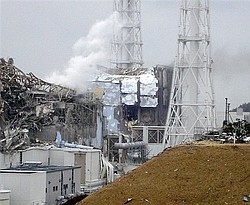
This image made available from Tokyo Electric Power Co. via Kyodo News, shows the damaged No. 4 unit of the Fukushima Dai-ichi nuclear complex in Okumamachi, northeastern Japan, on Tuesday March 15, 2011. White smoke billows from the No. 3 unit.
AP
Photo
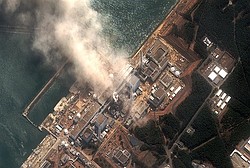
This satellite image provided by DigitalGlobe shows the damaged Fukushima Dai-ichi nuclear facility in Japan on Monday, March 14, 2011. Authorities are strugging to prevent the catastrophic release of radiation in the area devastated by a tsunami.
Associated Press
It’s a big ocean between northeastern Japan and the United States, and a small chance — at least for now — that radiation from a crippled nuclear plant poses a serious threat.
Experts say the amount of radioactivity emitted by the facility is relatively minor and should dissipate quickly over the Pacific Ocean.
“Every mile of ocean it crosses, the more it disperses,” said Peter Caracappa, a radiation safety officer and clinical assistant professor of nuclear engineering at Rensselaer Polytechnic Institute in Troy, N.Y.
The only people at immediate risk are workers inside the plant and the people living closest to it. For most of the wider world, the danger of radiation exposure is minuscule — unless the plant sustains a complete meltdown, which would sharply escalate the dangers.
Japanese officials told the International Atomic Energy Agency on Tuesday that a fire had broken out in a fuel storage pond where used nuclear fuel is kept cool and that radiation had been “released directly into the atmosphere.”
If the water level in such storage ponds drops to the level of the fuel, a worker standing at the railing looking down on the pool would receive a lethal dose within seconds, according to a study by the Millstone nuclear plant in Connecticut.
Such intense radiation can prevent workers from approaching the reactor or turn their tasks “into suicide missions,” said David Lochbaum, a nuclear engineer who heads the nuclear safety program of the Union of Concerned Scientists.
Next in the line of danger would be those who live within a 20-mile radius. Areas around the plant have been evacuated for that reason.
“The odds of someone outside the plant getting an acute injury — sick in the next couple of weeks — is close to zero,” said John Moulder, a professor of radiation oncology at the Medical College of Wisconsin in Milwaukee who studies the effects of radiation exposure.
The radioactive particles probably contain materials linked to cancer in high doses, including cesium and iodine. The long-term cancer risk for nearby residents will depend on exposure and cleanup efforts, Moulder said.
Radioactive cesium and iodine also can combine with the salt in sea water to become sodium iodide and cesium chloride, which are common elements that would readily dilute in the wide expanse of the Pacific, according to Steven Reese, director of the Radiation Center at Oregon State.
Winds in the area are currently blowing toward the coast because of a winter storm. But that will change to a brisk wind blowing away out to sea at least through today, he said.