 43
43

Japan’s blasts cast doubt on nuclear renaissance
AP
 Photo
Photo
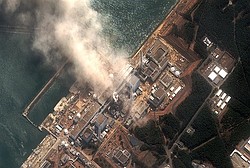
This satellite image provided by DigitalGlobe shows the damaged Fukushima Dai-ichi nuclear facility in Japan on Monday, March 14, 2011. Authorities are strugging to prevent the catastrophic release of radiation in the area devastated by a tsunami.
ASSOCIATED PRESS
Photo
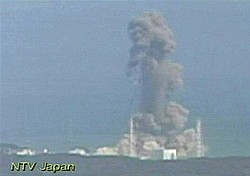
In this image made off Japan's NTV/NNN Japan television footage, smoke ascends from the Fukushima Dai-ichi nuclear plant's Unit 3 in Okumamachi, Fukushima Prefecture, northern Japan, Monday, March 14, 2011. The second hydrogen explosion in three days rocked Japan's stricken nuclear plant Monday, sending a massive column of smoke into the air and wounding 11 workers.
AP Photogallery | Earthquake aftermath
 Gallery
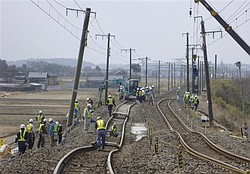
Workers repair the railway tracks damaged by the March 11 earthquake in Hitachinaka, Ibaraki Prefecture, Japan, Monday, March 21, 2011. (AP/Yukie Nomura)
Associated Press
PARIS
Switzerland freezes plans to build new nuclear plants, Germany raises questions about its nuclear future, and opposition to atomic-reactor construction mounts from Turkey to South Africa.
Will explosions and other worries at a tsunami-stricken Japanese nuclear plant halt what has come to be known as the nuclear renaissance?
Fears about nuclear safety that took a generation to overcome after the accidents at Chernobyl and Three-Mile Island are resurfacing around the globe. They are casting new doubt on a controversial energy source that has seen a resurgence in recent years, amid worries over volatile oil prices and global warming.
“Europe has to wake up from its Sleeping Beauty slumber” about nuclear safety, Austria’s Environment Minister Nikolaus Berlakovich told reporters in Brussels. He suggested an EU-wide stress test for nuclear plants, much as European banks have been tested for their ability to cope with financial shocks.
Yet some experts and officials say those fears are overblown, given the exceptional nature of Japan’s earthquake and ensuing tsunami. The Japanese blasts may slow the push for more nuclear plants but appear unlikely to stop it, given the world’s fast-growing energy needs.
The governments of Russia, China, Poland and even earthquake-prone Chile say they are sticking to their plans to build more reactors. Spain warned against hasty decisions.
Japan’s nuclear-plant explosions come as the U.S. government looks to expand its nuclear-energy industry by offering companies tens of billions in financial backing. Administration officials said that the U.S. would seek lessons from the Japanese crisis but that the events in Japan would not diminish the United States’ commitment to nuclear power.
“It remains a part of the president’s overall energy plan,” White House spokesman Jay Carney said.
In Atlanta, the CEO of Southern Co. said Monday he does not expect Japan’s problems to delay construction of two more nuclear reactors in Georgia, at the first nuclear plant in the United States to break ground in a generation.
Elsewhere, governments began questioning their vision of a nuclear- energized future amid rising threats of a meltdown at one Japanese reactor.
Switzerland ordered a freeze on new plants or replacements “until safety standards have been carefully reviewed and if necessary adapted,” Energy Minister Doris Leuthard said.
Switzerland has five nuclear-power reactors that produce about 40 percent of the country’s energy needs. It also has nuclear-research reactors.
In Germany, the government said it is suspending for three months a decision to extend the life of its nuclear-power plants. That also means that two older nuclear-power plants will be taken off the grid shortly — at least for now — pending a full safety investigation, Chancellor Angela Merkel told reporters.
Statistics from the International Atomic Energy Agency show there are 442 nuclear reactors in operation worldwide, with 65 new facilities under construction.