 43
43

Hope House is oasis of calm for kids
The Vindicator (Youngstown)
 Photo
Photo
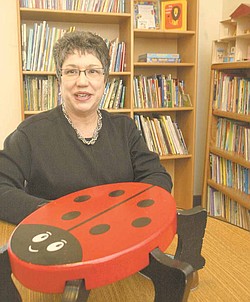
Carole Bopp, Hope House Visitation Center executive director, sits at a lady bug table. Lady bugs are the theme in one of the Center’s visitation rooms and are scattered throughout the facility, which in Fiscal Year 2010 provided services for 136 children, 155 adults and 177 families.
The Vindicator (Youngstown)
Photo
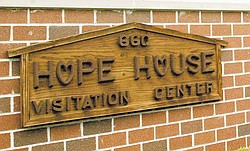
Hope House Visitation Center in Youngstown provides neutral ground for court-ordered visitation of children between parents and their children who are in foster care, as well as parents who are divorced.
Fast facts
Hope House has four home-like, child-friendly visitation rooms, including a nursery. The fully equipped kitchen and attached conference room is conducive to family meals and birthday parties. Here are some facts about the visitation center.
Budget: $150,619 for fiscal year 2011 (July 1, 2010, to June 30, 2011).
Paid staff: Two full-time members, the executive director and the program manager; and two part-timers. Two interns from Youngstown State University’s Departments of Social Work and Human Ecology worked 1,158 hours for a savings of $24,144. Volunteers including board members and interns, donated 2,082 hours, for a dollar value of $423,410.
Services: Hope House provided services for 136 children, 155 adults and 177 families. It served an average of 26 families per week.
Source: Hope House Visitation Center
Facility was vision of the Junior League of Youngstown
YOUNGSTOWN
Hope House Visitation Center prides itself on being an oasis of calm for children caught in the storm of feuding parents.
Some children who come to Hope House for court-ordered, supervised, separate meetings with their mother and father say it’s nice to see their parents and know they are OK, said Carole J. Bopp, Hope House executive director.
“One thing I’ve learned,” Bopp said, “is that kids want to see their parents. Even if they can’t live with them anymore, they want the contact.”
Hope House facilitates meetings, primarily court-ordered, between parents and children who are in foster care, as well as parents who are divorced, she said.
The facility was the vision of the Junior League of Youngstown, which, with the support of the Mahoning County Children Services Board and the county’s Domestic Relations and Juvenile courts, raised $200,000 to build the facility on West Earle Avenue on the South Side in 1999.
Bopp said Hope House is being confused with House of Hope adult-care facility on the North Side because of the similarity of their names to the detriment of the visitation center.
House of Hope has been criticized by the state health department for having “conditions ... that constitute a real and present danger to the residents.”
Bopp said she is receiving almost daily calls from sponsors and others, confused by the similarity of the names of the two organizations, saying they will no longer help Hope House.
“We are not House of Hope, we are Hope House,” Bopp said. She urged program supporters and others to contact Hope House at 330-788-8882 and get the facts.
Hope House, governed by a board of directors, contains rooms for visitations, a nursery, kitchen/conference room, waiting room, indoor play area and an outdoor family picnic/playground area.
Hope House also has “Deputy Greg,” as he is known by the staff and children.
He is Mahoning County Deputy Sheriff Greg Taillon, who provides security during visitations. He also is a resource officer at Jackson-Milton Schools where he operates the Drug Abuse Resistance Education program.
“The kids here love Greg. Everyone calms down when he is around because they know they are safe. He is such a diplomat,” Bopp said.
Hope House is neutral ground for everybody. That was the case for Russell Bailey, a teacher at Campbell Memorial High School, who uses the facility for weekly custodial/noncustodial exchanges.
Bailey said he received custody of his children after he and his former wife divorced. The domestic-relations court ordered there be no contact between the two, making it necessary to have a neutral place to exchange the children.
Bailey drops the children off at least 15 minutes before their mother arrives to pick them and on the return exchange he picks them up 15 minutes after she leaves.
“It’s turned out to be a godsend. We have been using the facility for two years. The staff give the children small presents and play games with them and help them with their homework while they are waiting.
“It makes it safe for both parents, and a fun, pleasant time for the kids. It’s the best thing for the kids. They have been around enough fights,” he said.
“Sometimes when I pick them up, I have to pry them out because they have started an activity and don’t want to leave,” said Bailey of Boardman.
“It’s the magic of the place and the craft cart, which leads to all kinds of projects,” said Bopp, who was chosen Public Citizen of the Year 2008 by the National Association of Social Workers, Ohio Chapter, Region IV.
She said the parents go through orientation when they first come to Hope House to learn the rules, and the children get to know why they are there and who they will see.
Parents may not talk negatively about each other to their children, or about the domestic-relations case.
“They get one warning. If there is a second violation, that visitation is over. If they don’t show up for visitation twice, we notify the court,” Bopp said.
“Initially, Hope House is about keeping parents apart and children safe. It may take years, but the hope is that they will graduate from supervised to outside visitation over time,” Bopp said.