 43
43

Clarett: Athletes are to blame
 Photo
Photo
Maurice Clarett
- Tressel's Resignation
-
- Photo gallery: Jim Tressel at YSU
- Scandal may hurt OSU’s recruiting
- Maurice Clarett speaks
- Valley VIPs come to Tressel’s defense
- Pryor ends his silence with 97-second apology
- Luke Fickell takes over as Ohio State interim head coach
- Tressel skips rules meeting
- Pryor hires agent, prepares for draft
- Expert: Ohio State scandal in ‘leaky faucet phase’
Associated Press
COLUMBUS
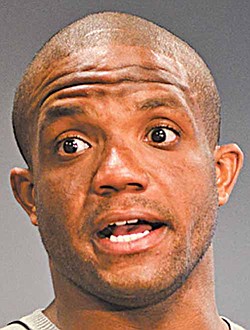
Former Ohio State running back Maurice Clarett blames athletes rather than coaches and fans for the culture that created problems in the Buckeyes’ football program.
“There’s no secret regime, there’s no secret congregation of people who sit around at Ohio State who gives young guys money,” Clarett said Wednesday on The Dan Patrick Show. “Anything that any player goes and gets is all based on him and who he meets in the community. The coaches and the university have no control over what the young guy’s doing.”
Clarett, ruled ineligible after carrying Ohio State to its first national championship in 34 years in 2002, said the university cannot control everything that players do.
“There wasn’t any coach or any booster or any member in or around Ohio State who helps you get a car,” Clarett said, recalling his own time on campus. “It doesn’t go on. It’s just guys doing what they want to. People will forever do what they want to. It’s nothing more than young guys making mistakes.”
Clarett questioned the foundation of big-time college football, where universities and coaches make millions off athletes yet the players get in trouble with the NCAA for accepting cash for autographs or memorabilia.
“Why are they even in that position? Why is it that a university can profit $20 million, $30 million, $40 million and these guys are in the position that they have to sell their memorabilia — the only thing they have of value at that point?” Clarett said. “Why are they even in that position to do that, when there’s enough money to go around?”
Clarett seized the starting tailback job before the 2002 season opener and caught the nation’s attention when he piled up 230 yards rushing in a victory over Washington State — still the sixth-highest single-game total in school history.
Clarett, who rushed for 1,237 yards in his only season, was suspended the following summer for taking improper benefits, including cars. He never played in another college game.
He did not blame his ineligibility on boosters.
“People didn’t reach out to me. I reached out to people,” he said. “Just when you’re traveling around the community, I reached out to people: ‘Hey, I’m struggling with this. Hey, I need help with this.”’
Clarett sued the NFL to enter the draft before he had been out of high school for three years, but lost on appeal.
He pleaded guilty in September 2006 to having a gun hidden in his SUV and holding up two people outside a Columbus bar in a separate case. He was sentenced to 71/2 years in prison, and was released in early 2010 after serving 31/2 years.
Clarett played last year for the Omaha Nighthawks of the United Football League.
He accused Ohio State of academic fraud during the investigation spurred by his improper-benefits case in 2003. But on Wednesday, he said he had lied and manipulated the professor to get good grades.
Going to prison had altered his view of the world, Clarett said. Five years ago, he said he might have celebrated that Ohio State and former coach Jim Tressel were going through the problems they are now. But that isn’t the way he feels.
Clarett also said he did not consider Tressel, who until a few months ago had a squeaky clean image around the country, to be a cheater or a fraud.
“You can’t be a fraud for 30 years. It’s impossible,” he said. “People can smell a fraud in the first month, two, three, four, five months. They’re going to be exposed. To do what that man has done ... it’s wrong for that man to get dealt like that.”
Asked where his national championship ring is, Clarett said, “That’s at my mother’s house. There’s not one piece of memorabilia that I don’t have.”