 43
43

Wal-Mart tries to regain its footing with customers
ASSOCIATED PRESS
 Photo
Photo
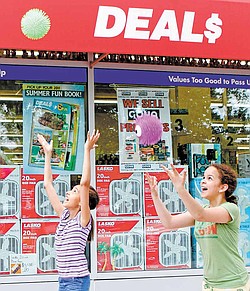
In this photo taken May 29, 2011, young girls play as they pass a Harlem Deal$ store in New York, where a six-ounce New York strip steak can be purchased for $1.50. Deal$ stores are owned by Dollar Tree, which sells a variety of items for $1. As May came to a close, the company said it continues to see more customers who are spending more per visit. Dollar stores pose the biggest threat Wal-Mart, the nation's biggest retailer. (AP Photo/Kathy Willens)
ASSOCIATED PRESS
Photo
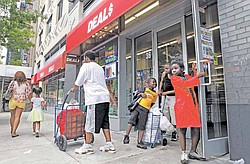
In this photo taken May 29, 2011, Teyonce Armstrong, right, 7, and her brothers Keith, 6, and Markquis, 11, play by the door of a Harlem Deal$ store in New York while waiting for their grandmother, who was shopping inside, to exit. Deal$ stores are owned by Dollar Tree, which sells a variety of items for $1. The company said at the end of May it continues to see more customers who are spending more per visit. Dollar stores pose the biggest threat Wal-Mart, the nation's biggest retailer. (AP Photo/Kathy Willens)
Associated Press
NEW YORK
Wal-Mart is in a race against time to give the people what they want before they get comfortable shopping elsewhere.
Shoppers who switched to other stores when Wal-Mart decided to ditch best-selling toothbrush brands, craft supplies and bolts of fabric may be hard to win back.
The company has taken nine months to restore thousands of grocery items, including some best-selling brands, it dumped from its shelves two years ago. The idea was to tidy up stores for the wealthier customers it had won during the recession.
Grocery sales have improved, rising in the low single digits in the first quarter. But overall traffic at its U.S. namesake stores has been down, and revenue at stores open at least a year has posted eight-straight quarters of declines on a year-over-year basis.
Wal-Mart says it will take until the end of the year to restock the rest of the store with items that were culled, from craft supplies to home furnishings. That will go a long way toward restoring Wal-Mart’s ability to provide one-stop shopping, which could be a plus as shoppers make fewer trips to save on gasoline.
“The customer, for the most part, is still in the store shopping, but they started doing some more shopping elsewhere, and we want to bring them back. We know that it’s easy to lose them,” said Charles Holley, Wal-Mart Stores Inc.’s chief financial officer, during a Citi Global Consumer Conference last week.
Dollar stores, which benefited from shoppers trying to stretch their dollars in the recession, are continuing to gain new customers and post higher revenue. The trend has accelerated as gasoline prices closed in on $4 a gallon. Dollar stores more adroitly maneuvered the post-recession economy. They have expanded their inventory, particularly brand names, become more competitive on price and are expanding to new locations. Meanwhile, some wealthier shoppers are trading back up to the mall or higher-end grocery stores such as Whole Foods.
Wal-Mart is increasingly “caught in the middle” between dollar stores and more expensive stores, said Wall Street Strategies analyst Brian Sozzi. “Now, it’s trying to return to its roots, but it’s facing old competitors — the dollar stores — that are getting much better.”
Richard Hastings, a consumer strategist with Global Hunter Securities, gives Wal-Mart two years to woo back its U.S. customers before their new shopping habits are imprinted.
But the restocking has taken longer than Wal-Mart predicted. In November, it had said that the merchandise it cut would be restored by this past spring.
Even when Wal-Mart has been able to get goods to the stores, the company known for its efficiency and precision has had trouble getting them onto shelves, says Cameron Smith, who recruits executives for Wal-Mart suppliers.