 43
43

Nike faces new allegations of worker abuse at factories
ASSOCIATED PRESS
 Photo
Photo
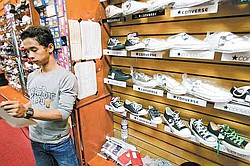
In this photo taken July 12, 2011, a shop attendant stands near Converse shoes on display at a store in Jakarta, Indonesia. Workers making Converse sneakers in Indonesia said supervisors throw shoes at them, slap them in the face and call them dogs and pigs. Nike, the brand's owner, admits that such abuses have occurred among the contractors that make its hip high-tops but claims there was little it could do to stop it. (AP Photo/Irwin Fedriansyah)
ASSOCIATED PRESS
Photo
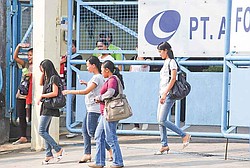
In this photo taken May 26, 2011, workers leave a factory that make Converse shoes, in Gunung Putri, West java, Indonesia. Workers making Converse sneakers in Indonesia said supervisors throw shoes at them, slap them in the face and call them dogs and pigs. Nike, the brand's owner, admits that such abuses have occurred among the contractors that make its hip high-tops but claims there was little it could do to stop it. (AP Photo/Achmad Ibrahim)
Associated Press
SUKABUMI, Indonesia
Workers making Converse sneakers in Indonesia say supervisors throw shoes at them, slap them in the face and call them dogs and pigs. Nike, the brand’s owner, admits that such abuse has occurred among the contractors that make its hip high-tops but says there was little it could do to stop it.
Dozens of workers interviewed by The Associated Press and a document released by Nike show that the footwear and athletic apparel giant has far to go to meet the standards it set for itself a decade ago to end its reliance on sweatshop labor.
That does not appear to explain abuses that workers allege at the Pou Chen Group factory in Sukabumi, some 60 miles from Jakarta — it didn’t start making Converse products until four years after Nike bought Converse. One worker there said she was kicked by a supervisor last year after making a mistake while cutting rubber for soles.
“We’re powerless,” said the woman, who like several others interviewed spoke on condition of anonymity out of fear of reprisals. “Our only choice is to stay and suffer, or speak out and be fired.”
The 10,000 mostly female workers at the Taiwanese-operated Pou Chen plant make around 50 cents an hour. That’s enough for food and bunkhouse-type lodging, but little else.
Some workers interviewed by the AP in March and April described being hit or scratched in the arm — one man until he bled. Others said they were fired after filing complaints.
At the PT Amara Footwear factory just outside Jakarta, where another Taiwanese contractor makes Converse shoes, a supervisor ordered six female workers to stand in the blazing sun after they failed to meet their target of completing 60 dozen pairs of shoes on time.
The company’s own inquiries also found workers at the two factories were subjected to “serious and egregious” physical and verbal abuse, including the punishment of forcing workers to stand in the sun, said Hannah Jones, a Nike executive who oversees the company’s efforts to improve working conditions.
An internal report Nike released to the AP after it inquired about the abuse show that nearly two-thirds of 168 factories making Converse products worldwide fail to meet Nike’s own standards for contract manufacturers.