 43
43

ODOT seeks flashy green lanterns for plows
The Vindicator (Youngstown)
 Photo
Photo
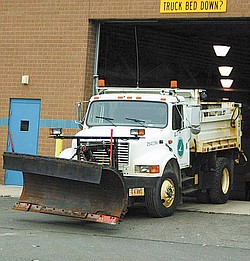
Another truck done- an ODOT snow/slag truck leaves the inspection garage at the Canfield Facility.
The Ohio Department of Transportation has seen a spike in crashes involving state snowplows this winter, and it’s looking to a green lantern for help.
The department has proposed installing flashing green lights on top of snow- removal equipment to increase visibility.
Only one month into the winter weather season, the number of accidents already has surpassed last year’s total. So far, there have been 63 crashes statewide, compared to 57 all of last winter, said Scott Varner of ODOT’s Central Office Communications.
No accidents with snowplows have been reported in Mahoning County this winter. On Dec. 7, a car hit the back of an ODOT plow that was s topped at a traffic light on state Route 5 in Trumbull County, said Kristen Erickson, an ODOT District 4 spokeswoman.
The driver who hit the ODOT plow was given a citation, she said.
Last year throughout District 4, which comprises Ashtabula, Mahoning, Portage, Stark, Summit, and Trumbull counties, four accidents with ODOT snowplows were recorded, compared to five so far this year.
To combat the increase of accidents, ODOT has proposed the use of green lanterns — flashing LED lights placed atop snow removal equipment — as a way to help snowplows be seen better on the highway.
Varner said that studies have indicated that blue and green colored lights have the best visibility in snowy conditions, and that in the color spectrum, the human eye is most sensitive to green.
The proposal is part of the department’s legislative requests for the 2012-2013 state transportation budget, which will have to be decided by the state Legislature and incoming governor John Kasich.
“In the past, we’ve used reflective material, changed the type of lighting from the old lights to using LED lights, but for whatever reason, drivers still have difficulty seeing snowplows,” Varner said.
Currently, Ohio law dictates that ODOT must use yellow flashing lights, like other non-emergency vehicles such as tow trucks and mail delivery vehicles.
“We don’t have exact figures yet in terms of the cost,” he said. “It would be a gradual process, not a one-time large up-front cost. We think the cost will be minor, especially compared to the amount we can save when trucks aren’t being repaired from crashes.”
Erickson said accidents often occur because drivers don’t realize how slow a plow is moving.
“On Interstate 80 or state Route 11, for example, it would be going up to 45 or 50 miles per hour and on a smaller secondary road they would stay between 30 and 35 miles per hour,” she said.
What all the plow truck is doing also plays a role.
“If they’re spreading salt, they want to go even slower so it doesn’t spray off the road too fast,” she said. “Drivers should remember don’t crowd the plow and take it slow in ice and snow.”