 43
43

Vikings honor Korey Stringer
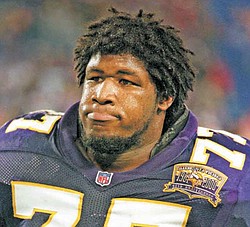
AP
 Photo
Photo
This Nov. 12, 2000, file photo shows Minnesota Vikings offensive tackle Korey Stringer leaves the field, in Minneapolis. The Vikings have painted a big 77 on their practice field in Mankato to honor Stringer, the offensive tackle who died of heat stroke 10 years ago.
Associated Press
MANKATO, Minn.
Jim Kleinsasser can’t believe it’s been 10 years since he last heard a belly laugh from his friend, Korey Stringer.
The memory is as vivid as it’s ever been, and new Minnesota Vikings coach Leslie Frazier tapped into that first-hand knowledge during a somber moment before the team’s first training camp practice.
Kleinsasser is the last remaining Vikings player who knew Stringer as a teammate, and the veteran spoke to the team about his friend on Monday, the 10-year anniversary of Stringer’s death from heat stroke.
“I loved that guy,” Kleinsasser said. “His comedy, just his humor, he brought you up in the middle of training camp. He was just a great guy. A big guy, but just a big teddy bear. I don’t think there’s a better teammate you could have.”
The Vikings commemorated the date by painting a big No. 77 on one of their practice fields at Minnesota State University in Mankato. They also held a moment of silence before the practice started, a reminder of the dangers players face in the sweltering August heat of training camps across the country.
“It was a sobering moment for our team as Jim explained who Korey was and what type of player he was, more so the person,” Frazier said. “Everyone misses him. I wish he could come out and watch us practice today, but in a way I feel like he was there today. He was there, just having his number there on the field and painted.
“Just feel he lives on in a lot of ways through the pride these players have. A lot of people miss him.”
Stringer continues to impact his fellow football players to this day. His death on Aug. 1, 2001, prompted teams across the NFL to more closely monitor their players during the long, hot practices of August.
The Vikings have been at the forefront of the movement. Head athletic trainer Eric Sugarman is one of the most respected authorities on heat illness, and his staff uses an exhaustive system to keep track of how players are being affected by the heat.
The team has some players ingest pills that allow staff to monitor their core temperatures. They also take urine samples to make sure players are staying hydrated and are constantly prodding them to drink more water and Gatorade.
“I can’t prevent someone from getting an ACL injury,” Sugarman said. “I can prevent someone from getting heat illness.”
The anniversary comes just two days after a 14-year-old boy in South Carolina collapsed and died on the field during a practice for his high school. Doctors were conducting tests to see if heat was responsible for Tyquan Brantley’s death.
Sugarman doesn’t hesitate to share stories like that with his players. Anything to ensure that the message hits home.
“You have to,” Sugarman said. “It’s a shame that it happened and you don’t want it to ever happen again.”
Frazier was an assistant in Philadelphia in 2001 when news quickly spread of Stringer’s death.
“It was like shockwave going through the league when it happened,” Frazier said. “It changed a lot of what people do in training camp and how we prepare for training camp and how we practice today. So we feel bad for what happened, but the league has definitely changed when it comes to how we practice and how we emphasize hydration with our players.”