 43
43

In remote towns, heat wave threatens elderly
ASSOCIATED PRESS
 Photo
Photo
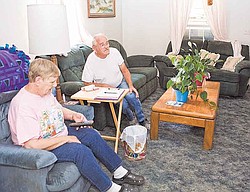
In this July 22 photo, John Pangburn and his wife, Wanda, watch television in their home on a hot summer day in Mulhall, Okla. “I can’t take the heat like my husband can,” said Wanda. “I can go outside for a little bit, but I just don’t stay out for long.”
Associated Press
MULHALL, Okla.
The air is cool inside Ray Knight’s makeshift coffee shop on the main strip in this tiny Oklahoma farming community, but there aren’t many customers.
With temperatures topping 100 degrees, the elderly farmers and retirees who Knight says like to gather and “swap lies” are nowhere to be seen. They’re also probably not at their doctor’s appointments, shopping at the store or at their club meetings. Many are afraid to go outside.
The heat wave scorching the Great Plains has turned many rural communities into virtual ghost towns for the last month, and also heightened a sense of isolation among the elderly residents who make up much of their population these days. The relentless stretch of 100-degree days, which began unusually early this year and could run for weeks longer, is making their way of life difficult and even dangerous, thwarting their routines for getting the supplies and health care they need.
“I can’t hardly do nothing when it’s this hot,” said Bryce Butler, an 86-year-old World War II veteran who stays in his house every day in this town of 200 people. He usually drives to the county seat in Guthrie, about 15 miles away, for errands but now can’t go out after noon.
In remote towns, elderly residents try to look out for each other. But it isn’t easy when those who live out in the country are afraid to drive to town. Many live alone.
Jo Swinney, an outreach specialist for the Logan County group, worries some elderly folks could easily slip through the cracks. “I’m sure there are,” Swinney said. “It’s hard to make contact with people in these rural areas if they don’t seek help from someone.”