 43
43

Synthetic-drug use skyrockets, as do trips to hospital ERs
AP
 Photo
Photo
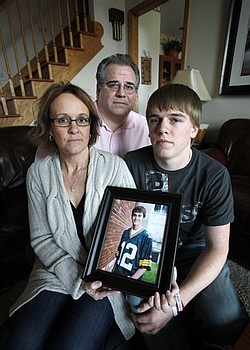
Jan, left, and Mike Rozga sit with their son Daniel on Sunday, March 27, 2011, in Indianola, Iowa, while holding a photo of their son David who killed himself last summer after dabbling with a product known as K2. Synthetic substances like K2 that mimic marijuana, cocaine and other illegal drugs are making users across the nation seriously ill, causing seizures and hallucinations so intense that thousands of them seek help at emergency rooms.
Associated Press
INDIANOLA, Iowa
Until he tried a marijuana look-alike product called “K2,” David Rozga’s most dubious decision was getting a Green Bay Packers tattoo on his shoulder.
Then the 18-year-old athlete and band standout got high on the fake pot last June and complained to a friend “that he felt like he was in hell,” his father said.
Though he had never suffered from depression, the teenager went home, found a shotgun and killed himself — one of at least nine U.S. deaths in the last year that authorities suspect were caused by synthetic products designed to mimic marijuana, cocaine and other illegal drugs.
An Associated Press analysis shows that the substances are increasingly causing users to fall seriously ill, with some suffering seizures and hallucinations.
Available in many head shops for as little as $10, the synthetic drugs are often packaged as incense or bath salts, but they do nothing to perfume the air or soften water.
As more Americans experiment with them, the results are becoming evident at hospitals: a sharp spike in the number of users who show up with problems ranging from labored breathing and rapid heartbeats to extreme paranoia and delusions. The symptoms can persist for days.
“These kids weren’t looking for anything bad to happen,” Mike Rozga said of his son’s death.
At the request of the AP, the American Association of Poison Control Centers analyzed nationwide figures on calls related to synthetic drugs. The findings showed an alarming increase in the number of people seeking medical attention.
At least 2,700 people have fallen ill since January, compared with fewer than 3,200 cases in all of 2010. At that pace, medical emergencies related to synthetic drugs could go up nearly fivefold by the end of the year.
“Many of the users describe extreme paranoia,” said Dr. Mark Ryan, director of the Louisiana Poison Center. “The recurring theme is monsters, demons and aliens. A lot of them had suicidal thoughts.”