 43
43

State audit: City schools could save $6.3M
 Photo
Photo
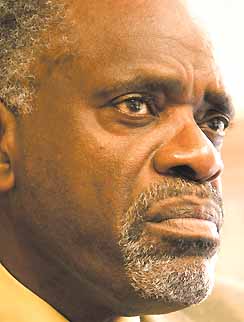
Youngstown City Schools Superintendent Connie Hathorn
Consider creating an internal audit function, ($106,000).
Consider reducing staffing levels by 64.5 full-time equivalent employees, $2.3 million, (5.5 central-based adminstrator, 10.5 office/clerical, 2.5 nurse, 5 curriculum specialist/other professional-educational, 36.5 teaching aide/instructional paraprofessional and 4.5
library full-time equivalent.)
Consider reducing staffing levels in facilities by 41 full-time equivalent employees, $1.4 million, (37.5 custodial and 3.5 maintenance.)
Reduce health-insurance costs, $1.7 million.
Reduce sick-leave use, $197,000.
Reduce overtime costs, $71,000.
Improve energy management, $235,000.
Upgrade routing software and eliminate at least six active buses, $74,000.
Reduce costs of special needs services, $467,000.
Source: State performance audit
By Denise Dick
YOUNGSTOWN
The city school district could save $6.3 million by cutting more staff and reducing overtime, health-insurance costs and sick-time use, according to a performance audit from the state auditor’s office.
“The Youngstown City School District could be a poster child for the benefits of performance audits,” Auditor Dave Yost said in a news release. “They have already done the hard work to pull out of fiscal distress, and I applaud them for remaining vigilant in their search for continued efficiencies through this performance audit to guarantee the fiscal health of the district in the future.”
Last May, the district contracted with the state office for $59,000 to conduct a performance audit. The aim was to determine how well the district had done at reducing operating costs as suggested in a 2008 performance audit.
The report released Tuesday points out that the district, which was released last week from fiscal emergency by the auditor’s office, has a positive five-year forecast. That is due to actions implemented by the district to reduce and control costs.
“Most notably, the district has reduced the size of its work force by approximately 24 percent since the 2008 performance audit, frozen base wages for four consecutive years and either fully or partially implemented 78 percent of the recommendations in the 2008 performance audit,” the latest audit said.
The state auditors examined the district’s financial systems, human resources, facilities and transportation, comparing it to peer districts. Although the report outlines more that can be done, its recommendations are not binding upon the school district.
It recommends reducing staffing levels by 64.5 full-time positions: 5.5 central-based administrators, 10.5 office/clerical employees, 2.5 nurses, 5 curriculum specialists/other professional-educational positions, 36.5 teaching aide/instructional paraprofessionals and 4.5 library positions.
Under facilities, the audit notes that the district employs 107 full-time positions — 52 fewer than reported in the 2008 performance audit.
It recommends reducing 41 more maintenance and operations staff: 37.5 custodian and 3.5 maintenance full-time positions.
Superintendent Connie Hathorn said the district will determine how the auditors arrived at the numbers for reductions. Some of the positions included may be part time.
The auditors came in at the district’s request, he said.
“They didn’t come in because they had to,” Hathorn said.
The audit says Youngs-town should consider creating an internal audit position to monitor and review operations and programs. The estimated annual cost of that position is $106,000.
Under human resources, it says that despite the reduction of about 322 employees since the 2008 performance audit, Youngstown’s “total staffing per 1,000 students is 18.5 percent higher than the peer average and exceeds the peer average in every category.”
It attributes that to a continuing decline in enrollment and the district’s not fully implementing the staffing reductions in the 2008 report.
On the other hand, it also says that districtwide average salaries are 3.6 percent lower than the peer average.
“However, the salary costs per student are 14.9 percent higher than the peer average, partially due to employing more [full-time equivalent employees] per 1,000 students,” it says.
Higher average salaries for office/clerical, other technical, professional and operations staff contribute to the higher salary costs per student. Also, the average salary for educational support staff is 7 percent higher than the peer average, it says.
“However, based on the lower rates in the certificated salary schedule, the higher average salary for educational support staff is likely due to higher tenure,” the audit says. “Furthermore, educational support comprises only 5.6 percent of total staffing levels.”
Under benefits, the audit says that the district, which is self-insured, doesn’t pay traditional premiums to a health-insurance provider but pays monthly premiums into a separate district fund established for health-insurance claims.
In 2009-10, the district paid $13.4 million in medical and prescription medication claims. The employees’ contributions toward those claims totaled about $407,000, or about 3 percent of the total. That’s lower than industry benchmarks, the auditors said.
It also recommends reductions in health-insurance costs and reduce sick-leave use.
Those are issues that are governed by employee contracts and those are likely to be affected by Senate Bill 5, a measure signed by Gov. John Kasich that restricts some public employees’ collective-bargaining rights. That issue is expected to become the subject of a referendum before voters.
“Everything is really up in the air right now,” Hathorn said.
The district should develop a districtwide policy that addresses excessive sick-leave use, misuse and abuse including disciplinary actions, the audit recommends.
“In addition, the district should actively monitor sick-leave use and require physician statements for extended absences to help identify potential abuse or misuse,” the audit says.