 43
43

Physicians answer questions at annual health-care seminar
 Photo
Photo
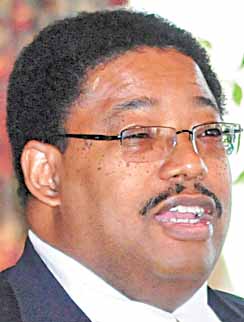
Dr. James Toliver speaks with the people in attendance during Saturday morning's Minority Physicians Conference at the Youngstown Country Club.
 Photo
Photo
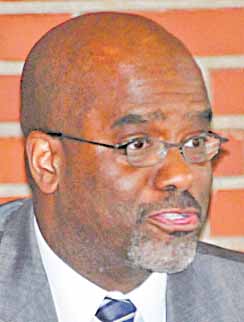
Dr. Cesar Augustine answer questions about health care practices during the Minority Physicians Conference at the Youngstown Country Club Saturday morning.
By Sean Barron
LIBERTY
High-risk behaviors, prolonged depression, stockpiling medications — and even sudden elation — often are precursors for suicide, a psychologist and participant in a health-care seminar warned.
“Sometimes that speeding ticket was really a desire to go off the road and end your life,” Dr. Kellie Kirksey, a Canfield-based psychologist, explained during Saturday’s fourth annual Minority Physicians conference at the Youngstown Country Club.
Kirksey was one of more than a dozen Mahoning Valley health-care practitioners who made up two panel groups to answer people’s questions related to the panelists’ areas of expertise during the 21/2-hour gathering, sponsored by the American Cancer Society and the Mahoning Valley Cancer Coalition.
The program’s main objectives were to introduce the health-care personnel to the community and allow people to address their concerns to the professionals, noted Charles Grace, a Delphi Packard retiree and program moderator.
Disciplines represented at the conference were psychology and psychiatry, internal medicine, neurosurgery, pediatrics, family practice, physical medicine and rehabilitation, dentistry and nephrology.
Kirksey noted that untreated depression, along with contributors such as the tough economy, hopelessness and a sense of disenfranchisement, often lead to suicide attempts. In addition, cyber-bullying and suicide “can walk hand in hand,” she said, adding that other high-risk activities include joining gangs and taking drugs.
Getting people to reach beyond themselves and building on what worked previously are some tools Kirksey uses to help such clients, she continued.
Dr. Sharon George, who’s part of a Warren family practice, took a question from a person who was worried his mother might be entering the early stages of Alzheimer’s disease because she has difficulty remembering people’s names.
“I can’t remember names,” George said to laughter.
George explained differences between Alzheimer’s and simple senility, adding that screening-test scores can determine if cognitive impairments are setting in.
She also discussed obstructive sleep apnea, a condition in which the person stops breathing during sleep and unhealthy amounts of carbon dioxide can build. Masks are among devices that can force air through the airway, George explained.
Dr. Louise Hayes, a Boardman padiatrician, was asked about a correlation between immunizations for children and an increased incidence of autism.
Medical literature doesn’t support such a link, but the fear has caused some parents to bypass getting children immunized against mumps, measles and rubella, for example, Hayes said. As a result, whooping cough has made a resurgence in the U.S., she added.
Dr. Kene Ugokwe, a Youngstown-based neurosurgeon, used the analogy of water causing increased pressure on pipes to illustrate what often leads to a stroke. Such pressure can cause the pipes to burst, something that’s similar to what causes blood to not reach certain parts of the brain, he said.
Dialysis usually is considered when the kidneys reach 15 percent or less of functioning capacity, noted Dr. Nathanial Doe, a Youngstown nephrologist.
The average difference is more than $20,000 per year per patient between dialysis at a facility and at home, Doe explained.
Other questions focused on President Barack Obama’s health-care plan, challenges to accessing mental-health providers, ways to function after a stroke, treatments for arthritis, types of dementia and recommendations for those with diverticulitis and diverticulosis.
Nine vendors provided information on topics such as the AIDS virus, prostate and breast cancer, body piercing, hearing loss and mammograms.