 43
43

Protecting tenants
Rental Inspections
 Video
Video
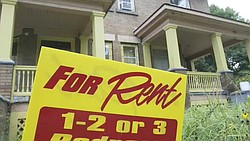
Registration and inspection of rental properties is underway in Youngstown.
By DAVID SKOLNICK
skolnick@vindy.com
YOUNGSTOWN
They’ve been on the job for
just a few days, but two men inspecting properties in Youngstown for the city’s rental-registration program say they’ve already seen it all.
“We’ve seen some houses where everything is fine to houses where everything on the [inspection] list is a problem,” said Jacob Peters, one of the inspectors.
The rental-property inspection list of 21 items requires rental properties to have, among other things, operating gutters and downspouts, structurally sound porches and stairs, windows that aren’t cracked or broken, working electric and heating systems, hot and cold water, working toilets, and to be free of insects, rodents and garbage.
“We’ve seen more houses in need of repair than ones that are good,” added David Rodriguez, the other inspector. “There are some that are really bad with mold. We were at one house that had a bad foundation. The house is going to fall down very soon. I feel bad for people who live in houses with those conditions. They deserve to live in a good house.”
Peters and Rodriguez inspected about 75 houses on the North Side from Tuesday to Thursday. Next week, they’ll be on the West Side.
On Thursday, the two spent several hours inspecting several rental properties owned by Joe Pedaline.
When the inspectors arrived at a duplex Pedaline owns on the corner of Ohio and Lora avenues, they immediately noticed garbage outside the house as well as a missing window on the front storm door and exposed wires on an overhead light fixture on the porch.
A closer look revealed a broken window and a portion of the gutter missing.
“Tenants just moved out ,and they trashed the place,” Pedaline said. “The outside [of the house] is brutal. But the inside is in good shape.”
The brick duplex is painted lime green with pink and light blue trim. The exterior of a nearby house owned by Pedaline is light blue, and another is painted lavender.
There’s no requirements in the city that regulates the exterior colors of houses.
“Beauty’s in the eye of the beholder,” Pedaline said about his colorful houses.
Pedaline said he doesn’t oppose the rental registrations and inspections, but everyone who owns property in the city should be subject to the same requirements.
“I could fight it, but I’d rather get it over with,” he said.
Peters and Rodriguez work for the Youngstown Metropolitan Housing Authority. The city hired YMHA to handle the inspections.
The YMHA then hired Rodriguez, a former insurance adjuster who also used to teach basic carpentry to ex-convicts, and Peters, who’s worked in carpentry and construction.
The city receives several complaints from tenants by telephone about problems with their rental properties. But during the first three days of the new program, tenants have said very little to the inspectors.
“Tenants are just letting us in without saying anything,” said Maureen O’Neil, the city’s property-registration administrator who went to every inspection with Peters and Rodriguez last week.
All the inspections done last week and for the next few weeks are by appointment.
“I’m surprised at the number of violations I’m seeing, because these were scheduled with the landlords,” O’Neil said.
The program requires rental-property owners to pay the city $20 per unit for an annual license after a safety inspection. If a property is a multifamily dwelling, the first unit is $20, and each additional unit in the structure is $15.
The city is paying $15 per inspection to YMHA.
If violations are found, landlords are given time — it varies based on the problems. “The more severe, the more time they’ll have” to make the improvements before a second inspection, O’Neil said.
It’s $40 for a second inspection, and then $100 for each follow-up inspection if the violations aren’t addressed, she said.
The landlords of about half of the 4,000 rental units in the city to be inspected are registered.
Federal subsidized properties are exempt because they’re already inspected by a government agency, O’Neil said.
The deadline to register was last month, but the city is giving landlords a few extra weeks to register, she said.
If they don’t, the inspectors will knock on doors of those homes and inform tenants that their landlord will receive a $100-a-day invoice from the city for not participating in the mandatory program, O’Neil said.