 43
43

YSU to present evening of songs
 Photo
Photo
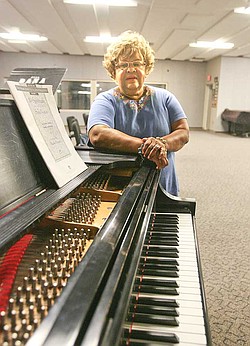
Sophia Brooks, classical soprano soloist, will be featured in "An Evening of 19th Century Negro Spirituals" on Thursday as the first event in Youngstown State University Diversity Council's 2010-11 Community Diversity Program Series.
By LINDA M. LINONIS
linonis@vindy.com
YOUNGSTOWN
Negro spirituals — songs of slaves — are “almost a lost art” in the words of soprano Sophia Brooks.
But the classical musician will use the voice that God gave her to give new life to the oral musical tradition handed down through generations in the South.
She will be featured in “An Evening of 19th Century Negro Spirituals” on Thursday in Ford Theater of Bliss Hall at Youngstown State University. The event is the first in YSU Diversity Council’s 2010-11 Community
Diversity Program Series.
Brooks said the spirituals are “songs of our people.” The lyrics often use colloquialisms of
areas in Georgia, Alabama and Texas. “Black folks would be saying the same things,” she said.
She noted that the Negro spirituals “come to us from an oral tradition ... from one person to another ... one generation to the next.”
Spirituals project a range of emotions, she said.
Though some may believe Negro spirituals are simple songs created by illiterate people, the Rev. Dr. Lewis Macklin, pastor of Holy Trinity Missionary Baptist Church and narrator for the program, said it is his role to “identify the historical context” of the spirituals.
In his research, the Rev. Dr. Macklin said he learned that spirituals carried “encrypted” messages. For example, “Wade in the Water” sends a hidden message to those who understand the meaning behind the words. Dr. Macklin said the lyrics would convey that an escape is being planned and when it happens, slaves should go into the water so that tracking dogs would lose the scent.
“The spirituals send a message of opportunity,” the pastor said. He said this program will “celebrate the intrinsic creativity” of the music.
Dr. Macklin said the spirituals “bear witness” to lives lived in oppression. But, he emphasized, “songs of sorrow are hope
for tomorrow.”
Brooks likened Negro spirituals to Jewish folk music in that both tell stories of history.
She said she is using some arrangements by Mark Hayes, a noted pianist, composer and arranger, and among these will be “Steal Away Medley” and “Joshua Fit the Battle of Jericho.”
Arrangements by Brooks’ accompanist, Wilbert
Ervin, include “I Know I’ve Been Changed” and “Little David.”
“This is truly an American art form,” she said of the genre. “It’s singing from the soul.”
Yulanda McCarty-Harris, director of equal opportunity and diversity at YSU, said “the story behind the music” will impact the audi
ence. She said spirituals are not only a part of African-American history but American history.