 43
43

Cordray, DeWine contrast priorities
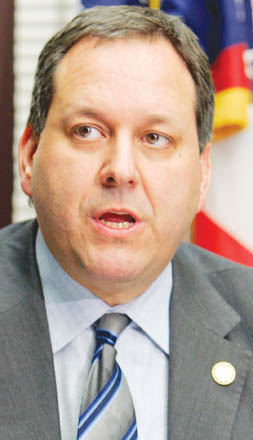
 Photo
Photo
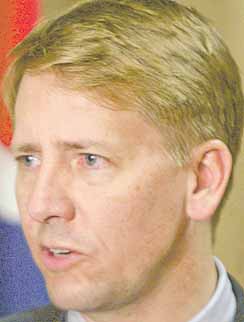
Former Ohio Attorney General Richard Cordray
By Marc Kovac
COLUMBUS
Four years ago, the last time a full term as Ohio’s attorney general was up for grabs, a crusading Democratic state senator named Marc Dann convinced the electorate to give him a shot at cleaning up state government.
A little more than a year later, Dann and a handful of office-mates were swept out after a sexual harassment scandal that led to criminal convictions and embarrassing details of an extramarital affair with an underling.
Two years ago, then-Treasurer Richard Cordray convinced the electorate to give him a shot at cleaning up the mess left behind by Dann’s administration and only partially settled by an interim attorney general appointed by the governor.
Now running for his first full term in the position, Cordray said he has done just that, addressing human resources, financial, legal and other issues in the process.
“It took many months to clean the office up and get it to where I could sleep at night,” he said. “And now I think we’re operating at a high level, smoothly, and I think continuity is what the office needs more than anything. They don’t need to go through yet another transition and start all over again when we’ve made as much progress as we have.”
But Cordray’s Republican challenger, former U.S. Sen. Mike DeWine, says the Democratic incumbent has not done enough to improve the attorney general’s office.
“The standard should not be, ‘Is he doing a better job than Marc Dann,’” DeWine said. “He’s doing a better job, but he’s not fixed, to me, the biggest problem that we have, and that is the crime lab. And I think the priorities are misplaced.”
Cordray and DeWine are the two major-party candidates in next month’s general election. Others running for the seat include Robert M. Owens (Constitution Party) and Marc Allan Feldman (Libertarian).
Cordray said he has made steady improvements since entering the office 21 months ago, including beefing up the computer-crimes unit, increasing the use of websites and other technologies to improve communications with local law enforcement and consumers and launching a human-trafficking commission to tackle related crimes.
“Under my watch, we’ve done quite a lot in the last year and nine months in law enforcement,” he said.
If re-elected, he said he would continue to push for more improvements, with goals comparable to those he ran on in 2008: restoring order and professionalism in the office, supporting local law enforcement and protecting the financial security of Ohioans.
“I think our momentum and our accomplishments now are at a faster pace than they were the first few months in office, when we were really trying to dig out of a mess,” he said. “And I think that that will continue.”
But DeWine countered that Cordray has not done enough to improve the office in the time he has been in charge.
“I run for attorney general because I know I can do a better job than the current attorney general,” he said.
DeWine said his goals, if elected, include improving turnaround time for evidence in the state’s crime lab, joining the legal challenges against federal health-care reform and working to improve the state’s business climate.
“I think we file too many lawsuits in society today,” he said. “I think the government files too many lawsuits. ... My job will be to say, ‘Look, aren’t there other ways we can solve this?’ Let’s fix the problem, but government should be there to work with business, help business, except in cases where you have real bad actors and people who you have to go get.”
Another goal: conducting an audit to determine ways to make the office more efficient, given the economic realities of the coming budget cycle.
“Everybody who gets elected this year, and everybody who takes office in January, is going to have to look at their department, their agency, their office and say, ‘What are we going to cut? What are we going to do?’” he said. “And it is a question of priorities.”
One of those priorities, for DeWine, will be improving the turnaround times at the state crime lab. He said the delays in processing DNA evidence are unacceptable, allowing more opportunities for criminals to roam free and commit more crimes.
“The current attorney general, in all fairness to him, did not create this problem,” DeWine said. “He inherited it. But he’s not fixing the problem.”
If elected, DeWine said he will “bring in experts. I will bring people from other crime labs. We will bring in management experts, we will do an audit, and we will start working to fix this problem. This is a longtime problem. He is not fixing it.”
But Cordray downplayed DeWine’s comments, saying he has not heard from “any local law-enforcement officials” who will back up his opponent’s criticism.
“It’s a lot of empty claims,” Cordray said. “I keep asking him, ‘Who’s complaining?’ The sheriffs, the police and the prosecutors — I think they’re very happy with the work we’re doing.”
Cordray did acknowledge that the state crime lab needed improvement when he took office — it was an issue that he and his Republican opponent campaigned for two years ago.
But he said he has made improvements since taking office.
“Over the course of my 20 months there, the response times in the DNA lab have fallen from an average of 100 days when I took office, which is too long, to 71 days, which is still longer than I’d like. But we’re making steady progress.”
Cordray also said that his office will work with local law enforcement when they need evidence turned more quickly.