 43
43

Secretary-of-state hopefuls have common objectives
 Photo
Photo
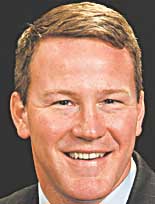
Jon Husted
 Photo
Photo
Maryellen O'Shaughnessy
By Marc Kovac
COLUMBUS
Republican Sen. Jon Husted has been a state lawmaker for a decade, including a stint as the leader of the Ohio House.
“As Speaker of the House, I couldn’t hide from making decisions,” he said. “I’ve had to make a lot of them in my life. I’m not afraid to make them. But I also know that there’s a way to make them in which you can minimize the fallout for whatever it is you do.”
Democrat Maryellen O’Shaughnessy is the clerk of common pleas court in Franklin County and a former Columbus city councilwoman.
“There’s no one else who sits before you as a candidate for secretary of state who understands as fully as I do the obstacles, the challenges and the successes of local government,” O’Shaughnessy said.
Both believe their backgrounds in public office help to make them a better choice to be Ohio’s next secretary of state, the individual responsible for administering the elections and the office where businesses make official their presence in the state.
Both also say they’ll push to ensure the coming reapportionment process — the secretary of state is involved in that task — is completed without partisan rancor.
Husted and O’Shaugh-nessy are the two major-party candidates on the November ballot. Libertarian Charles R. Earl also is seeking the office.
Elections
Both Husted and O’Shaughnessy have outlined comparable goals for ensuring Ohio’s elections run smoothly going into the next presidential contest in 2012.
“[As] the chief elections officer of the state, you have a very important role in ensuring the people trust the elections,” Husted said. “And as I often say, if you don’t trust the manner in which your public officials were elected, you won’t trust your public officials.”
“We need to make sure we do a good job there, that we continue to build on the successes and reforms that have been put in place by [Democratic incumbent] Jennifer Brunner,” O’Shaughnessy said.
Both are supportive of eliminating “golden week,” the period of time when Ohioans could register to vote and cast a ballot during the same day. And they both agree with shortening the early voting period in Ohio to 21 days from the current 35.
Husted said one of his first orders of business, if elected, would be to form a bipartisan commission, made up of members from rural and urban communities, to meet with the boards of elections in all 88 Ohio counties and discuss what they like and don’t like about how elections have been run.
O’Shaughnessy also wants to be in close contact with local elections boards to understand their needs and frustrations and respond accordingly.
Their ultimate goal would be to change the election system for the better — but make those changes gradually instead of issuing last-minute directives to local elections officials.
Business Services
O’Shaughnessy, a fourth-generation owner of a family funeral-home business, said one of her main goals if elected secretary of state will be to update the office’s business-services section, which handles corporate filings.
That includes instituting electronic filing and online access to public documents.
“I want to make sure, of course, that we’re administering fair and trustworthy elections and we continue to reform the system to make sure people feel their vote counts and is counted, but we really need to look really hard at ways to make that business-services division a true asset to business development and job growth,” she said.
“We have an opportunity here to reduce turnaround time, thereby reducing ... massive amounts of paperwork that people have to do when they do business in Ohio.”
O’Shaughnessy also would like to launch a series of small-business seminars, in conjunction with the state departments of development and administrative services and make a concerted effort to connect companies registering with the office with services that can assist them as they establish and expand their operations.
Husted voiced similar goals — an online business filing process that takes 24 hours to complete and links to state programs that can assist businesses.
“That save you time, money, energy, attorneys fees ... stuff that you might otherwise have to incur as a business,” he said. “If we do those kinds of things, that means that everybody’s first interaction ... with the state of Ohio will be positive.”
Apportionment Board
Husted was the primary sponsor of a proposed constitutional amendment that would have asked voters to expand the apportionment board to seven members — governor, auditor, secretary of state and the majority and minority leaders of the both the House and Senate.
Additionally, if voters approved, decisions by the new board would have required approval by a five-member super majority, including two members from the minority party.
That resolution did not pass before lawmakers broke for the summer or the deadline to place it on the ballot, so it will be another decade before the process could be changed.
O’Shaughnessy was critical of Husted’s inability to get his constitutional amendment through the legislative process.