 43
43

Racing cars and saving lives
 Photo
Photo
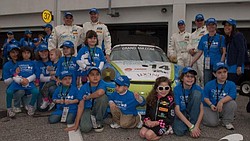
Neighbors | Submitted.Children’s Tumor Foundation recipients with Ronald Yarab (third from back right), his racing crew and race car during the Rolex 24 race in January. His team placed 15th in the Grand Touring class.
 Photo
Photo
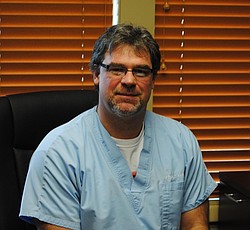
Neighbors | Shaiyla Hakeem.A normal day in the life of Ronald Yarab includes practicing physical medicine and rehabilitation at his office located in Boardman.
 Photo
Photo
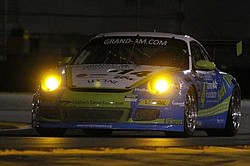
Neighbors | Submitted.This is the car Ronald Yarab and his team used in January for the 2010 Rolex 24 in Daytona. The race was continuous driving for 24 hours.
Boardman resident Ronald Yarab has been driving race cars for more than 15 years and practicing medicine for more than 17. Yarab is a 1980 Boardman High School graduate and completed undergraduate and medical school in South Carolina and served his residency at Ohio State University.
He specializes in physical medicine and rehabilitation out of his office, All Points, located on East Western Reserve Road. Yarab loves working in the medical field, but he has a hobby that satisfies the adventurous side of his alter ego.
Driving race cars has always been an interest to Yarab, who attended several races at the Canfield Speedway as a kid, but actually driving race cars didn’t quite fit into his busy schedule. “I have always liked it, but never really got the opportunity to get into it because of school and everything else that was going on,” Yarab said. Yarab’s racing career didn’t begin until his wife bought him a gift certificate to Skip Barber Racing School in Road America, Wis.
He said this school, which has various locations throughout the country, is renown for training the best drivers in the world.
After completing the school, there was no turning back. Despite the risk of accidents involved with race car driving, Yarab has only been involved in one major collision. “When you race, you’re going to wreck. It’s just a part of the game,” he said. The accident landed Yarab in the hospital with a concussion. He admits that at the time, his mind wasn’t concerned with the damage to his body, he was more focused on the damage sustained to the body of his car.
“When you’re in the process of wrecking, you’re really not thinking about yourself, you’re more worried about the car,” Yarab said, “A car like a Porsche is expensive, so you don’t want to smack it up.” Yarab spent Jan. 30 and 31 driving with his team, consisting of three other members, continuously for 24 hours in Daytona. The race was divided into two-hour driving schedules and judged by how many laps each team could complete within a 24-hour period.
Yarab and his team placed 15th in the Grand Touring class. “It’s grueling because your crew is really up for about 36 hours, including time for preparing and there are about 40 cars on the track at the same time,” Yarab explained. “It’s really kind of a mental race.” Yarab’s next race, the Rolex Grand Am Series is scheduled for July 4 in Daytona. With his busy lifestyle in the medical field, time to physically practice on a track is limited.
To compensate, computer simulation is used to orient and maneuver tracks prior to races. Yarab says you can choose any car with any track and drive the car as if you were really there. “It’s really realistic. I have the steering wheel, the pedals and a big screen. Technology really helps me out,” Yarab said. In driving race cars, Yarab also helps raise money for the Children’s Tumor Foundation. The program is called Racing4Research and a portion of the proceeds from races go toward helping kids with neurofibromatosis.
This is a genetic disorder affecting nerve cells that currently has no cure, according to the foundation. Yarab plans to continue racing for the next few years, but is eventually planning to retire from the track. “Racing — it’s like life. It gives you an emotional high from the highest high to the lowest low,” Yarab said, “But after the race, I have to remember that job to come back to.